What Changes With the Season
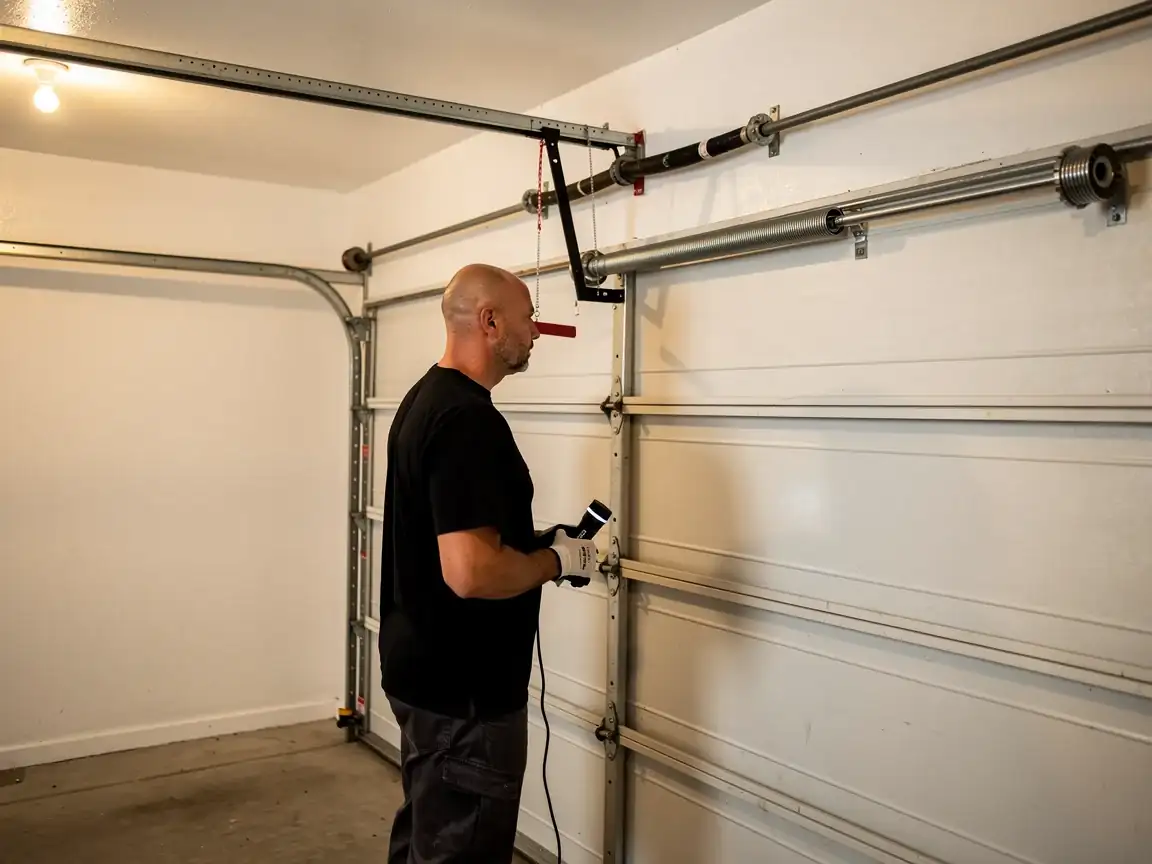
A cold-moderate climate means the garage goes through real temperature swings across the year without the extreme deep-freeze stretches you'd get further north. That swing still matters for a door's hardware. Steel springs and cables contract when the garage drops into the 30s and 40s, which changes the tension a spring is holding and can turn a quiet door into a noisy one for a few months. Lubricant that was fine in August gets stiff in January, and a track that was square in summer can bind slightly once the slab and framing contract. Owners on original 1980s and 90s hardware notice this first, because the metal has more wear to begin with and less tolerance for the seasonal shift. A newer door on the same track handles the same temperature change without a sound. If a door only gets noisy for part of the year, the season is doing exactly what it does to aging hardware - it's not a sign the door is suddenly broken, but it is a sign the hardware is older than it can hide.
What the Weather Here Does to It
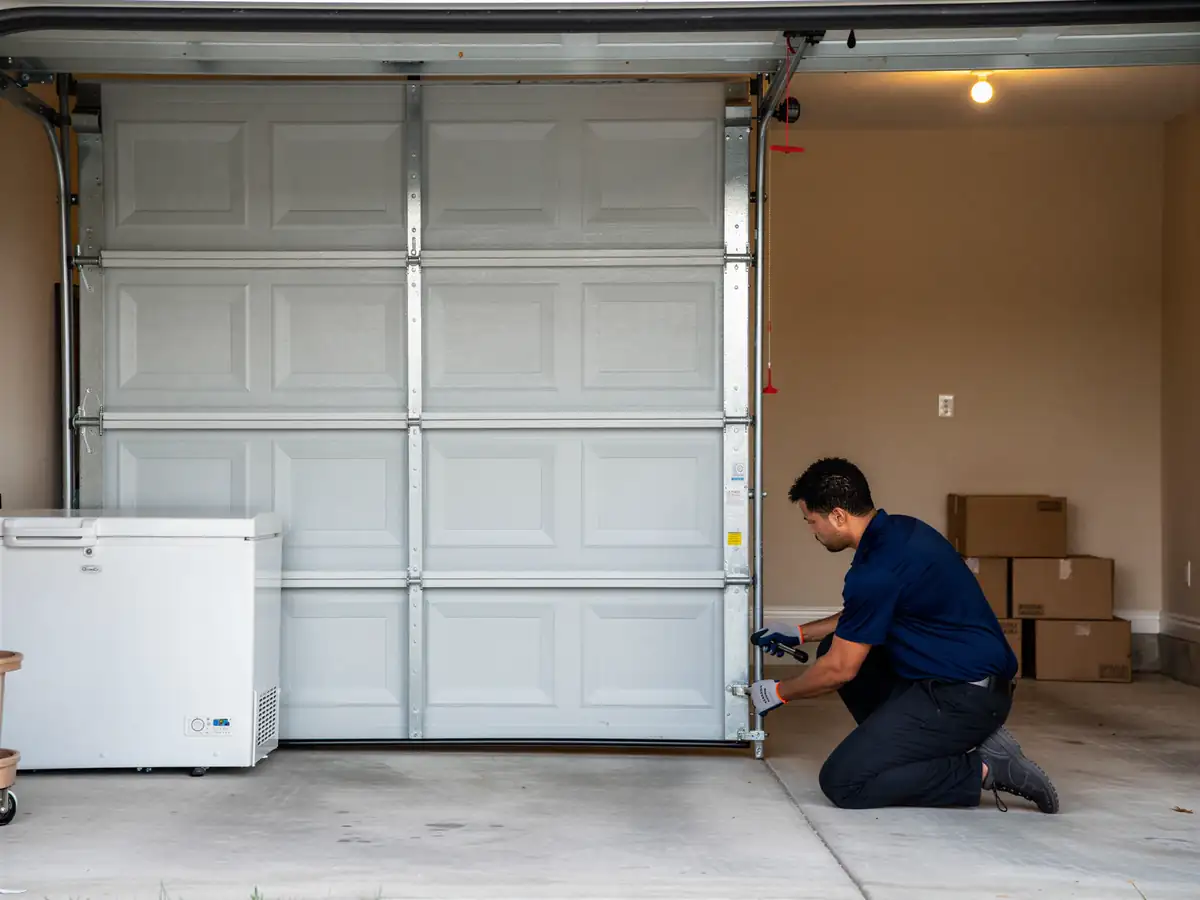
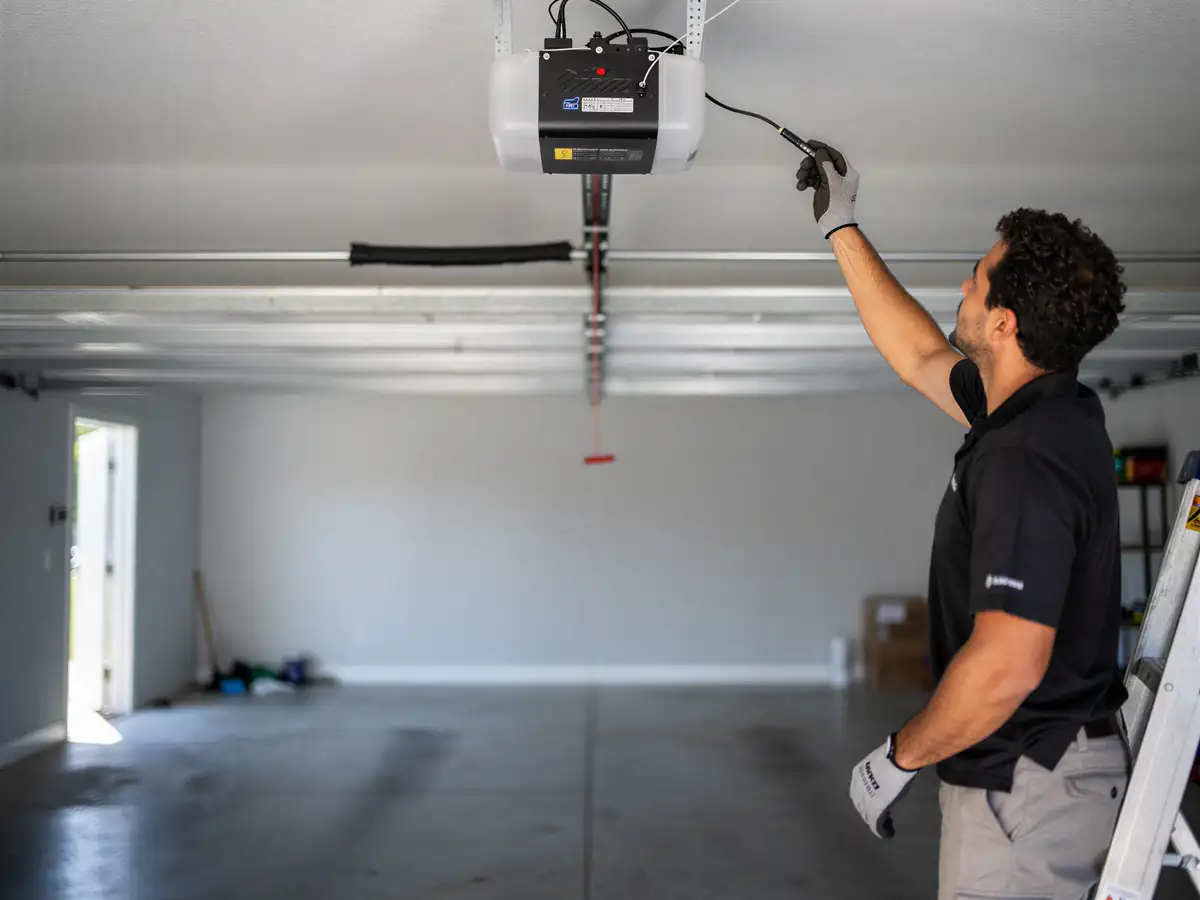
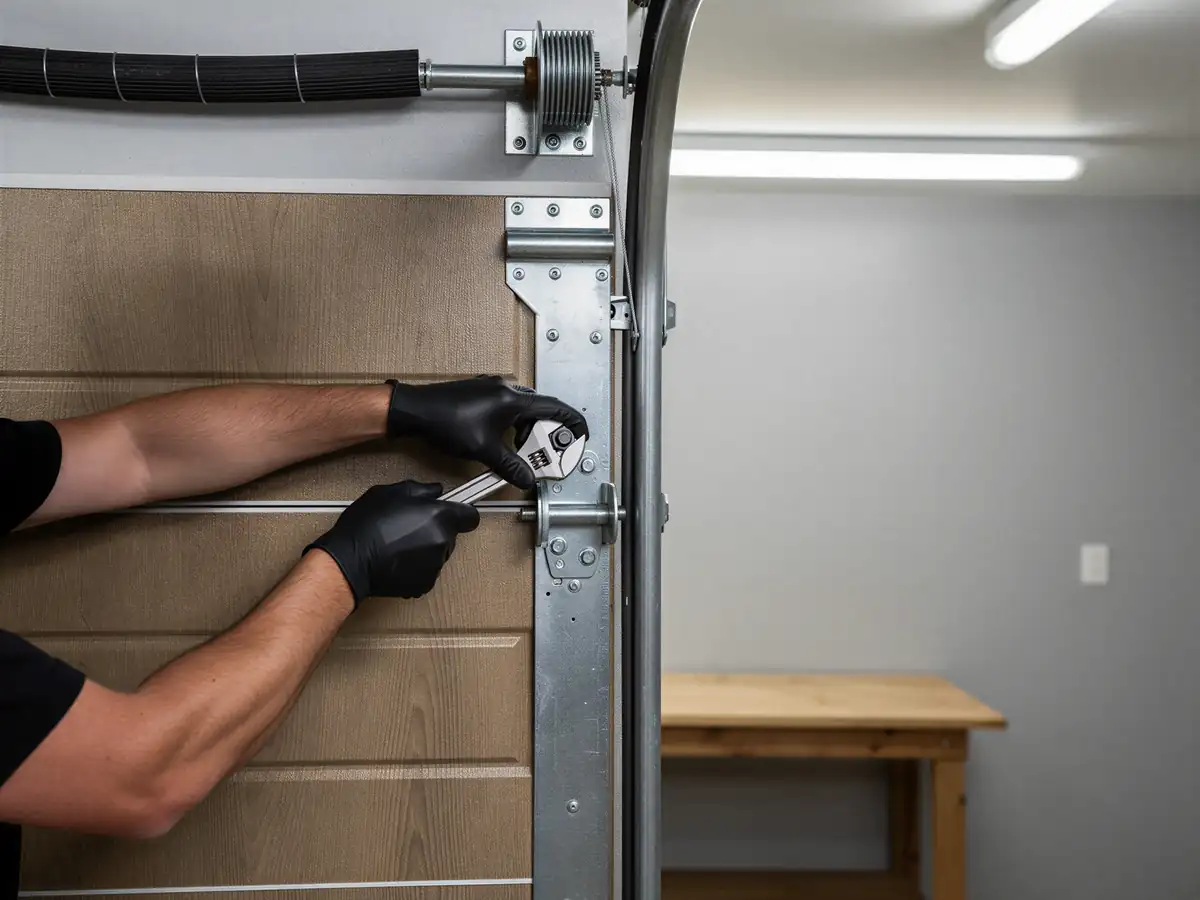
Cold-moderate weather doesn't crack concrete the way a true freeze-thaw climate does, but it does enough to matter on a door with decades of wear. Moisture that gets into a wood jamb or steel frame during wetter stretches, then contracts in the cold snaps, slowly works fasteners loose - hinges, track brackets, the bolts holding the opener rail to the ceiling. On a door built in step with the rest of the neighborhood's 1980s-90s construction, those fasteners have been through this cycle thirty-plus times. That's usually where a new rattle comes from: not the door itself, but a bracket that's backed out a quarter inch. We don't see the kind of extreme cold that snaps springs outright the way a harsher climate does, but we do see gradual loosening, and it shows up as noise months before it shows up as a real failure. Catching that rattle early is cheaper than catching the bang that follows it.