
Where We Go From Alpharetta, and What Changes House to House
See which nearby towns Alpharetta Garage Door Pros reaches, how housing age from 1951-2007 shapes common repairs, and what actually drives a service call price.
Pricing, and What Drives It
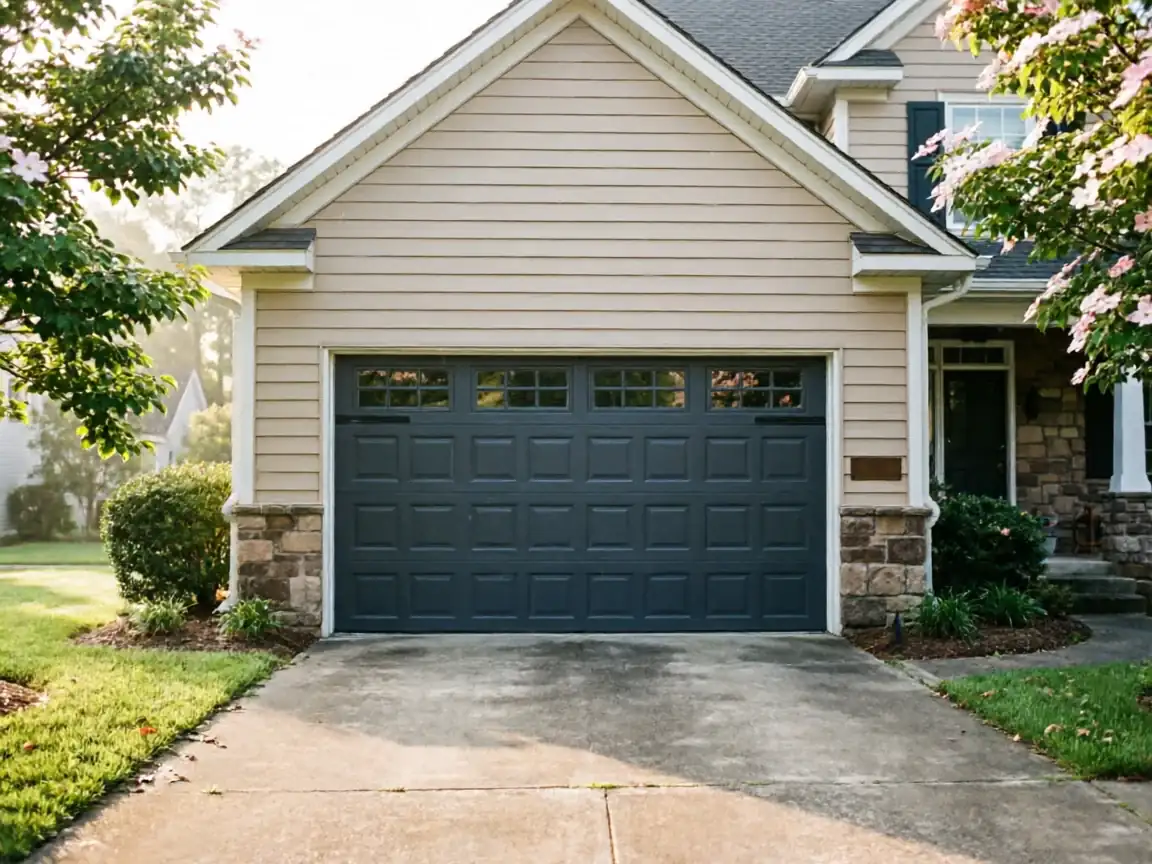
We work out of Alpharetta and drive to the towns listed below, so the first thing that affects your price is simple: how far the truck has to go. Beyond that, the real driver is what's on your house. A torsion spring job on a door installed in the 1980s costs differently than swapping a logic board on an opener from the 2000s, because the parts aren't the same parts.
Median household income across this service area runs $91,308, which tells you the kind of doors and openers that got installed the first time around - mid-grade steel, chain-drive openers mostly, some belt-drive in the newer builds. That's the baseline we're pricing against, not a luxury-market baseline and not a bargain-bin one.
Here's the limitation: we don't quote a firm number over the phone for anything beyond a basic service call. A spring job is predictable. A bent track, a door that's been hit, or an opener that's partially fried from a power surge - those need eyes on them before we say a number, because guessing wrong either shortchanges the job or oversells you.
What We Fix Most Here
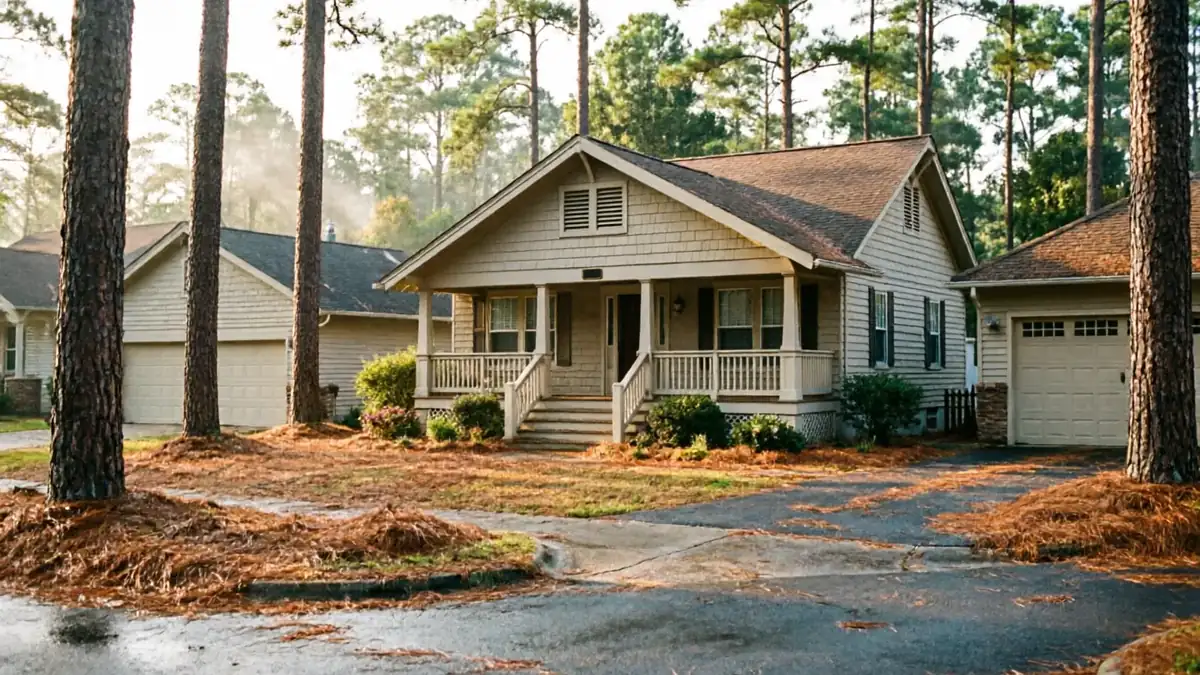
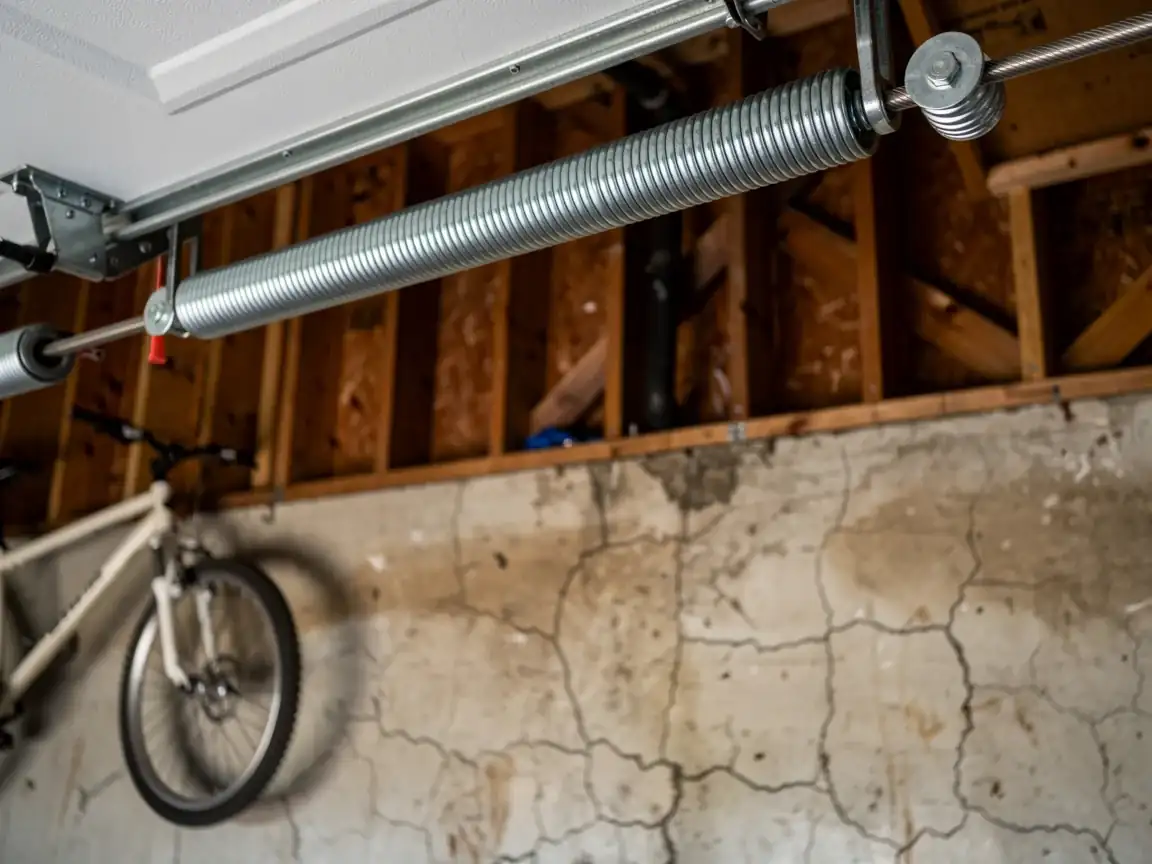
Older stock - the houses closer to that 1951 end of the range - tends to bring us torsion spring failures and worn rollers, plus hardware that was side-mounted in a way nobody manufactures replacement parts for anymore. On those jobs we're often retrofitting newer-standard hardware onto an old frame rather than finding an exact match.
Houses built through the 80s and 90s core, which is most of what's out there, mostly come in for opener failures: dying capacitors, worn drive gears, safety sensors that have drifted out of alignment after years of being bumped by bikes and lawn equipment. That's the single most common call across the service area.
Newer builds, closer to the 2007 end, bring fewer spring jobs and more electronics - circuit boards, remotes that won't pair, keypads that have corroded contacts after a decade outside in the weather. We work on all of it, but we'll tell you straight if a 20-year-old opener is cheaper to replace than to keep patching, which is often the honest answer once a board starts going.
What to expect
Frequently asked
Straight answers about garage door repair in Alpharetta. Still unsure? Ask us directly.
How old does a garage door have to be before repair stops being worth it?
There's no fixed age, but doors original to houses built in the 1950s through 70s often have track, hinges, and spring hardware that are all failing around the same time. At that point, one repair tends to just shift the problem to the next worn part, and we'll tell you if that's what we're seeing.
Do you work on both older and newer garage doors in this area?
Yes. Housing here runs from 1951 to 2007, with most built in the 80s and 90s, so we carry parts for older side-mounted torsion systems and newer extension-spring setups on the same truck, since both show up on the same street.
What's the most common garage door repair you see around here?
Torsion spring failure, by a wide margin. It tracks with the age of the housing stock - a spring installed decades ago in an 80s or 90s build finally reaching the end of its cycle count.
Will cold weather affect my garage door opener?
This area sits in a cold-moderate climate band, which isn't extreme but is consistent enough that freeze-thaw cycles each winter can shorten the life of a drive belt or fatigue an aging torsion spring faster than in a milder climate.
Ready to get your garage door sorted?
Tell us what it’s doing and where you are in Alpharetta - we’ll take it from there.