What Changes With the Season
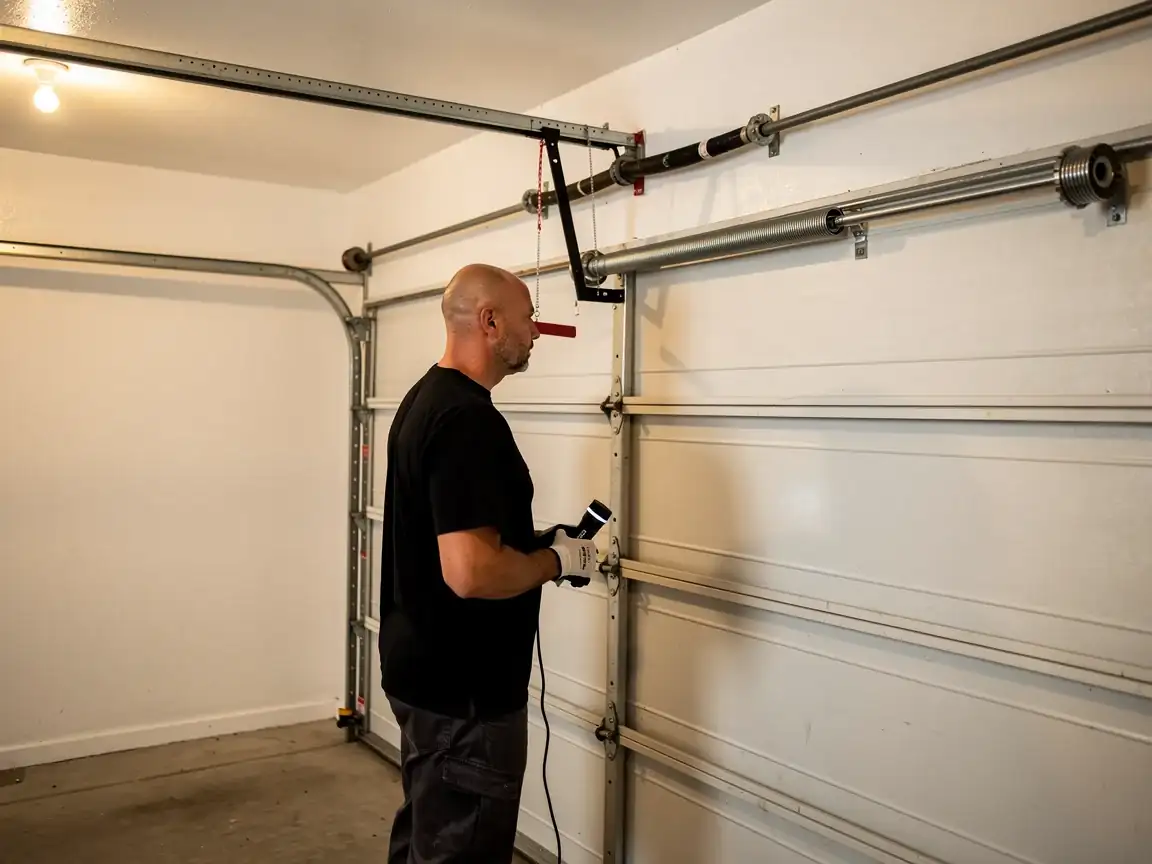
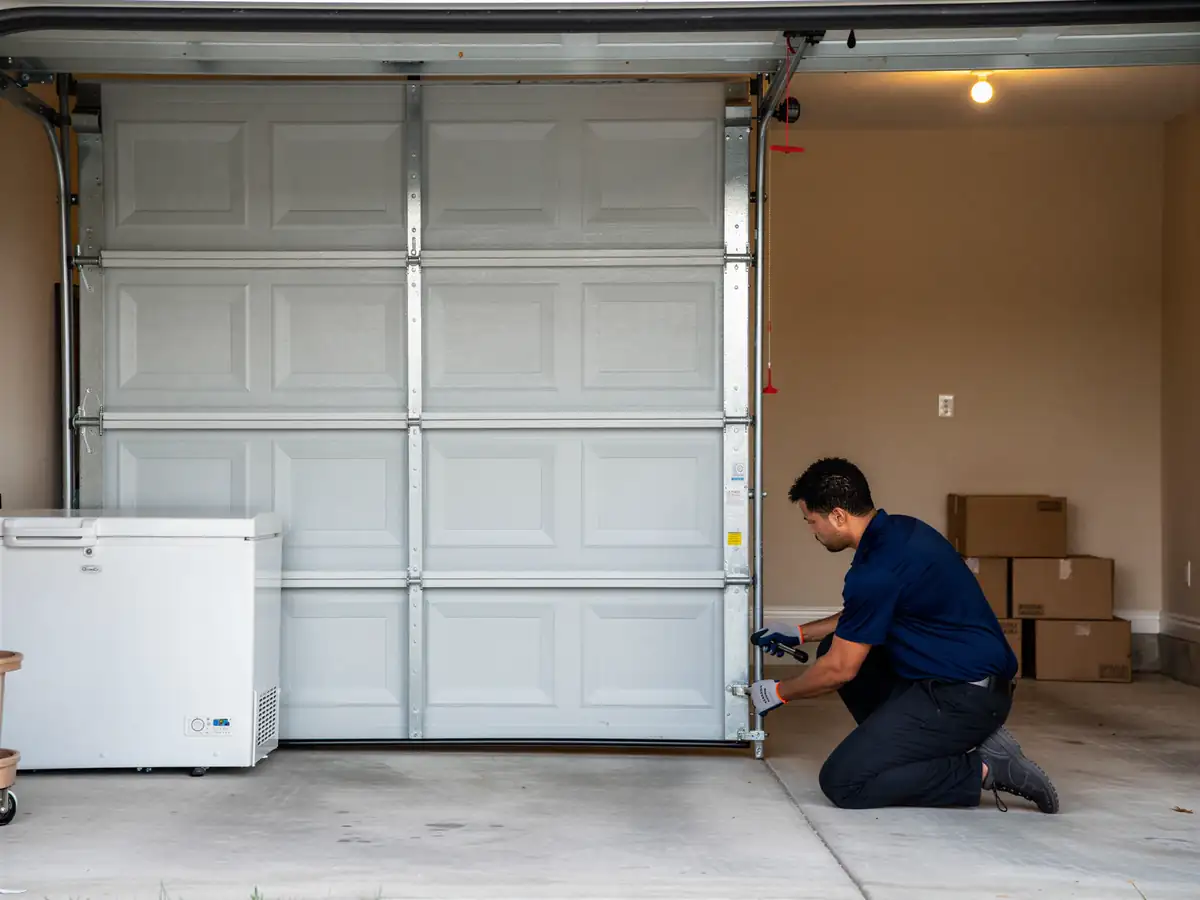
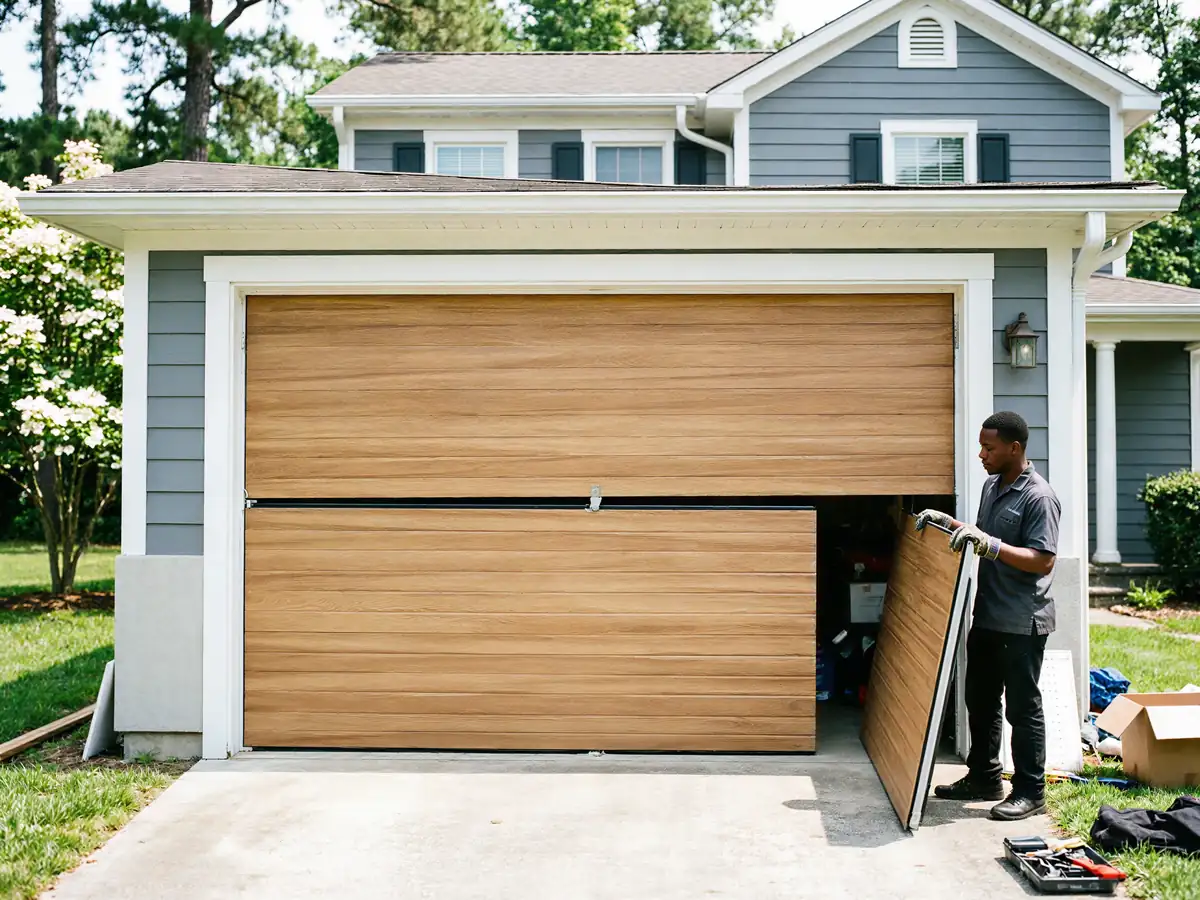
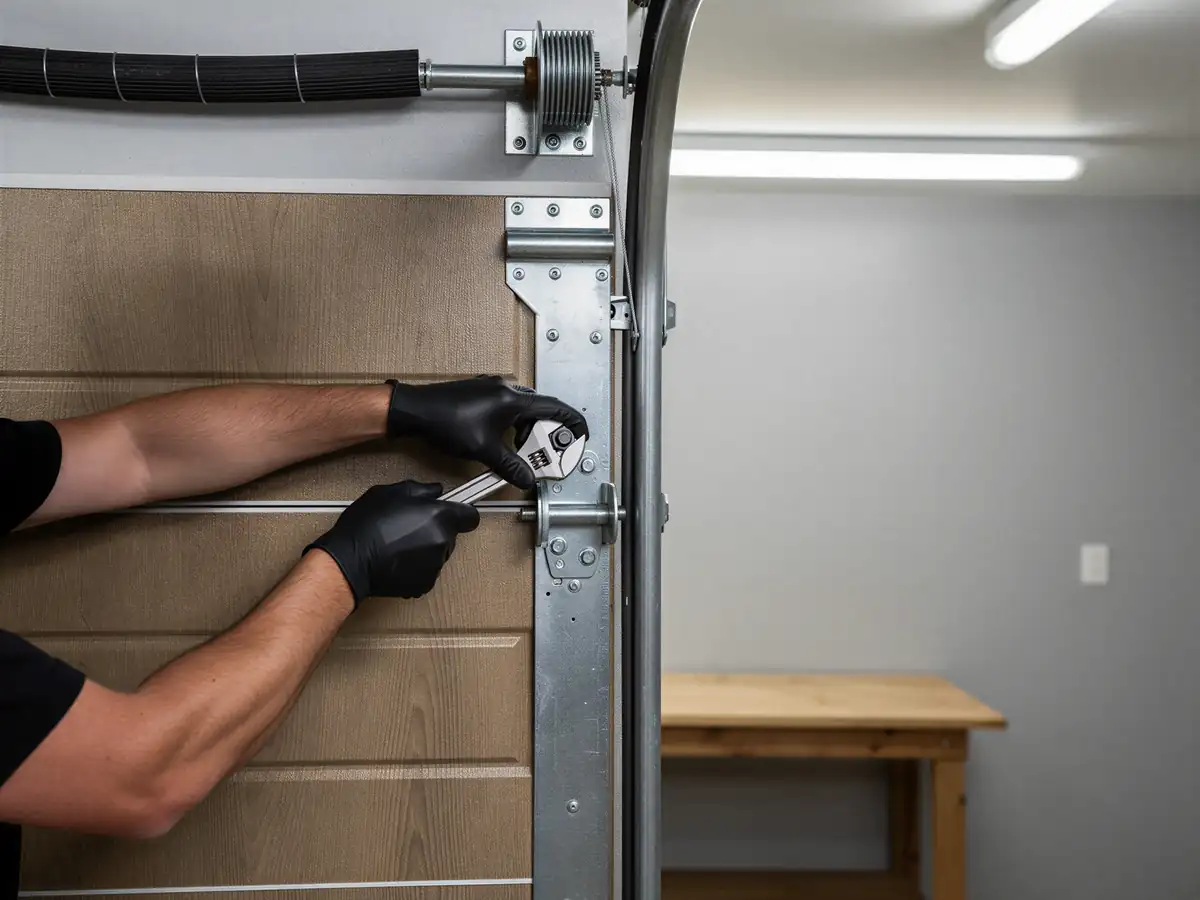
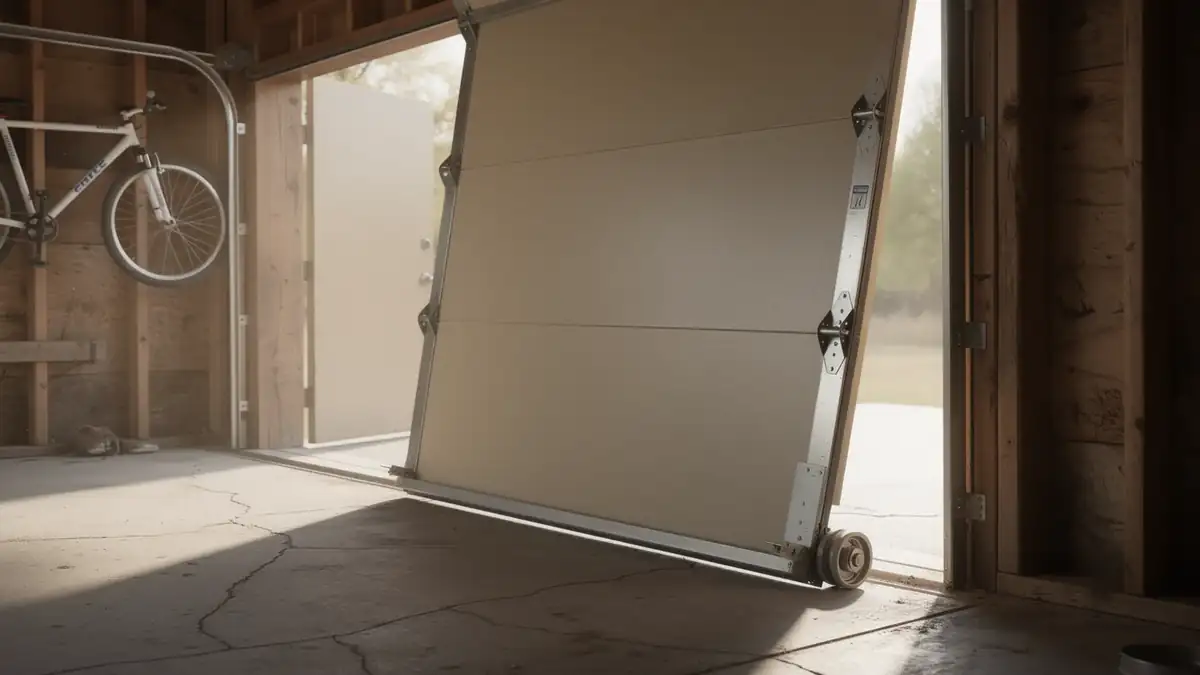
A door that's run fine all summer can start binding or slipping track as the weather turns, and it's not coincidence. Homes from the 1980s and 90s stock common here were framed to the codes of that era, and the lumber behind the track brackets moves with humidity swings more than newer engineered framing does. In spring and fall, that movement loosens lag screws a fraction of a turn at a time - not enough to notice in any one week, but enough over a season that the track starts to walk away from true. If your door has gotten a little louder, or the rollers sound like they're chattering instead of rolling smooth, that's usually the track telling you it's no longer perfectly parallel on both sides. Doors on original 1980s-vintage track are the ones we see this happen to most, simply because the hardware has had more decades of seasonal cycling to work loose. This isn't an emergency-level problem on its own, but it's the kind of thing that turns into an off-track door if a bracket finally lets go while the door is mid-cycle.
What the Weather Here Does to It
The climate here falls in a cold-moderate band - real winter cold, but not the deep-freeze extremes some regions get, with plenty of freeze-thaw cycling in between. That cycling is hard on track hardware specifically. Moisture gets into the track channel and into the bolt holes on the brackets, freezes, expands, and then thaws out again days later. Repeat that enough winters in a row and you get rust forming right where the roller rides and right where the lag bolts thread into the jamb - both of which loosen the tolerances a track depends on. On original hardware from a house built in the 1984 median range, that rust has had decades to work. A door that's been fine through several mild weeks can jump track on the first hard cold snap because the track contracted slightly and a weak bracket finally gave. We don't get the kind of extreme cold that cracks steel, but we get the freeze-thaw churn that loosens it, and that's the more common failure mode we see on older track in this area.