What Is Going On
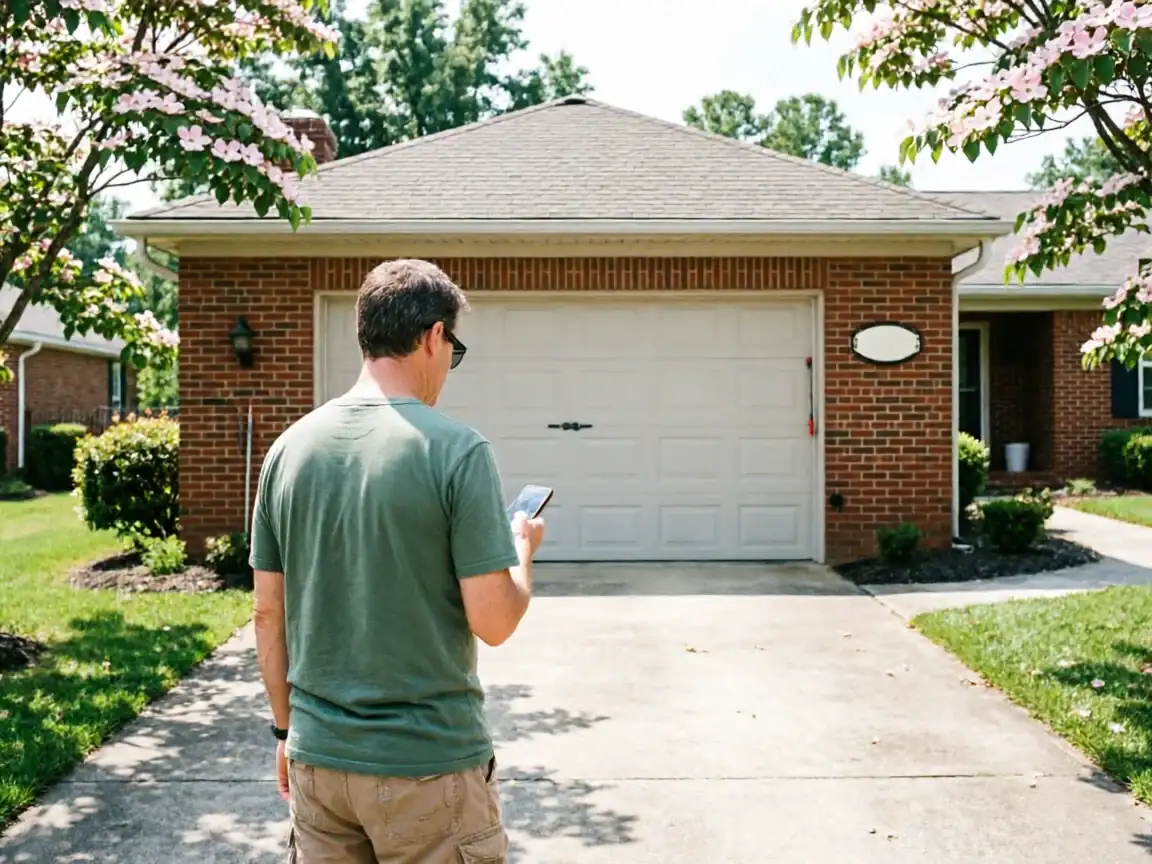
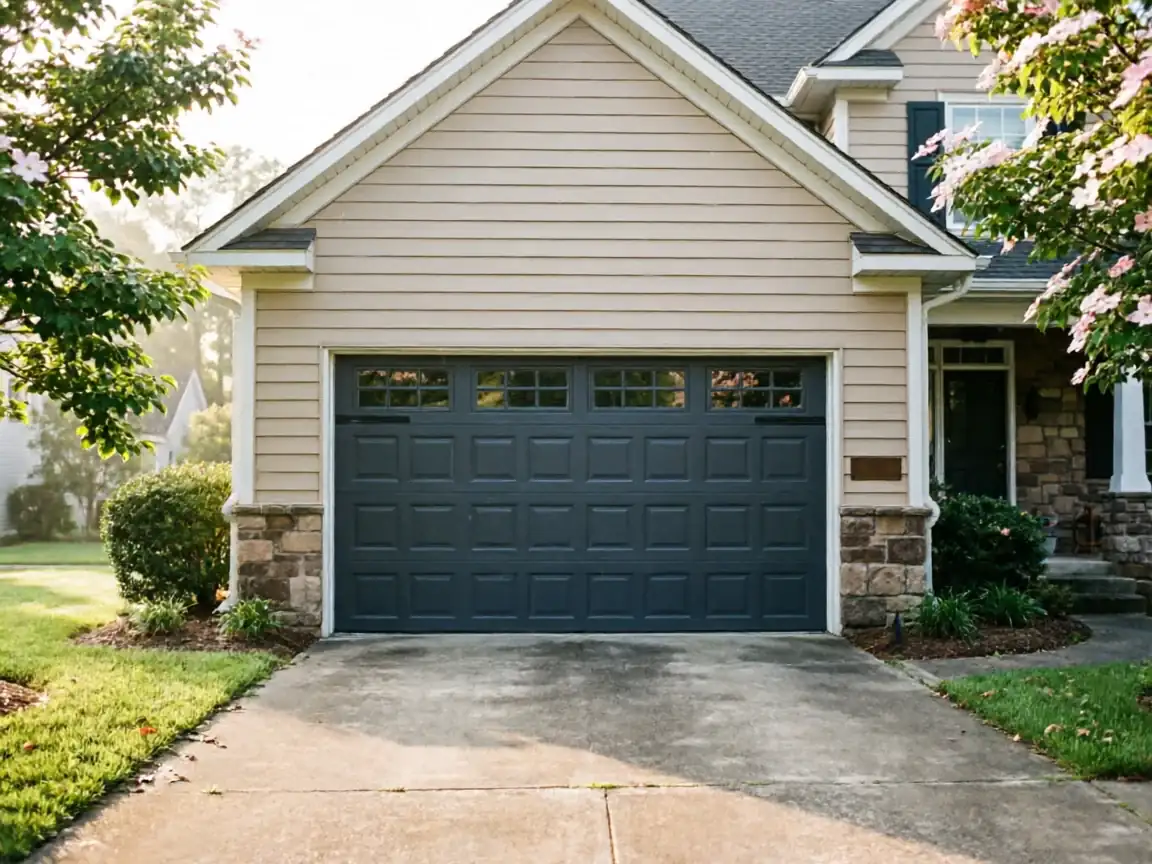
Housing in this service area was built between 1951 and 2007
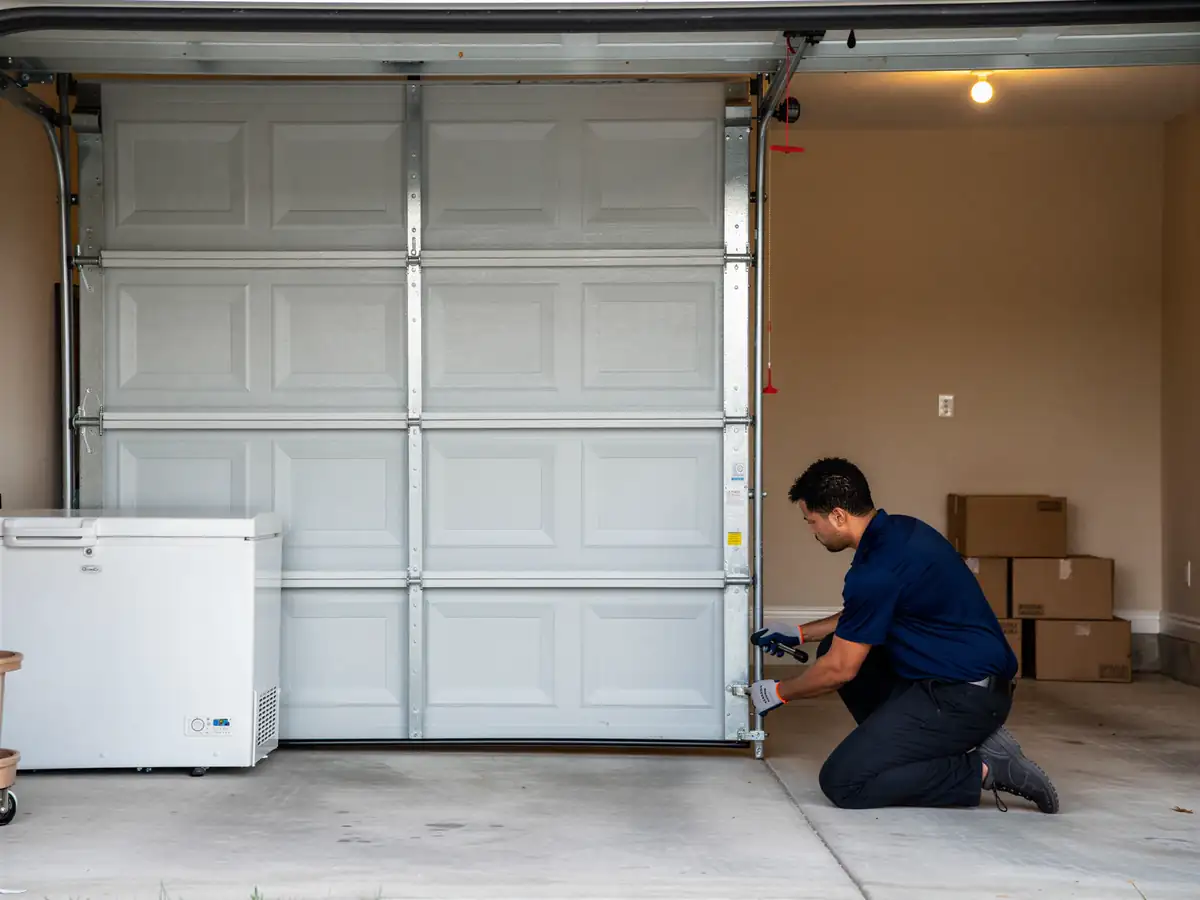
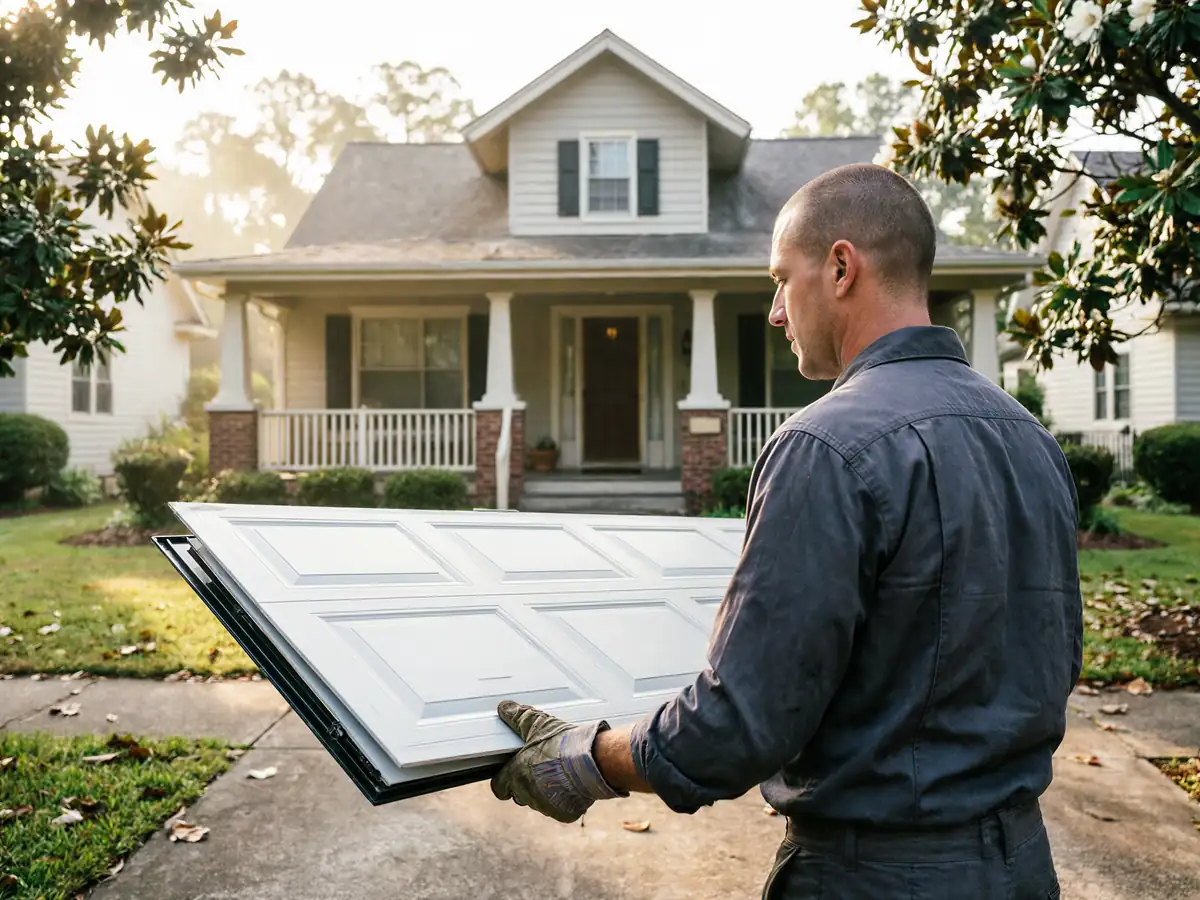
With the median year sitting at 1984. That means a lot of the doors we get called on aren't just old - they're original, or close to it. A door installed when the house was framed in the mid-80s has been through forty winters of hardware cycles, and a surprising number of them are still hanging on the same torsion spring and the same steel track.
Across the 19 named areas in this region, the dominant housing stock is 1980s and 90s construction
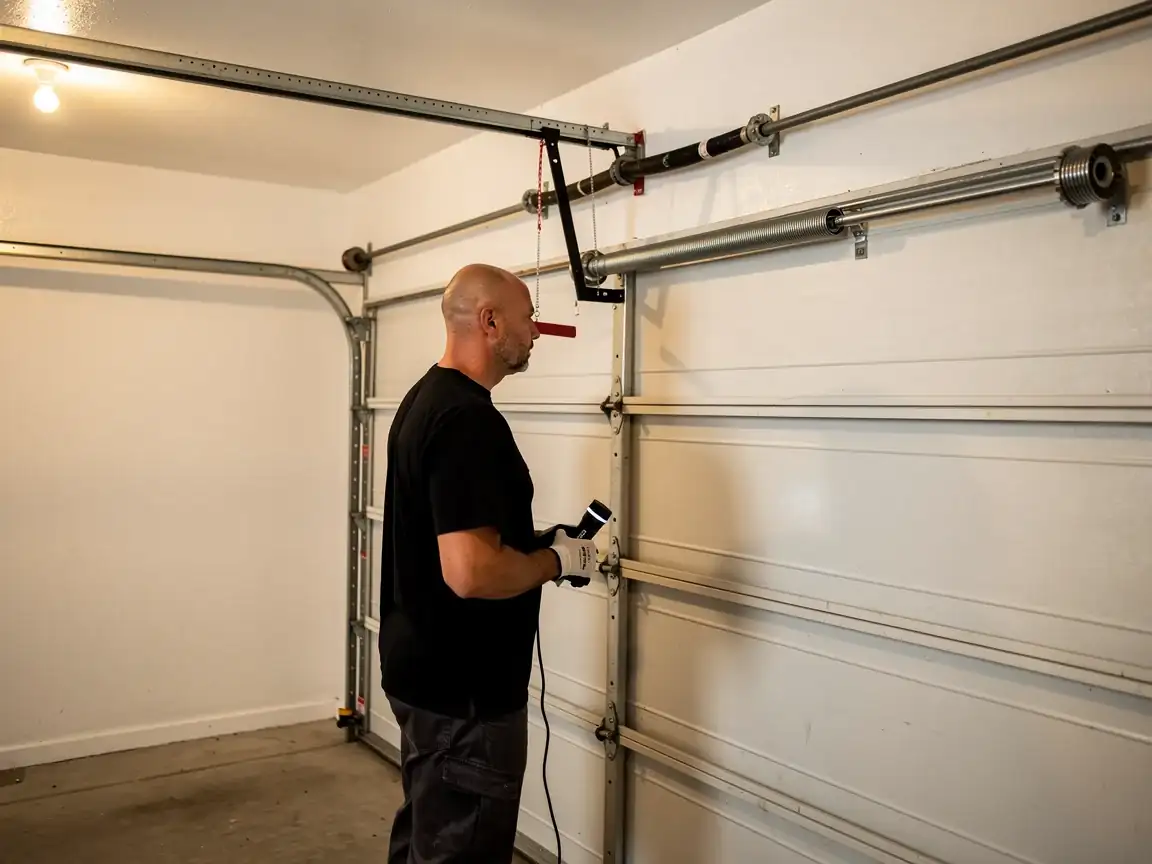
Which means a specific generation of door and opener hardware shows up again and again: lighter-gauge steel panels, chain-drive openers with worn gear sets, and torsion springs rated for a cycle count that ran out a decade ago. None of that is a defect - it's just age doing what age does to moving parts under tension.
The question isn't whether an old door has problems
It's whether the problems are in the door itself or in parts that can still be swapped out cheaply. A bent track or a dead spring is a repair. A warped panel or a frame that's pulled away from the house is usually the start of a replacement conversation.
What Changes With the Season
This area sits in a cold-moderate climate band, which doesn't mean brutal winters, but it does mean real swings - cold snaps that tighten steel and humid stretches that swell wood trim and wood-composite panels. A door that closes flush in July can bind in January because the frame shifted a few millimeters with the temperature drop.
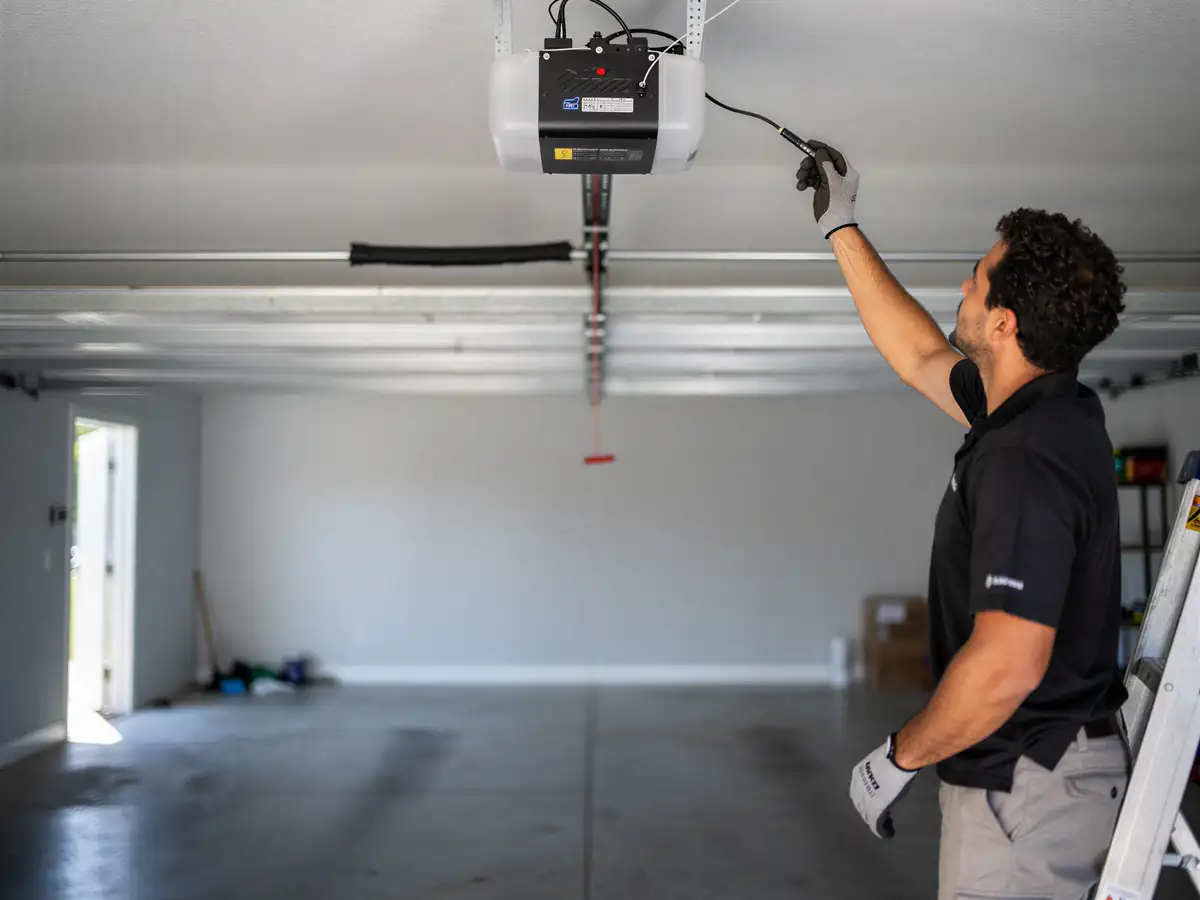
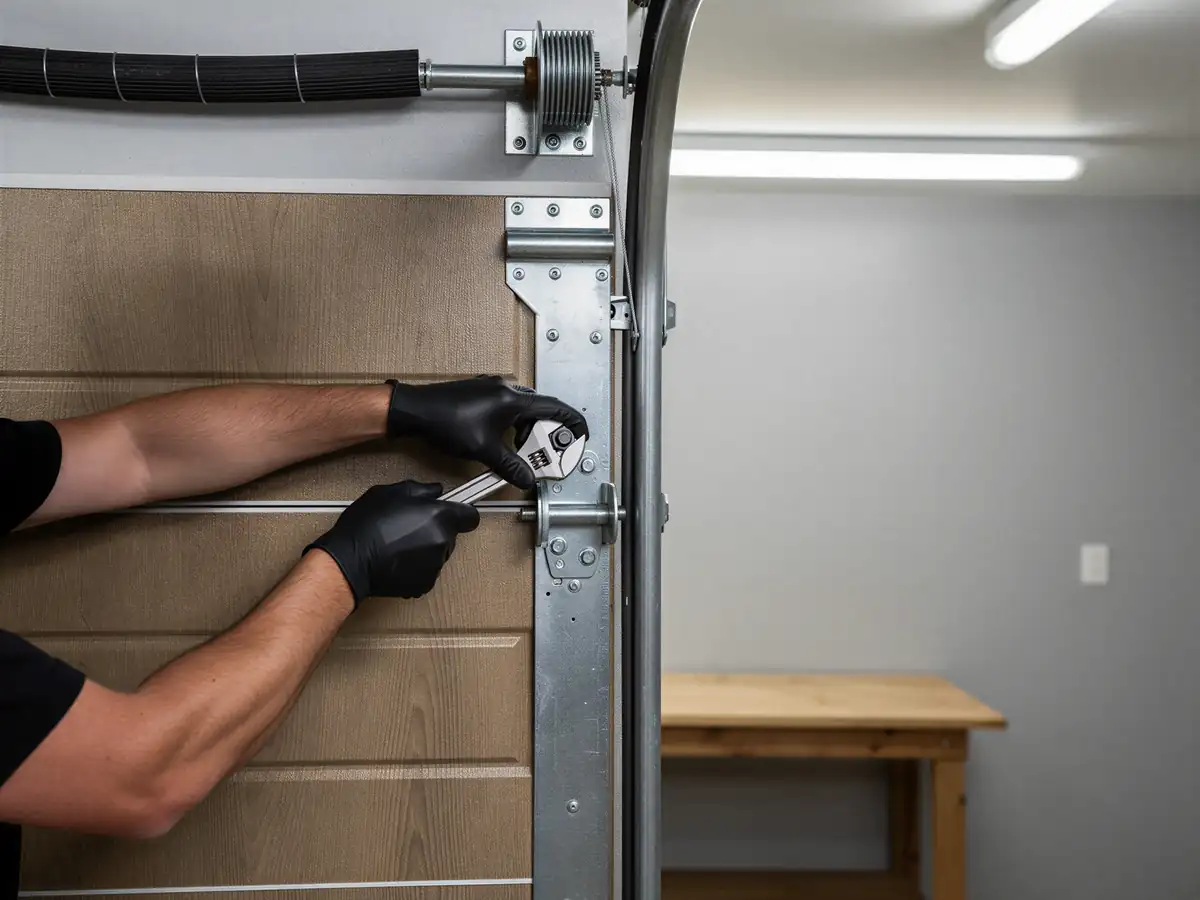
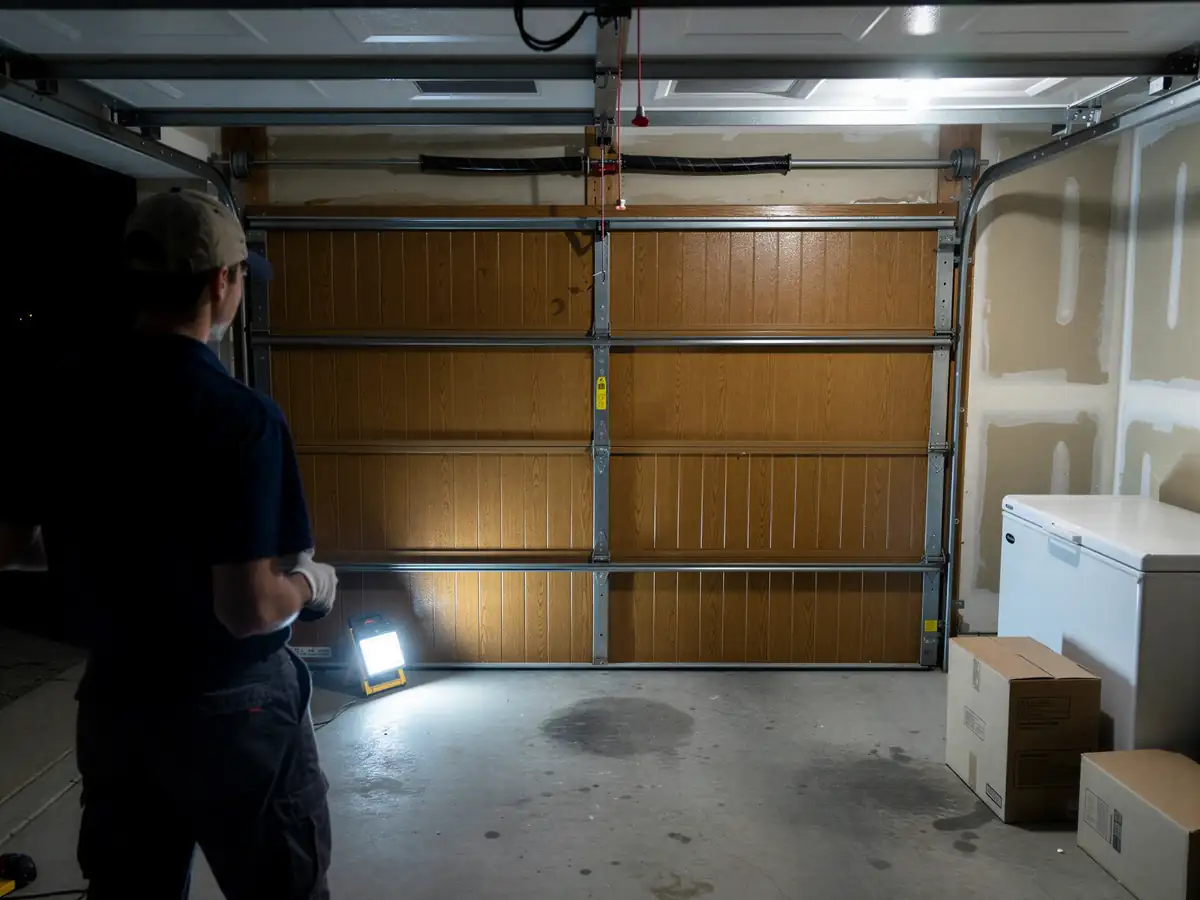
On an older door, that seasonal movement finds every weak point. A torsion spring that's lost some of its temper from age handles the extra load poorly in cold weather, which is why broken springs cluster in the colder months here. Openers with worn drive gears also strain harder when the door is slightly out of true from frame movement, and that's often when a motor that's limped along for years finally quits.
None of this is unique to one season - it's cumulative. A door built in the 80s or 90s has been through thirty-plus of these cycles, and each one took a small toll on the hardware. By the time a homeowner notices a problem, it's usually the hardware's way of telling you the cumulative wear has caught up, not that something sudden broke it.
What the Weather Here Does to It
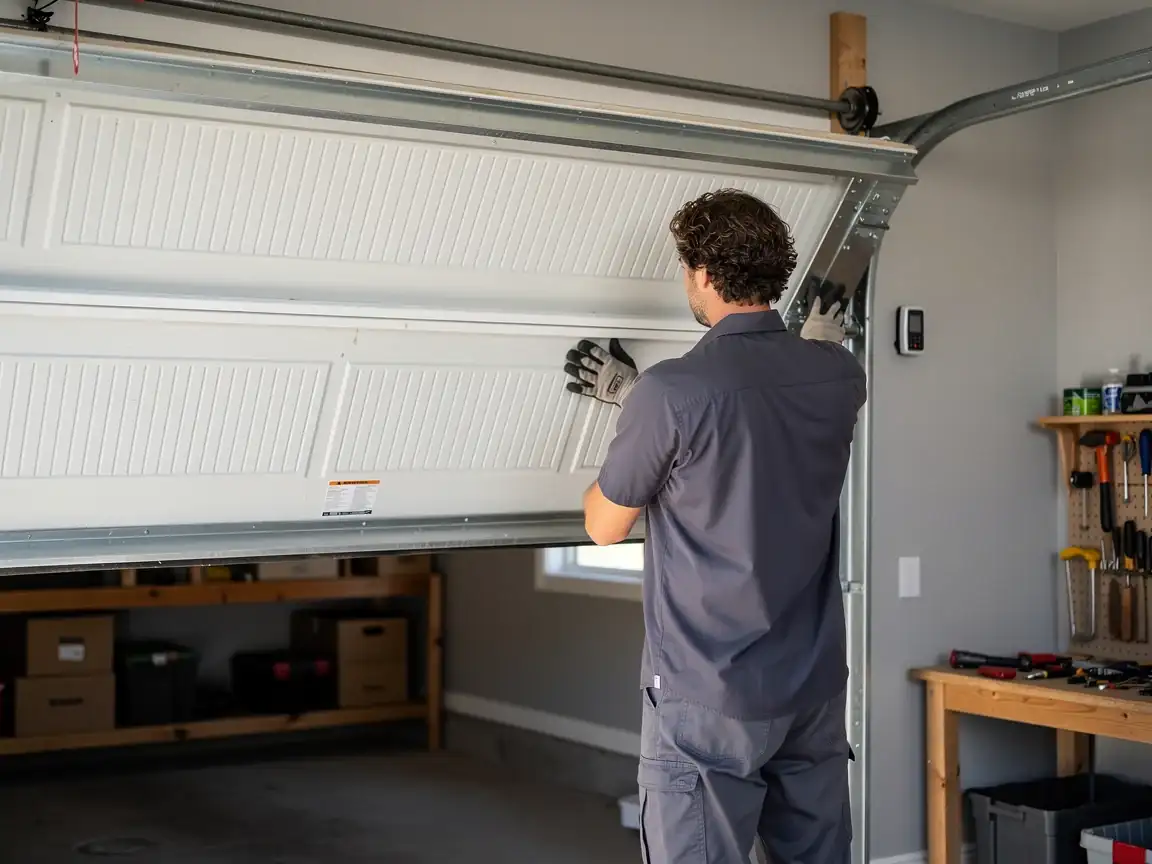
The cold-moderate climate here means steel contracts in winter and the door panel itself can pull slightly away from the weatherstrip at the bottom, which lets cold air in and puts uneven stress on the bottom bracket. On a newer door with modern seals, that's a minor annoyance. On a door from the original 1980s-90s housing stock, the bottom bracket and hinges have already absorbed decades of that same seasonal flex, and the metal fatigue shows up as a bracket that's slightly bent or a hinge pin that's worn oval instead of round.
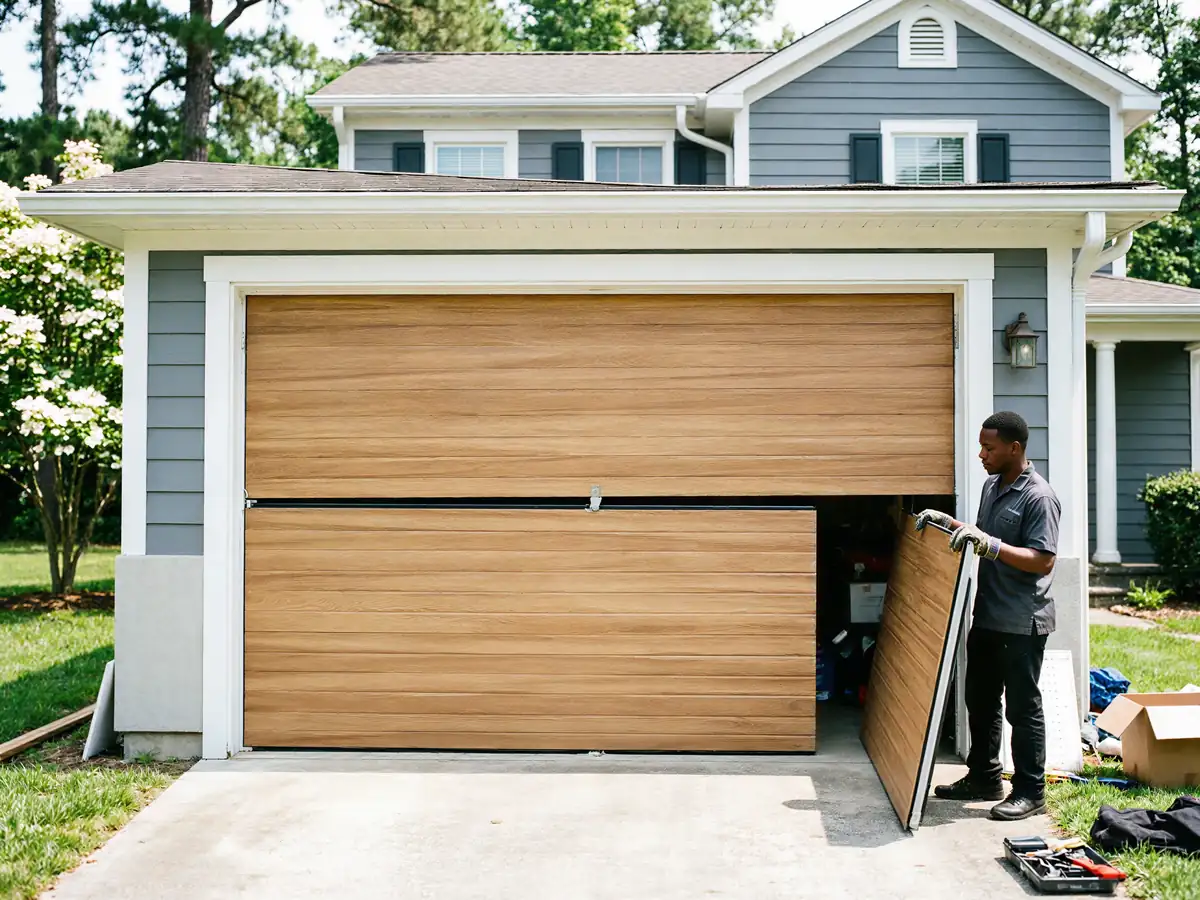
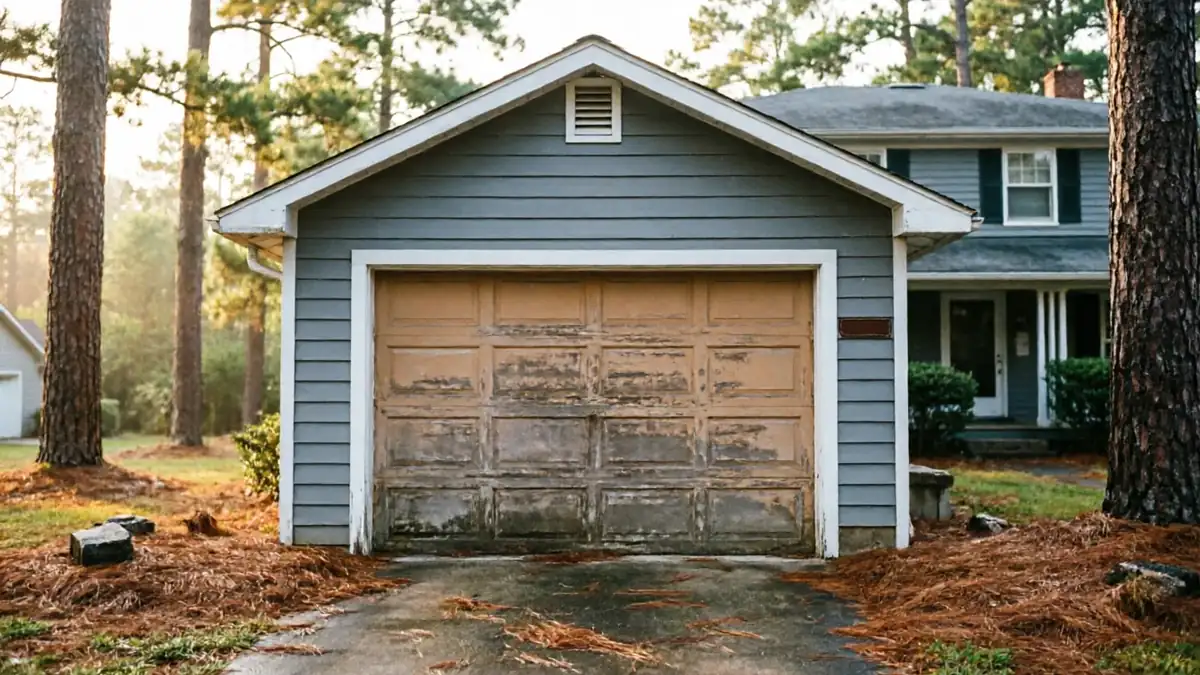
Humidity swings matter too. Wood-composite panels from that era don't handle moisture cycling as well as the steel and vinyl-clad doors made today, and swelling at the bottom panel is one of the most common reasons an old door starts dragging on the track in spring and fall.
We can't predict which exact week a thirty-year-old spring will let go, and we won't pretend to. What we can say is that the cold-moderate swings this region sees are hard on aging hardware in a way that's measurable in the age of the stock we work on every week, not hard on it in some dramatic once-a-decade event.
When to Get Help
If your door is from the original build
Meaning somewhere in that 1951 to 2007 range, with most of what we see landing in the 1980s or 90s - the first thing worth checking is whether the problem is the spring, the opener, or the door itself. A broken torsion spring on a door that's otherwise square and running on good track is almost always worth fixing. It's a contained repair with a known part.
What's not worth fixing, in our experience, is a door where the panels are warped from moisture cycling and the track has been bent and rebent enough times that it won't hold alignment
At that point you're paying for labor against a door that's going to need the same labor again in a year.
Here's the honest limitation
Some original hardware from this era is discontinued, and if a specific panel or a matched spring set isn't available, we'll tell you that rather than installing a mismatched part that'll fail early. With a median household income of $91,308 across this service area, replacement is often the more sensible call once an opener from the 80s is on its second or third motor - not because the repair is impossible, but because the math stops making sense.
- $91,308 median household income