When a Spring Goes in Cold Weather Here in Alpharetta
Alpharetta's housing stock dates mostly from the 1980s and 90s, and cold snaps hit those original springs hard. Here's what to watch for and when to call.
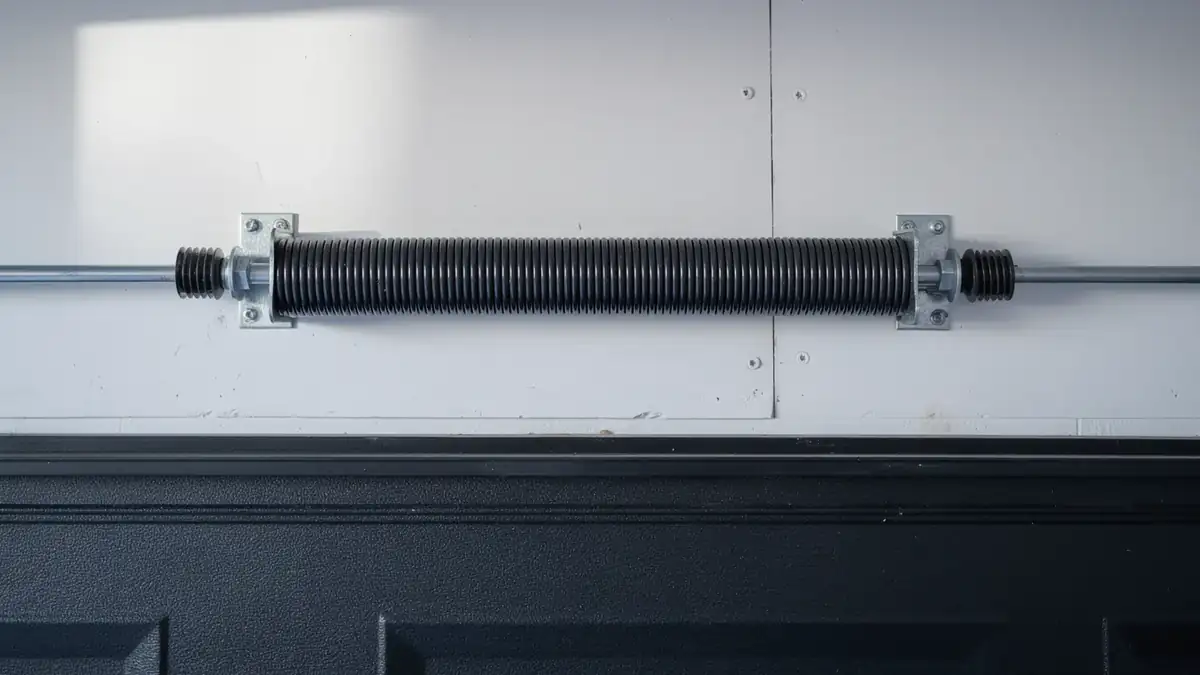
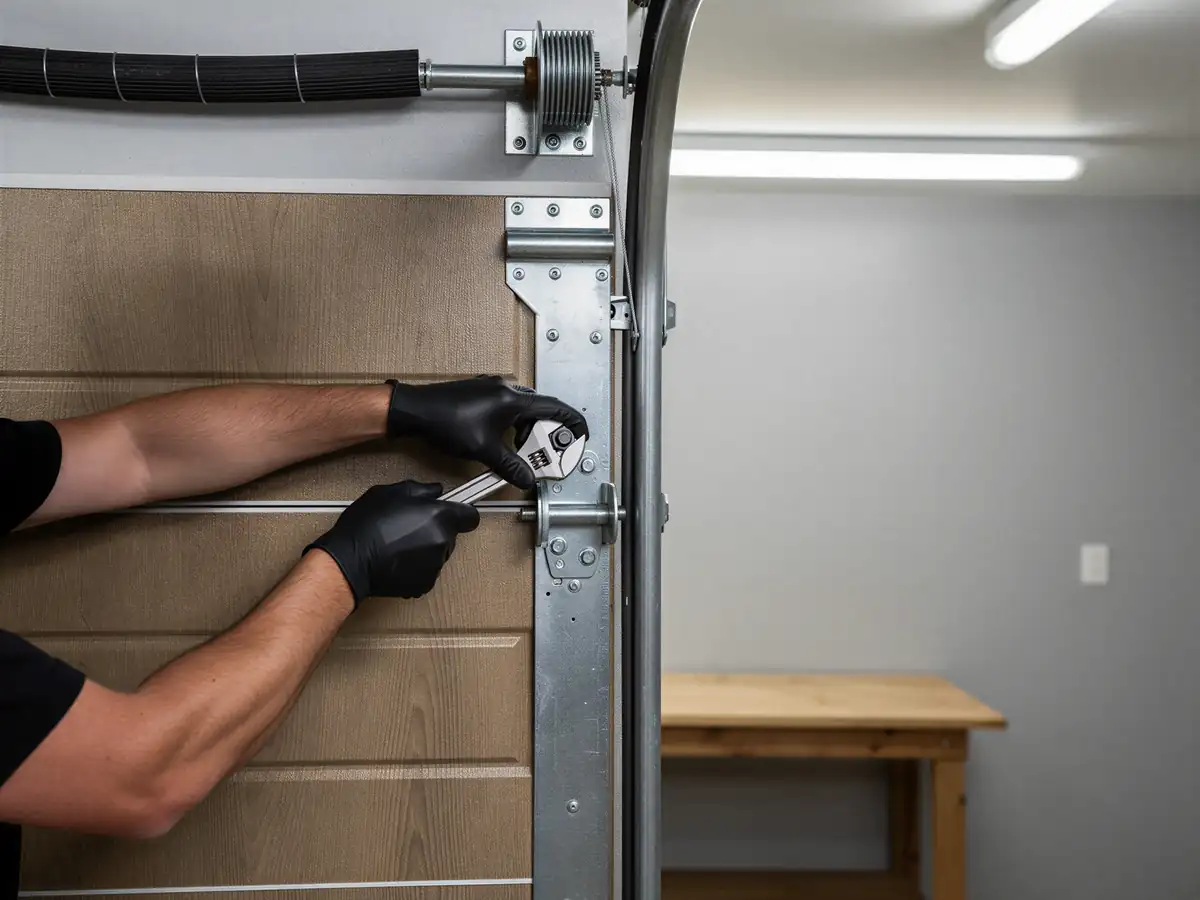
A torsion spring doesn't like a sudden temperature drop. Steel contracts in the cold, and a spring that's already fatigued from years of cycling can lose its last bit of flex right when the thermometer falls. In Alpharetta, where most houses went up between 1951 and 2007 with a median build year around 1984, a lot of the springs still on these doors are original or close to it. That's thirty-plus years of coil cycling on hardware that was never meant to last forever, and cold is usually the thing that finishes the job. You'll hear it before you see it most of the time: a loud bang from the garage, then a door that won't budge or that slams down instead of lowering slow. That bang is the spring letting go, not the door itself failing. The door panels, tracks, and opener are usually fine. It's the spring that did the work of holding up 150+ pounds of door every day, and it just ran out.
What Changes With the Season
Alpharetta sits in a cold-moderate climate band, not the deep freeze of the upper Midwest, but enough of a swing between summer humidity and winter cold snaps to stress metal twice a year. Spring steel contracts when temperatures drop, which raises tension on a coil that's already wound tight. That added tension is exactly what pushes a weak spring past its limit. You'll also notice openers working harder in cold months. Motors that handle a door fine in July can strain in a January cold snap because the spring isn't carrying its share of the weight anymore. If your opener sounds like it's laboring, or the door drops the last foot instead of lowering evenly, that's often the spring showing age before it actually breaks.
What the Weather Here Does to It
Because so much of the housing in this part of the metro dates to the 1980s and 90s, a good share of garages here still run springs that have seen three decades of Georgia winters. Cold doesn't damage a spring on its own, but it accelerates whatever fatigue is already there from thousands of open-close cycles. A spring rated for around 10,000 cycles doesn't care what season it is on cycle 9,999, but a cold snap is often the trigger that pushes it over. We don't see the extreme freeze-thaw cycling that cracks concrete further north, but a cold-moderate climate still means enough temperature swing to matter for metal that's already near the end of its life.
When to Get Help
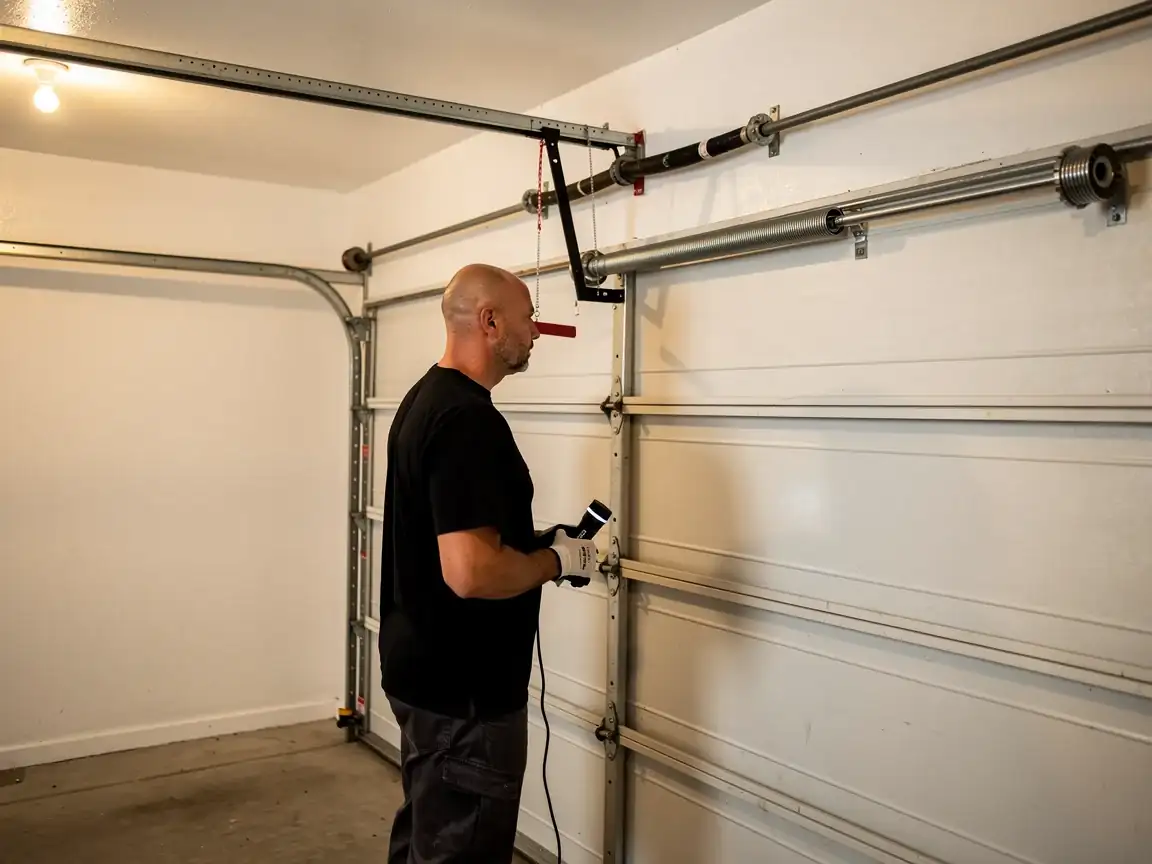
If you hear a bang and the door won't move, stop trying to open it manually or with the remote. A broken torsion spring means the door has no counterbalance, and the opener will strain or the door can drop hard. Call before you pull the release cord. If the door is just slow, noisy, or uneven on a cold morning, that's worth a look before it breaks outright rather than after. One honest limit: we can't tell you over the phone whether a spring is about to go or has years left in it. Age and cycle count matter more than how it sounds on any given day, and the only real way to know is to have someone look at the coil and the hardware in person.
How it works
From “it’s stuck” to “it’s fixed”
01
Tell us what’s wrong
Describe the symptom - won’t open, loud bang, opener runs but the door won’t move.
02
On-site diagnosis
A technician tests the door under power and by hand and finds what actually failed.
03
Clear, up-front plan
You get the fix that’s needed and what drives the cost - before any work starts.
04
Repaired & tested
The repair is done, the door is set true and tested, and the work area left clean.
Next step
Not sure which repair your door needs in Alpharetta, GA? Describe what it’s doing - every job starts with a diagnosis.
Does cold weather actually break garage door springs, or is that a myth?
Cold itself rarely snaps a healthy spring. What happens is that steel contracts and gets slightly stiffer in low temperatures, which adds stress to a spring that's already fatigued from years of cycling. In Alpharetta, where a lot of springs date back to houses built in the 1980s and 90s, that added stress is often enough to finish off a coil that was already near the end of its life.
My door is from a house built in the 80s. Should I replace the spring before it breaks?
If your spring hasn't been replaced since the house was built, it's well past the cycle count most torsion springs are rated for. We'd rather look at it and tell you honestly whether it's close to failing than have you find out on a cold morning when the door won't open and the car's stuck inside.
Why does my opener strain more in winter?
A torsion spring carries most of the door's weight, and a weakening spring shifts more of that load onto the opener motor. Cold makes the spring stiffer and less effective at the same time, so the motor works harder to do what the spring used to handle on its own.
Ready to get your garage door sorted?
Tell us what it’s doing and where you are in Alpharetta - we’ll take it from there.