What Causes It Around Here
Most of the houses we get called to went up somewhere between 1951 and 2007
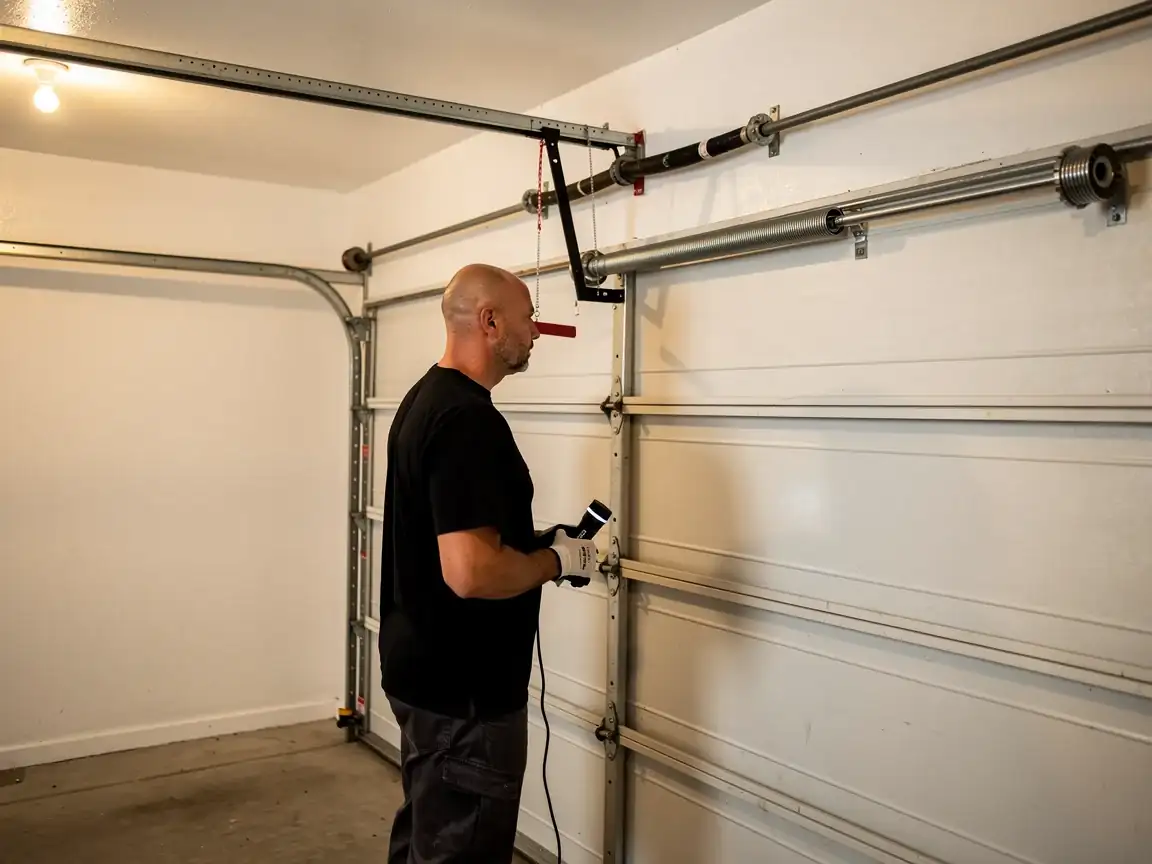
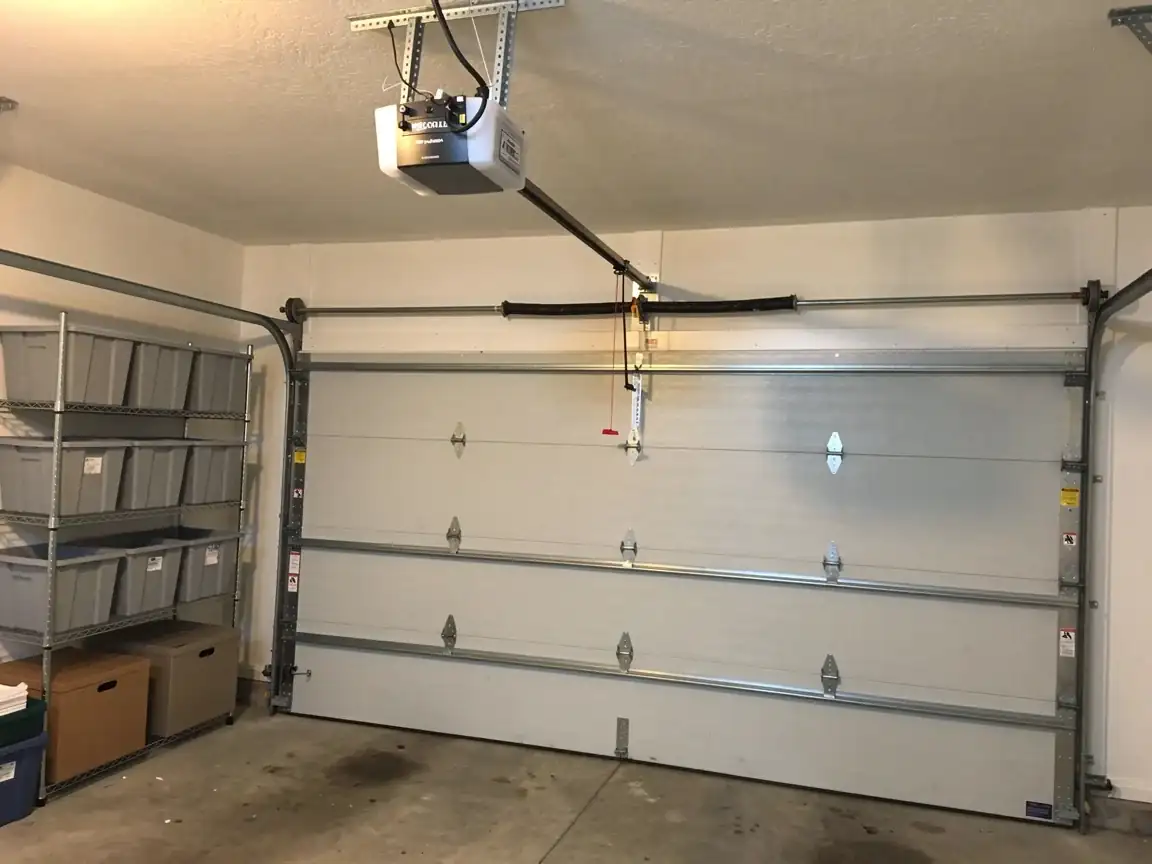
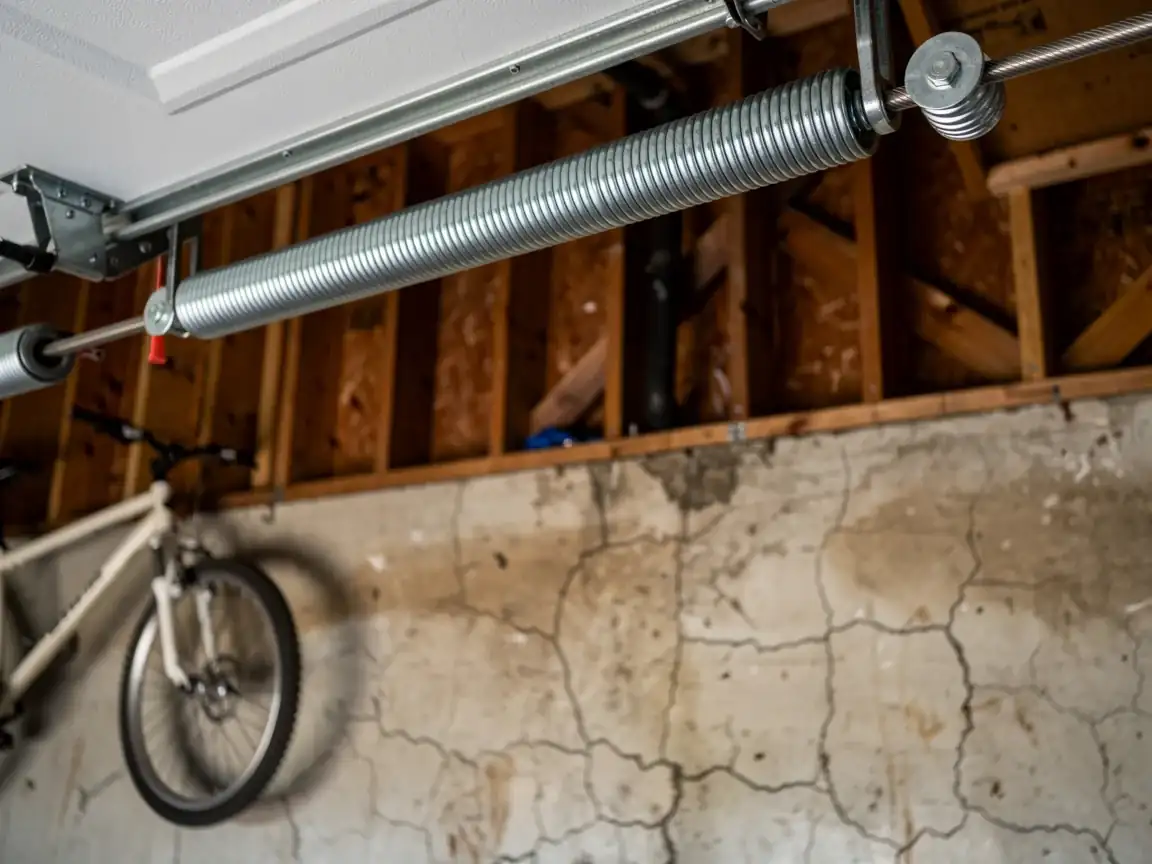
With the bulk of that stock dating to the 1980s and 90s across the area's 19 named neighborhoods. That matters because a torsion spring installed when a house was built in, say, 1987 is now well past the cycle count it was rated for. Steel fatigues whether anyone notices or not, and a door that still looks fine on the outside can be carrying a spring that's a season away from snapping.
The climate here doesn't help
Alpharetta sits in a cold-moderate band, which means winter mornings cold enough to stiffen the grease in an old spring coil and summer humidity swings that work on wood jambs and steel track alike. That freeze-thaw-style cycling is hard on fasteners and hinges that were torque-set thirty-some years ago and never touched again. We see openers from that same build era straining against springs that have lost tension, which is a slower, quieter failure than a snapped cable but just as real.
Newer builds in the mix, closer to 2007, usually have different hardware entirely
Lighter doors, different spring sizing - so the fix looks different house to house even on the same street.
Parts We Carry
Because so much of the local housing dates to the 1980s and 90s, we carry torsion springs and extension springs sized for the door weights and track configurations that were standard in that build window, not just whatever's newest on a shelf. That includes rollers, end bearings, and cable sized for the heavier wood and early-steel panel doors common in houses from that era, alongside the lighter rollers and belt-drive parts that fit the newer end of the 1951-2007 range.
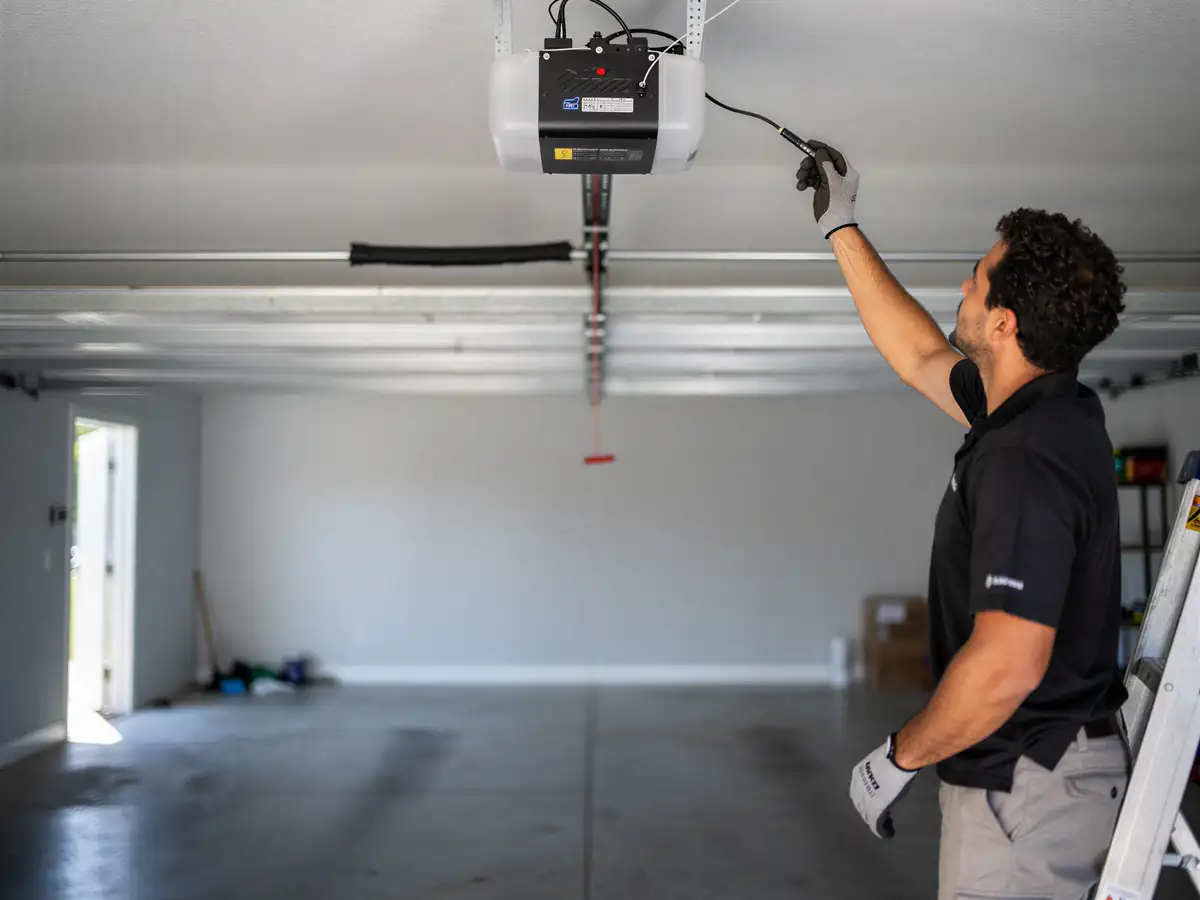
We also stock general opener parts - drive gears, logic boards for common platforms, safety sensor pairs - since an opener failure often shows up at the same time as a spring issue on a door that's been running mismatched tension for a while.
Here's the honest limit: if your door or opener predates that main building window, or it's an unusual import, the exact part sometimes has to be special-ordered, and that can add a few days to the job. We'll tell you up front if that's the case instead of guessing and making you wait twice.
What You Pay
We don't post a flat number here because what you pay depends on what's actually wrong - a single broken torsion spring on a door built to 1980s-90s spec is a different job than replacing two springs plus worn cable on a heavier older door, and it's different again if the opener logic board has to go too. What we can tell you is that pricing is set against a service area where median household income runs around $91,308, and we quote the job in front of you before any work starts, not after.
If a part needs special ordering because the hardware is outside the common 1951-2007 range, that adds to both the wait and sometimes the cost, and we say so before you commit. We'd rather lose a few minutes explaining that than surprise you on the invoice.
The Symptom
The pattern we see most in this area starts small
A door that groans or hesitates on the way up, especially on a cold morning, then starts reversing on its own partway through the cycle. That's usually a spring that's lost tension working against an opener that's trying to compensate - common in houses from the 1980s-90s stock where the original spring has never been swapped. Left alone, it ends one of two ways: the spring snaps outright, usually with a loud bang and a door that won't move at all, or the opener motor burns out trying to lift a door it was never sized to lift alone.
A grinding or popping sound near the top of the track, rather than at the spring itself, points somewhere else
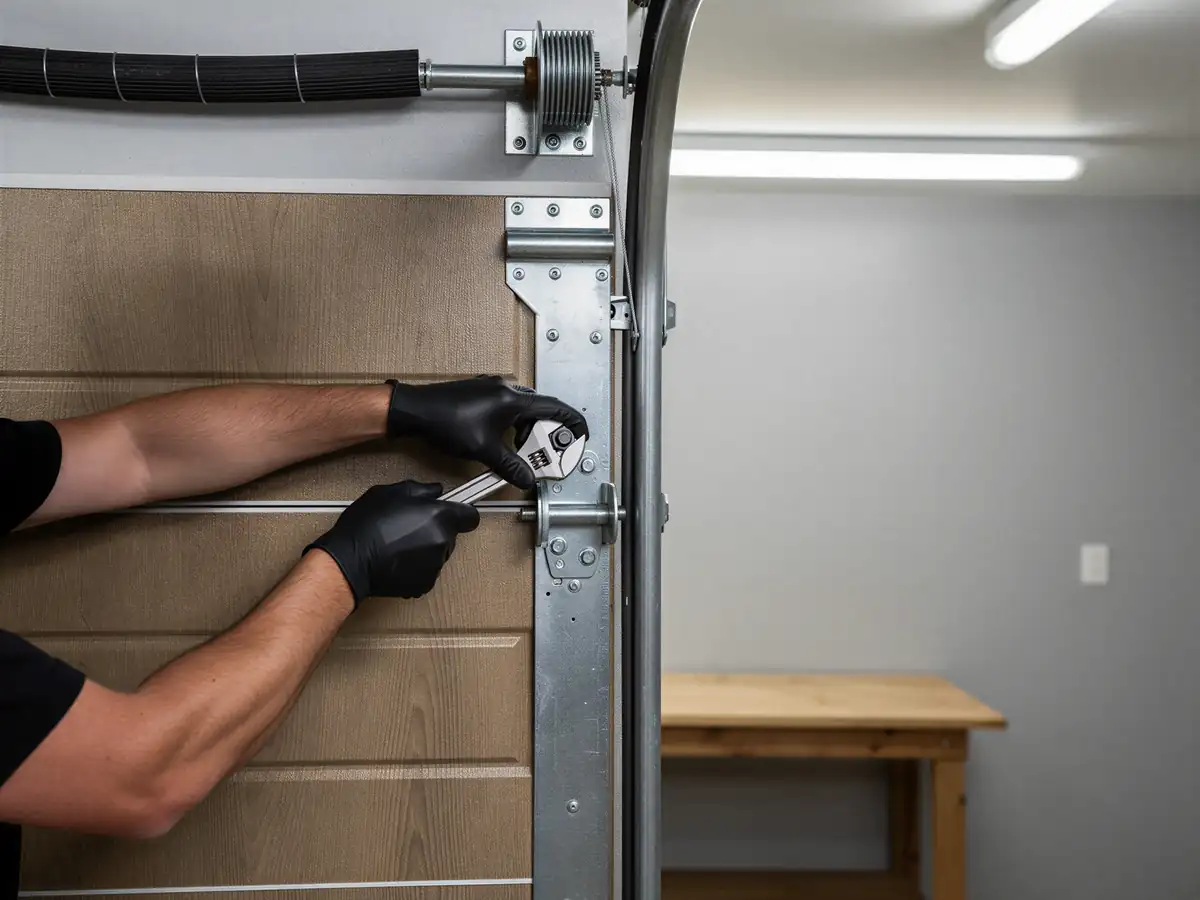
Usually a bearing plate or roller that's worn from three decades of cycling. We look at both before quoting, because treating the spring without checking the hardware around it just means a second call later.