Getting It Booked In
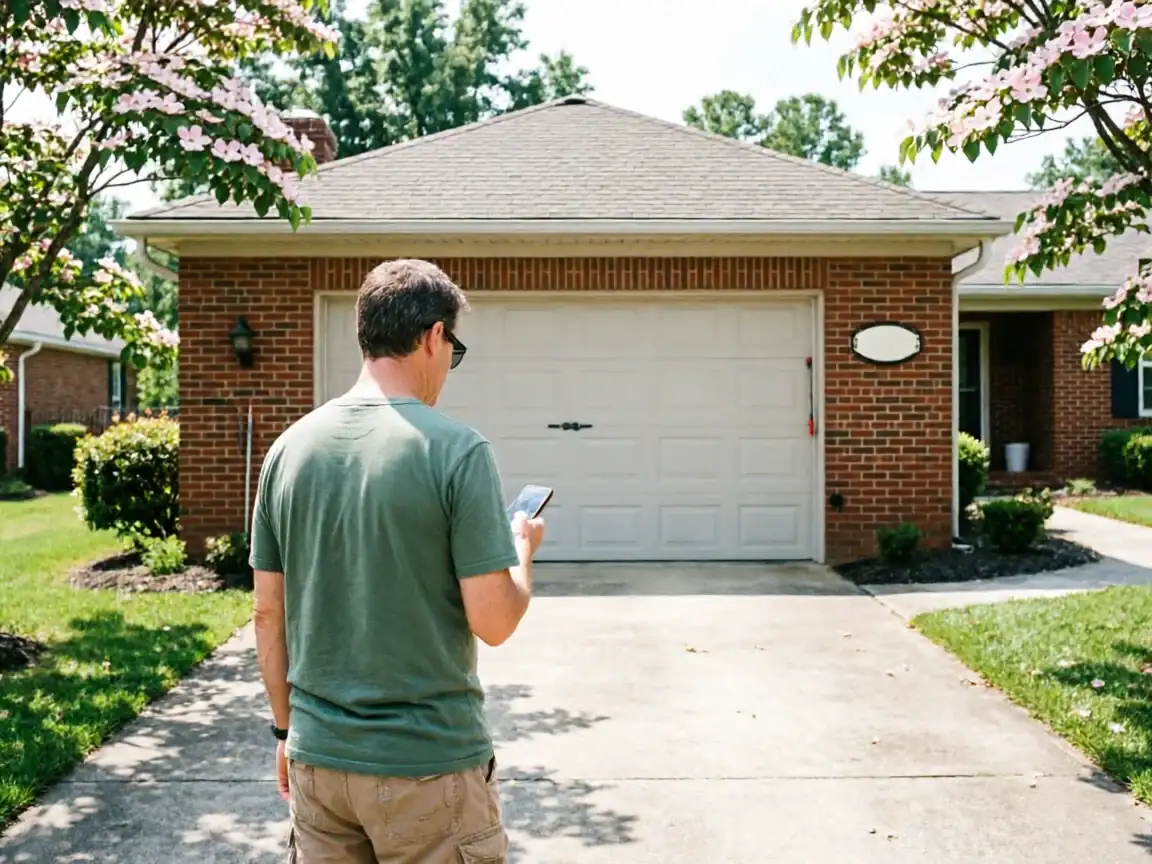
When you call about a door that won't open, we need two things fast
What the door is doing (stuck shut, stuck open, hanging crooked, won't respond to the opener) and what kind of spring setup it has. Chamblee is about 13 miles from our Alpharetta base, so we ask these questions up front to load the right parts on the truck before we leave, not after we've already diagnosed it standing in your driveway.
- 13 miles
Most of what we see called in as "emergency" from this area falls into two buckets
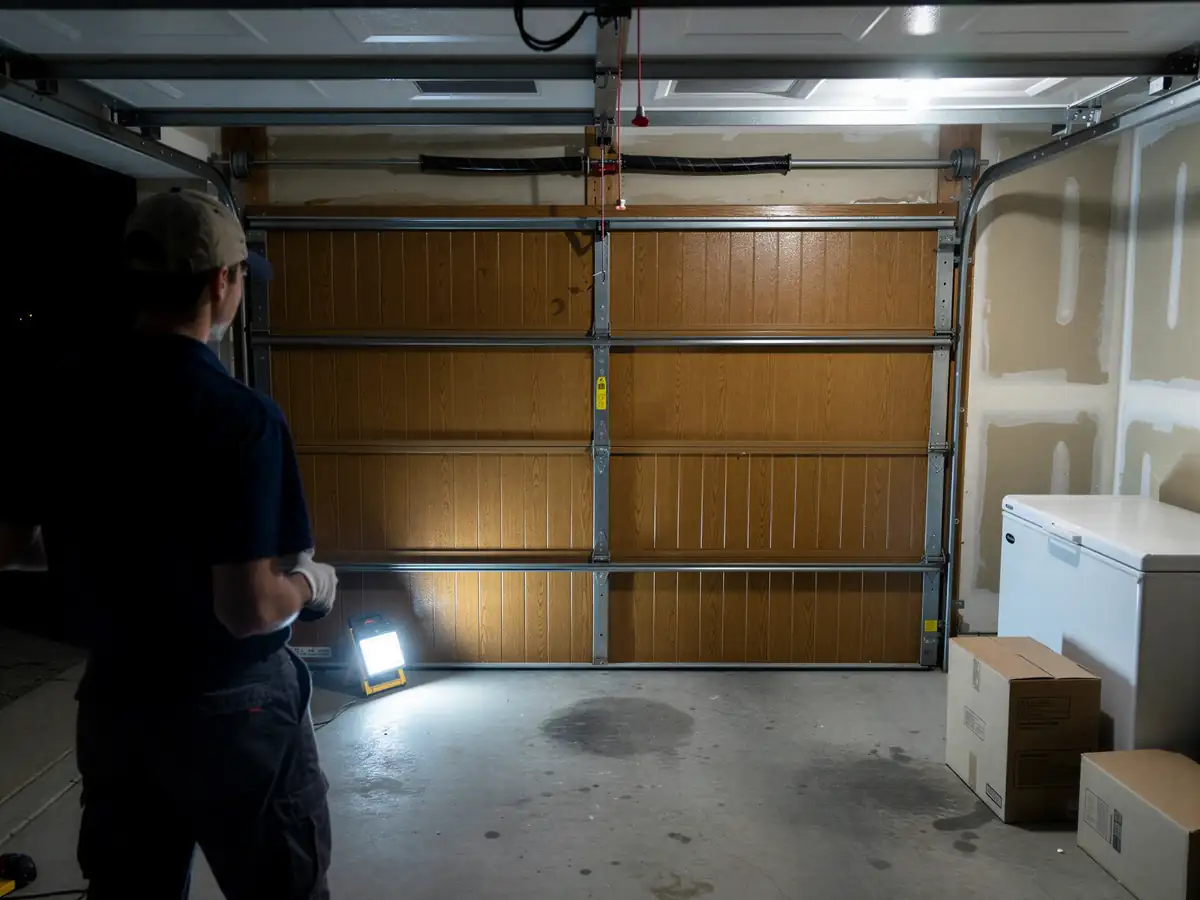
A torsion spring that's let go with a bang, or a cable that's frayed through and dropped one side of the door. Both of those are genuine emergencies - a door that's off its track or hanging on one cable is a safety problem, not a convenience one, and we treat it that way on the phone.
We don't keep a branch in Chamblee
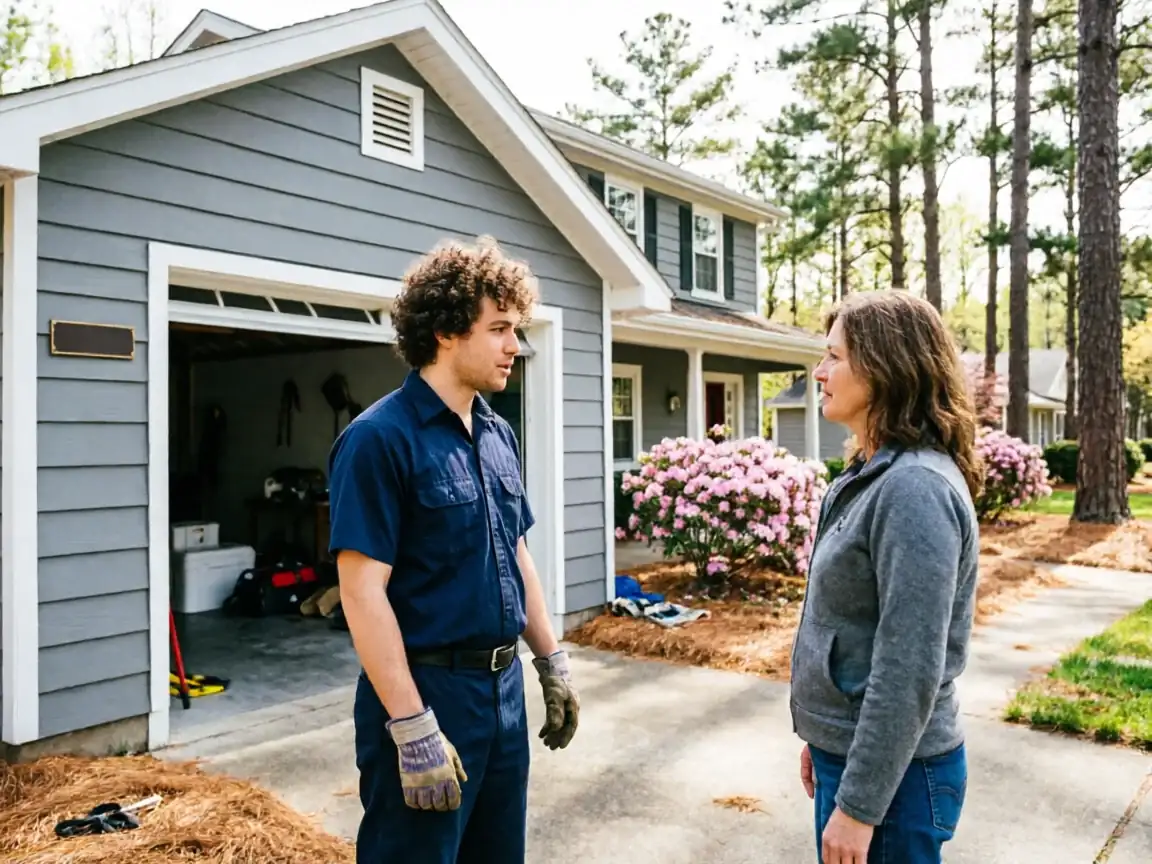
We cover it from Alpharetta, which means the call travels before the truck does. Tell us the symptom plainly and we'll tell you honestly whether it can wait until morning or needs to move now.
Can You Do This Yourself
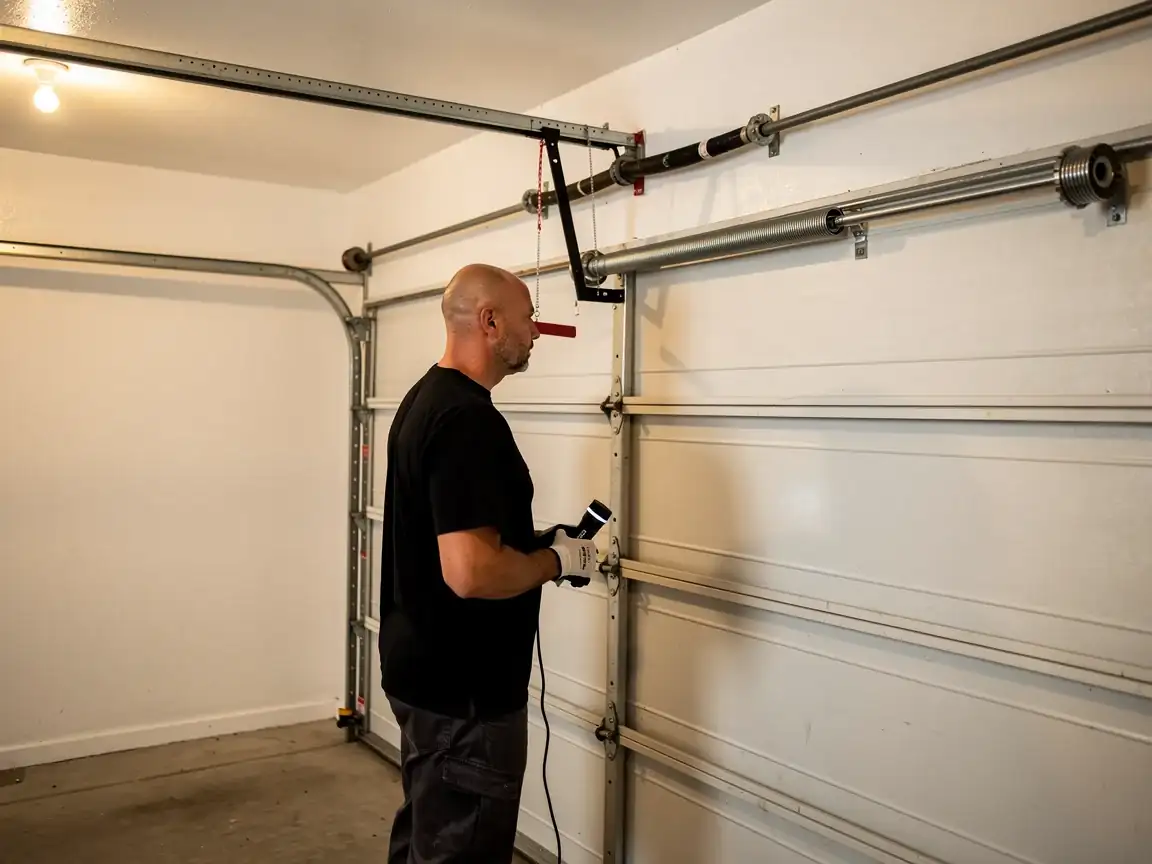
A broken torsion spring is not a DIY repair. The spring is wound under enough tension to break a wrist or worse if it's released wrong, and that's true whether the door is five years old or forty. Don't cut it, don't unwind it, don't try to force the door open past it. That's the one flat limitation on this page - we'd rather lose the job to someone being patient than have you lose a finger being fast.
What you can safely check yourself: whether the opener has power, whether the safety sensors at the bottom of the track are aligned (a blinking light on the opener usually means they're not), and whether anything is visibly jammed in the track. If the door is just sitting there silent and the lights aren't blinking, it might be a dead circuit board or a tripped breaker, not a spring at all - and that's a call you can make before spending money on an emergency visit.
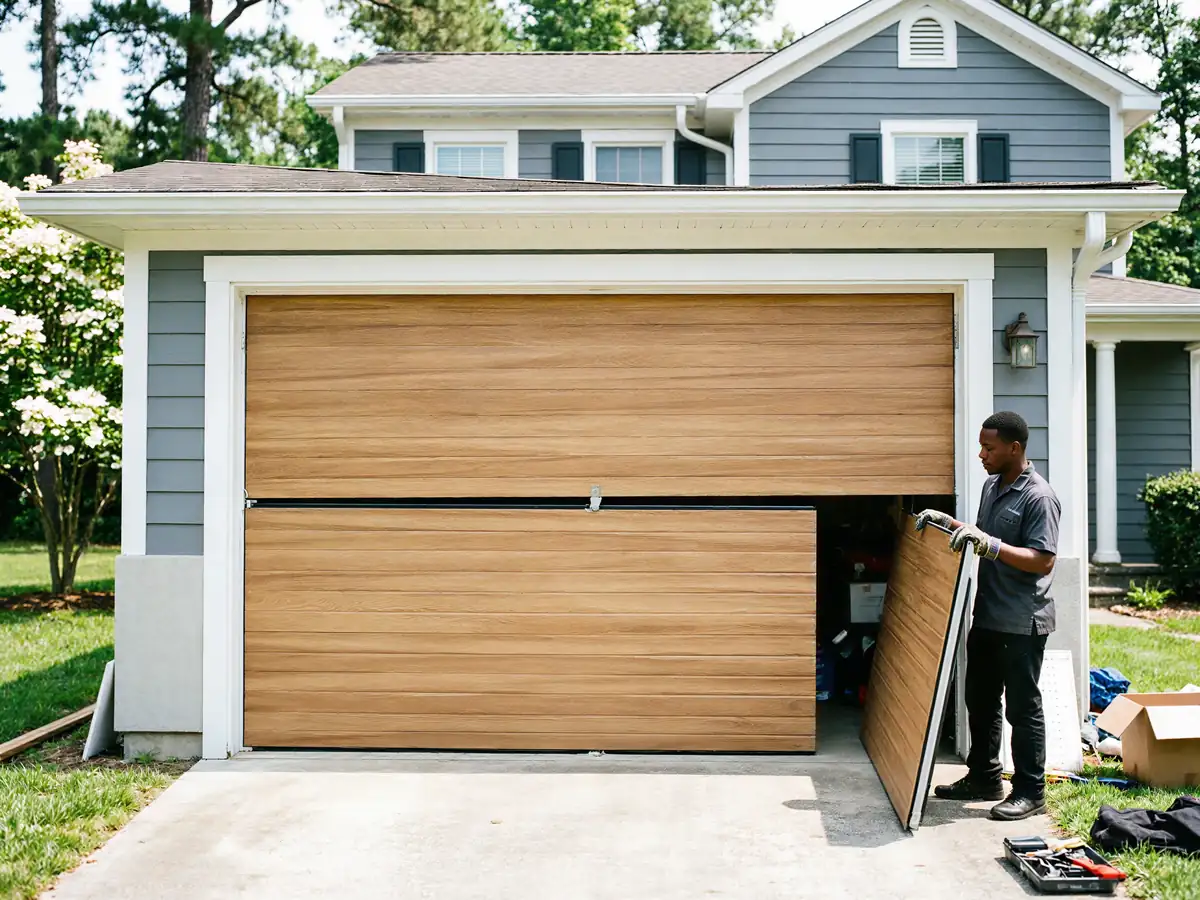
If the door is physically stuck - crooked in the track, hanging on one side, or a cable visibly snapped - stop touching it and get it off the opener switch. Leave it for us.
How We Fix It
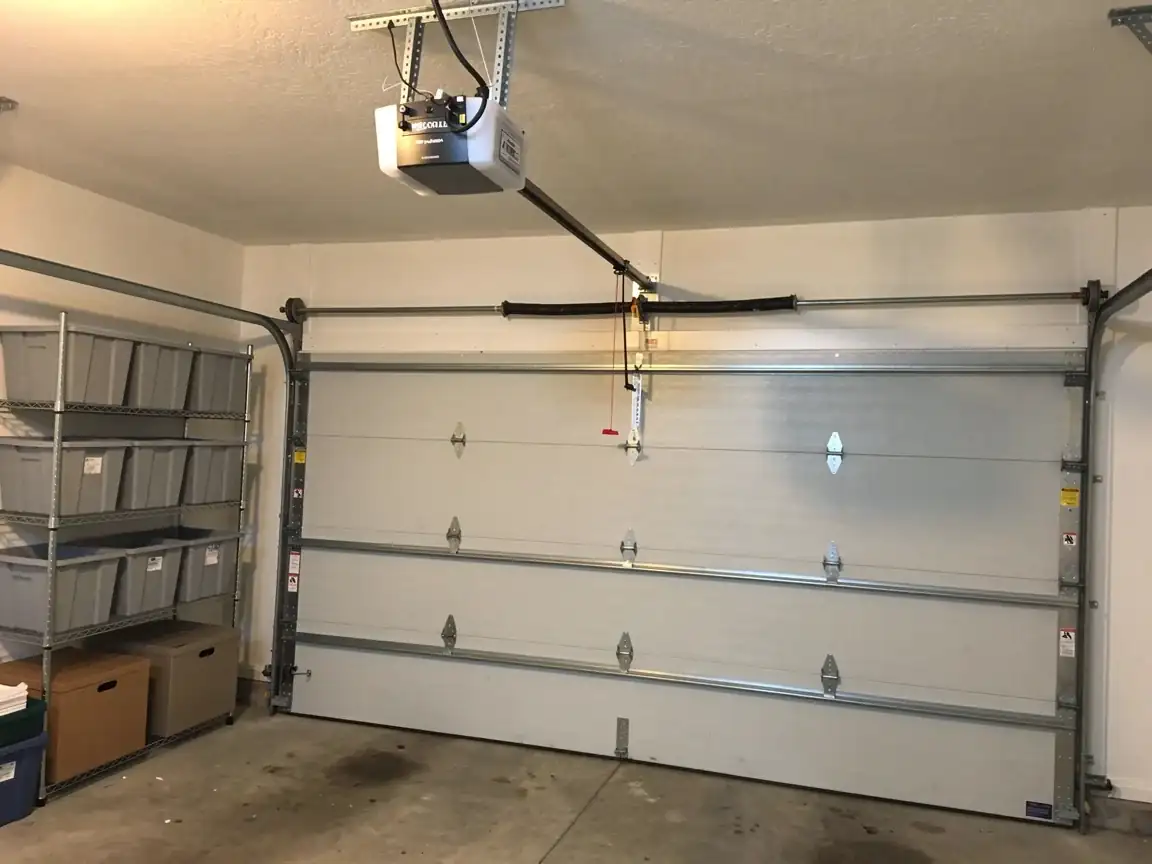
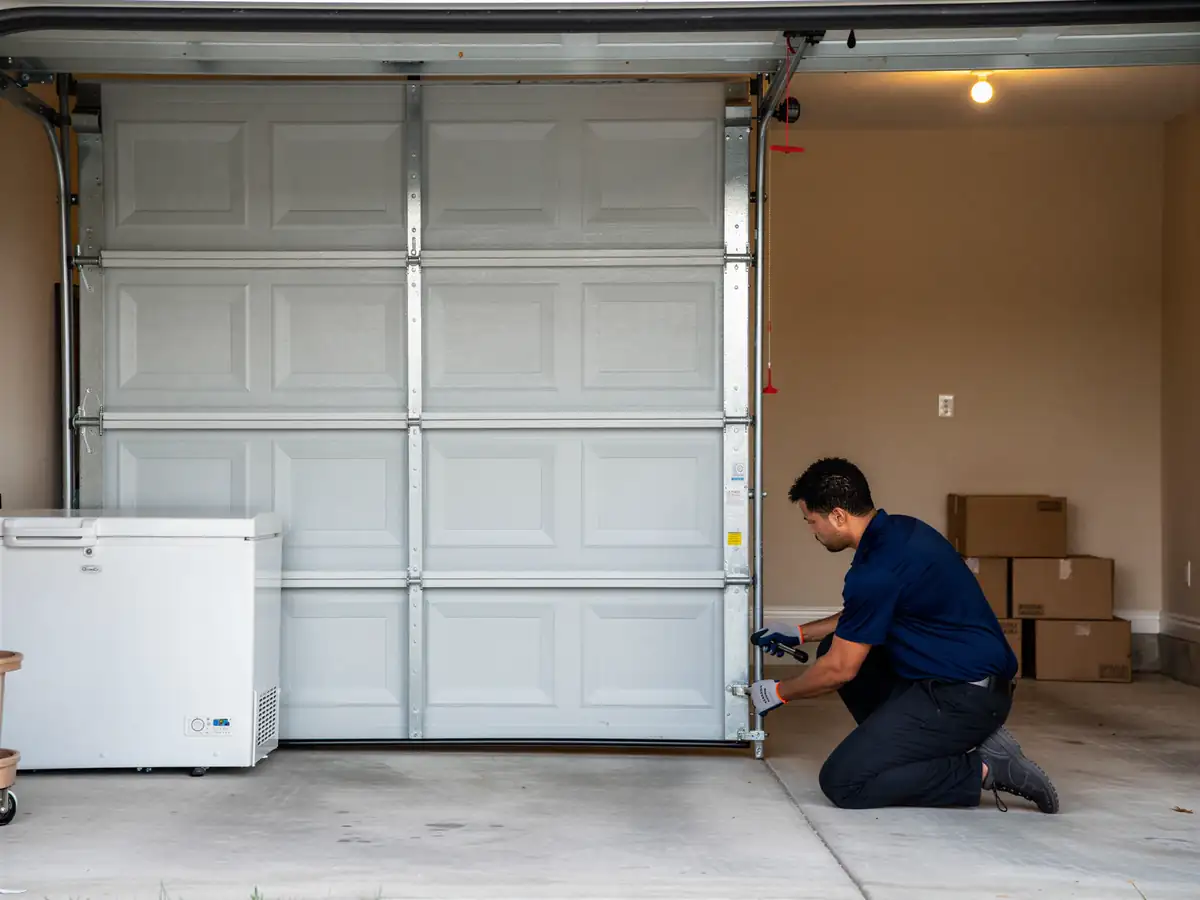
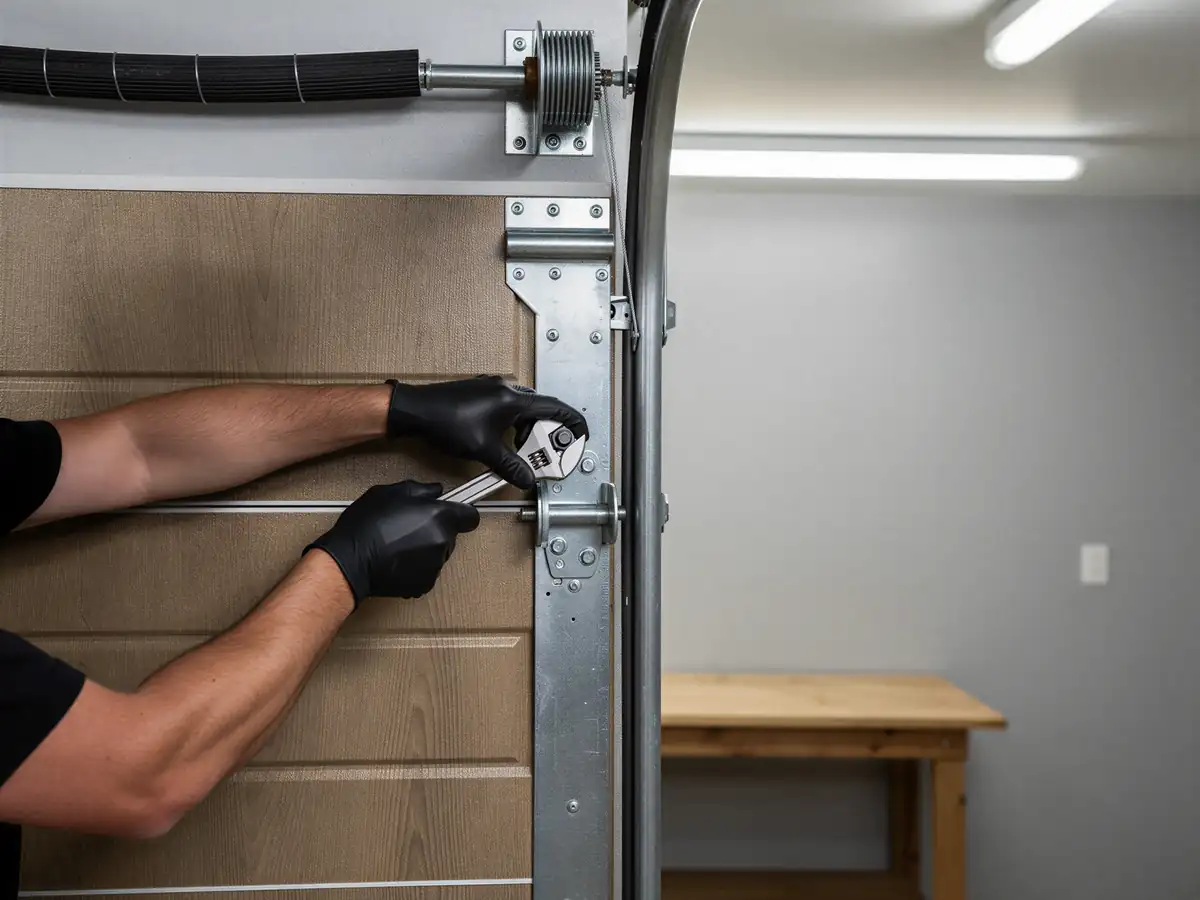
On a broken spring, we measure the door and cycle count before we touch the old spring, because torsion springs are sized to the door's weight and a mismatch means the opener burns out trying to compensate. We replace in pairs on most double doors even if only one side failed, since the second one is usually close behind it on the same wear clock.
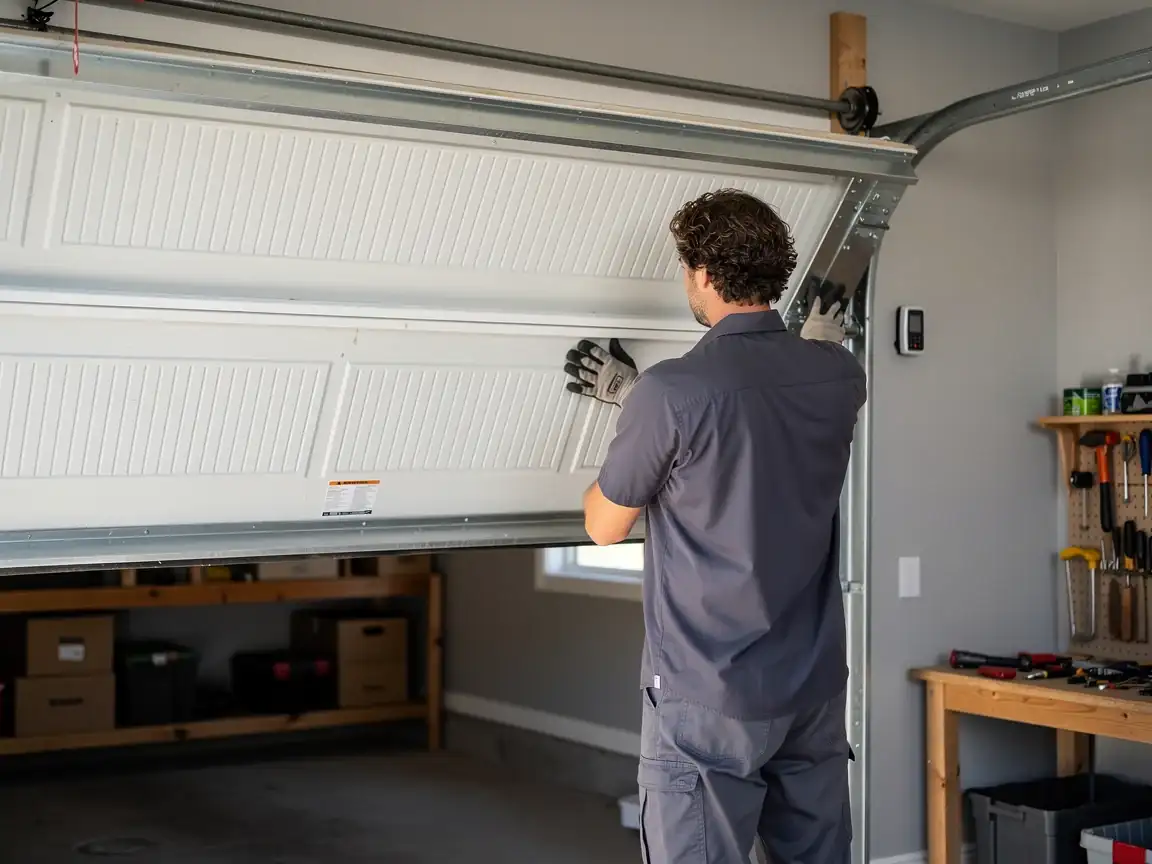
On a cable failure, we check the drum and track alignment at the same time - a cable that frayed through often did so because a roller was already binding, and replacing the cable without fixing the roller just buys you a few more months before the next emergency call.
We test the door through a full open-close cycle under load before we call the job done, not just once with the door empty. If the opener's force settings were fighting the old spring, we reset those too. We carry common spring sizes and standard-lift cable on the truck; anything unusual - oversized doors or older low-headroom hardware - sometimes means a return trip once the part's in.
What Causes It Around Here
The houses on this side of the Alpharetta coverage area, Chamblee included, are mostly 1980s-90s builds
And Chamblee's own median build year sits right at 1981. That matters because original hardware on a door that age is now past its rated cycle count - torsion springs are usually good for somewhere around 10,000 cycles, and a door opened twice a day since 1981 has used that up a long time ago, often more than once if it's already had a spring replaced.
The region sits in a moderate cold climate band
Which isn't the extreme cold or extreme humidity that chews through seals in a year or two, but it's enough seasonal swing - cold mornings, humid summers - to make steel fatigue and lubricant breakdown the steady background cause rather than any one storm. We don't see a lot of weather-event damage here. We see slow wear that finally lets go on an ordinary Tuesday.
Across the wider service area the housing stock runs from 1951 to 2007 with a median around 1984
So Chamblee's 1981 figure puts it slightly on the older side of that spread - which is part of why original torsion hardware, not newer extension-spring kits, is still what we find on a lot of these doors.
Parts We Carry
We stock standard torsion springs in the common residential sizes, galvanized lift cable, nylon and steel rollers, and standard track sections on the truck for same-visit repairs. For a door built to 1980s spec, that covers the large majority of what breaks - the springs, the cables, and the rollers are the three parts that fail most on hardware this age.
What we don't carry as standard stock: oversized commercial-grade springs, discontinued panel sections for doors no longer manufactured, and specialty low-headroom torsion hardware. If your door needs one of those, we'll tell you on the first visit rather than let you assume it's a quick fix, and we'll order the part before coming back out.
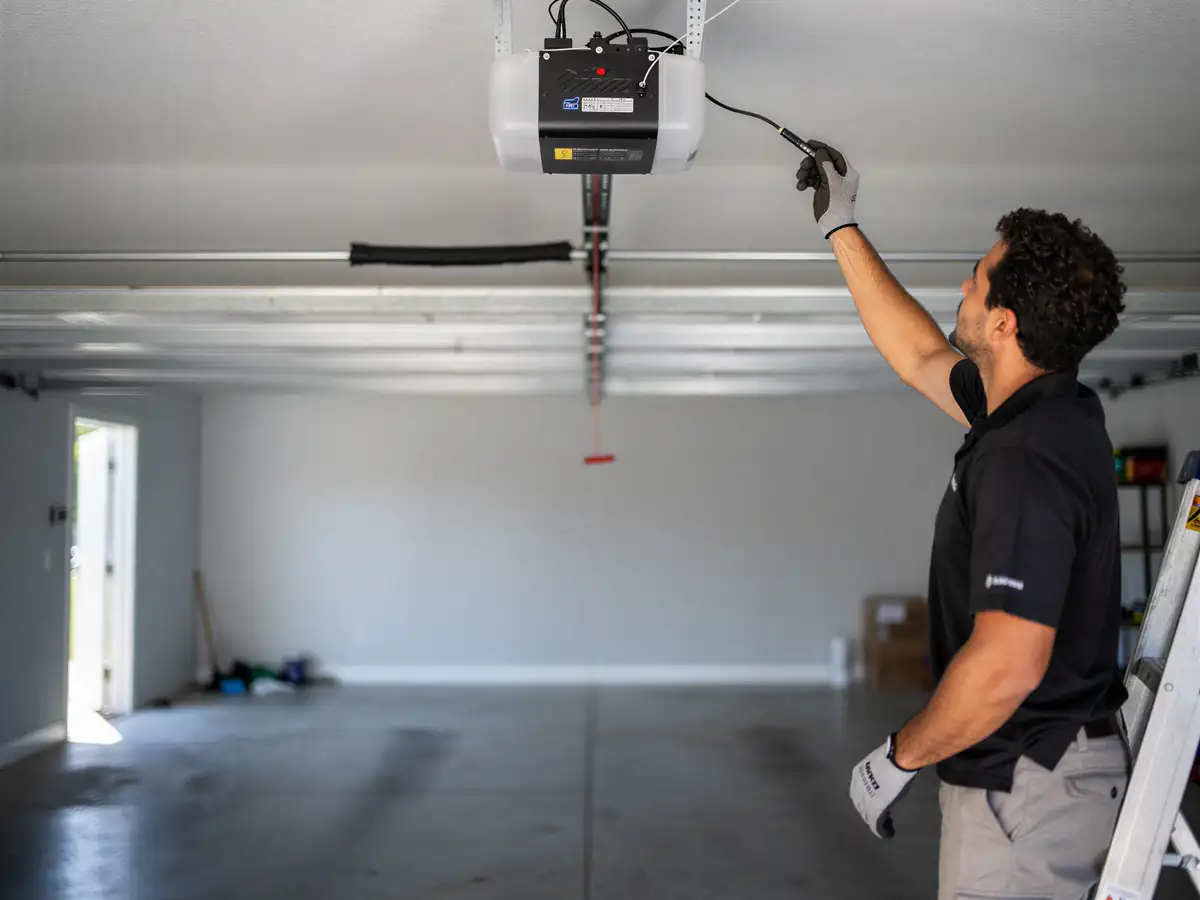
We also carry basic opener logic boards and safety sensor kits for the common residential brands, since a dead board gets mistaken for a spring problem more often than people expect.