Getting It Booked In
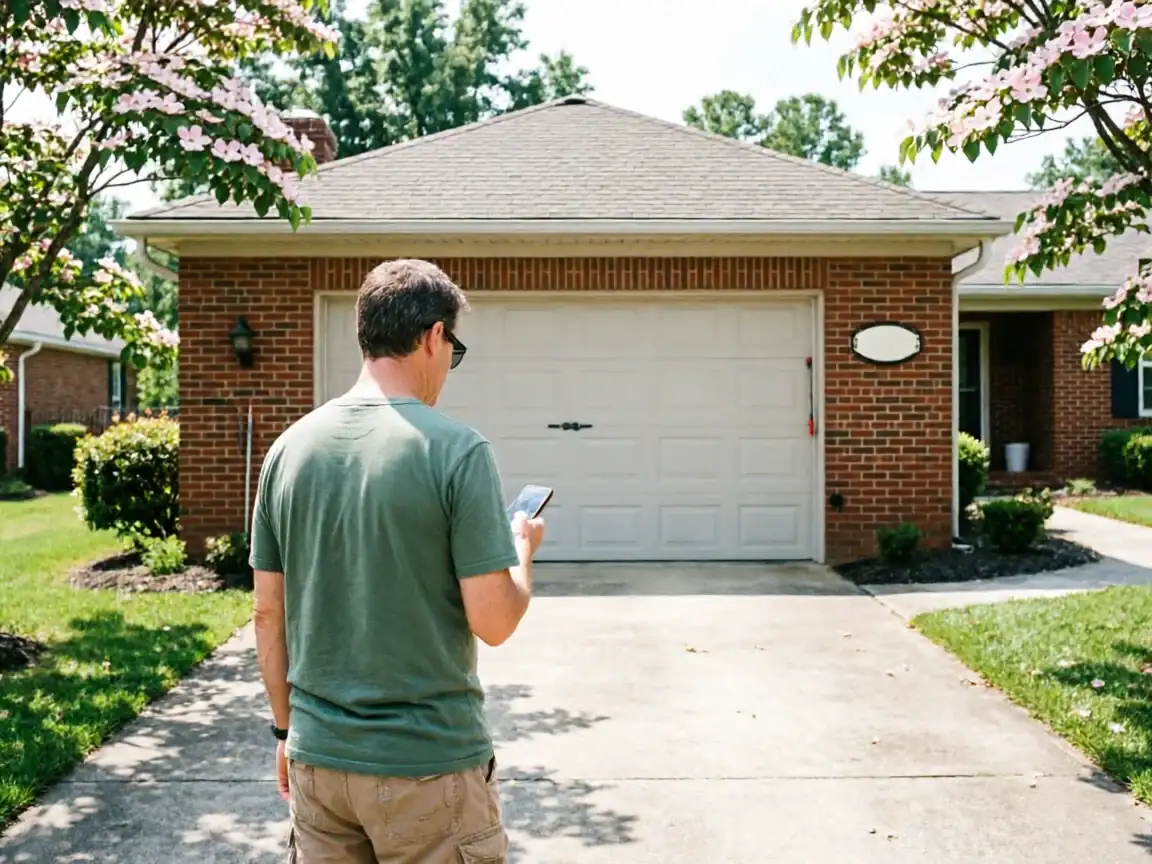
Chamblee sits about 13 miles from our shop in Alpharetta
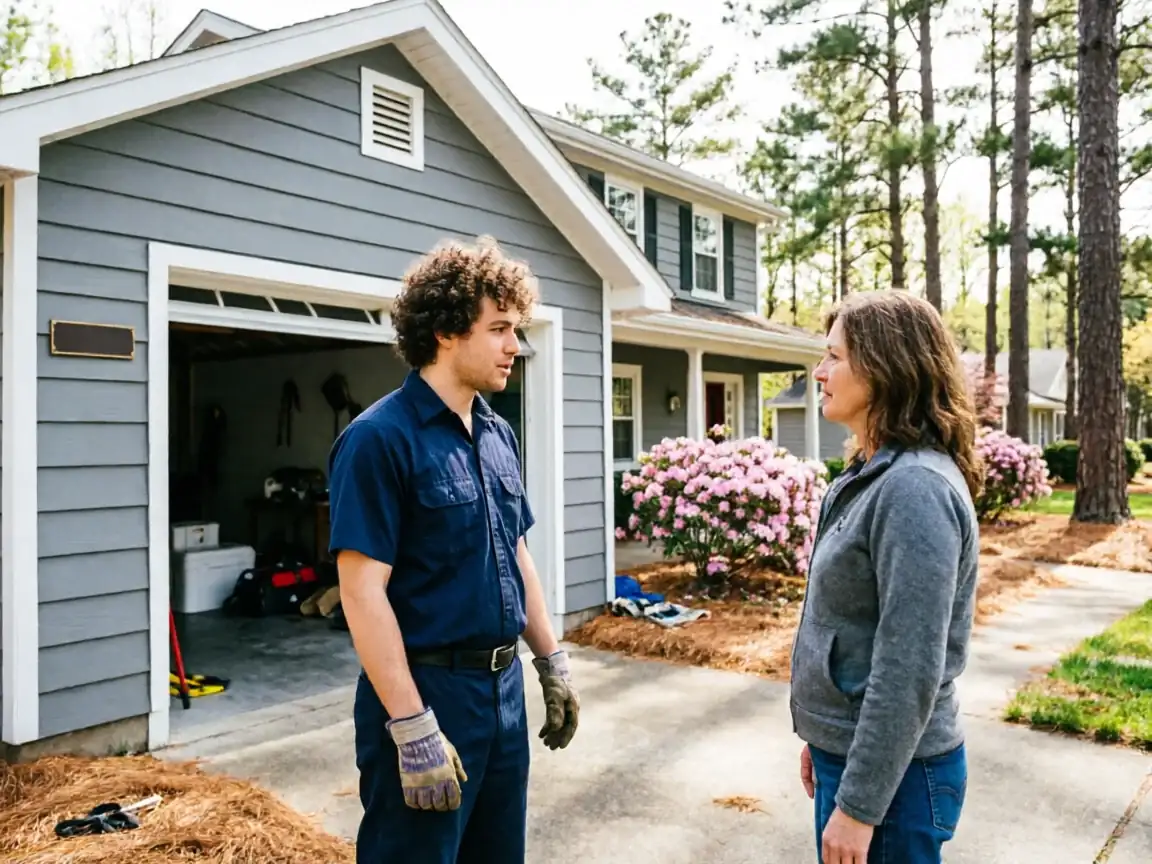
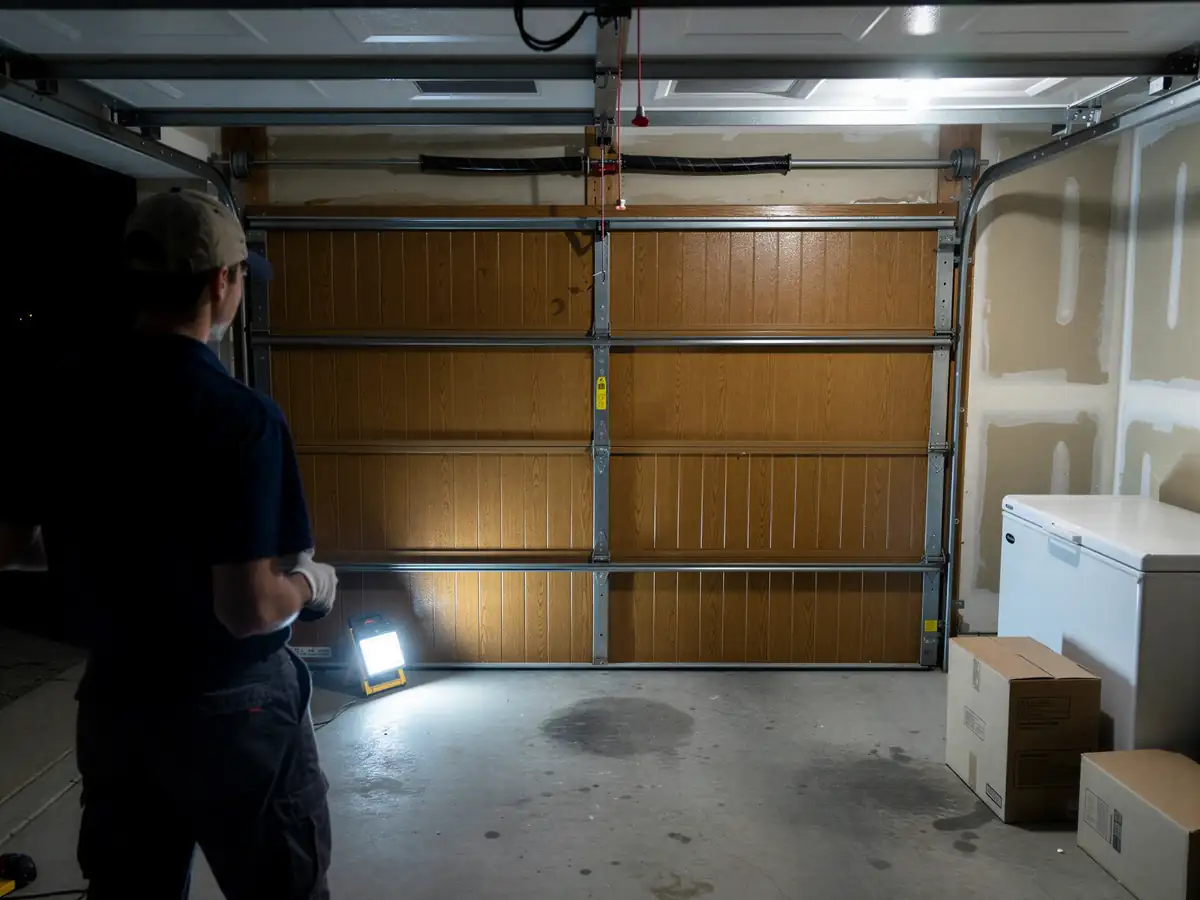
Which is enough distance that we build the drive into how we schedule, not into what we charge you. When you call, we ask what the door is doing, what it sounds like, and whether it's stuck open or stuck shut, because that tells us what to load on the truck before we leave rather than guessing on site. A stripped torsion spring and a bad logic board take different parts, and showing up once with the right one beats showing up twice.
- 13 miles
We don't run a branch in Chamblee
So we can't promise a same-hour arrival the way a shop five minutes away might. What we can do is tell you honestly, on the phone, roughly where in the day the drive puts us, so you're not standing in a hot or cold garage wondering. If the door is loose on its tracks and could fall, we'll walk you through making it safe - block it, don't force it - until the truck is there.
Booking ahead for non-emergency work, like a tune-up or a panel swap
Is the easier path for everyone. Same-day emergency calls still happen, they just slot in around the drive.
Can You Do This Yourself
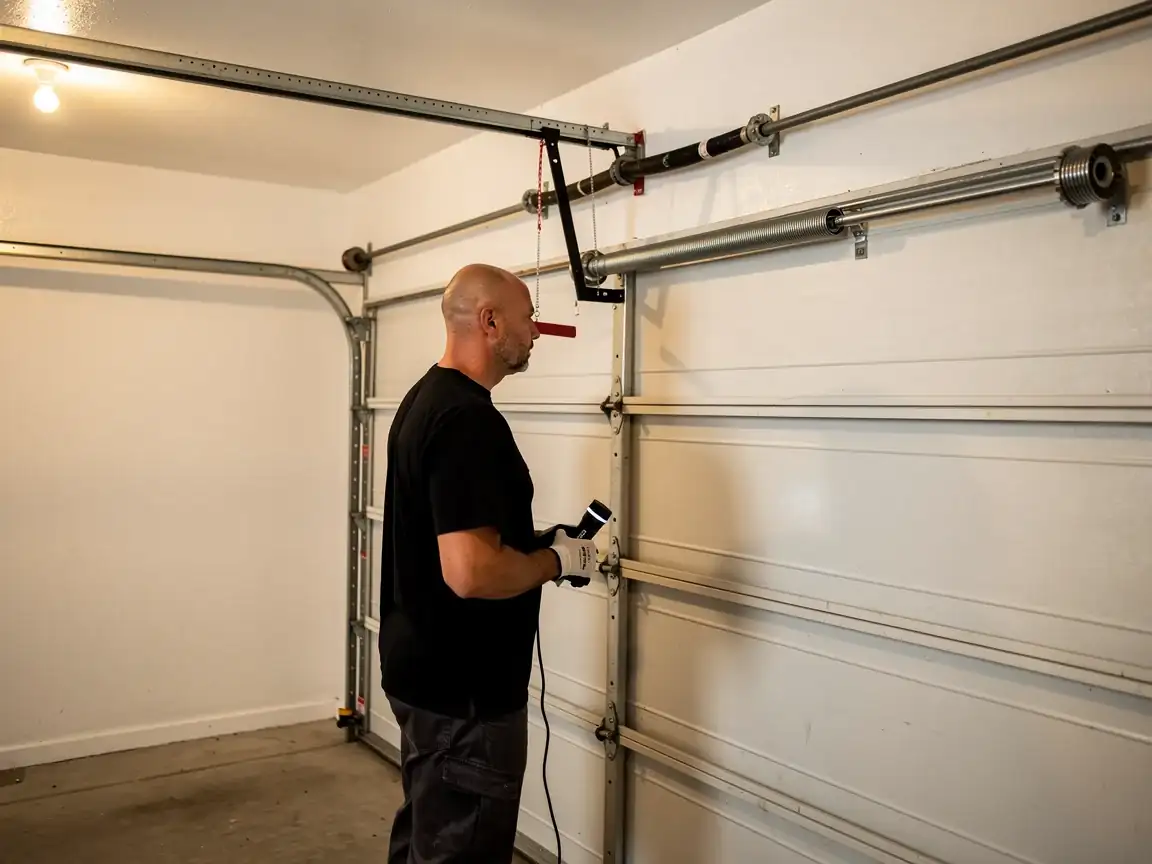
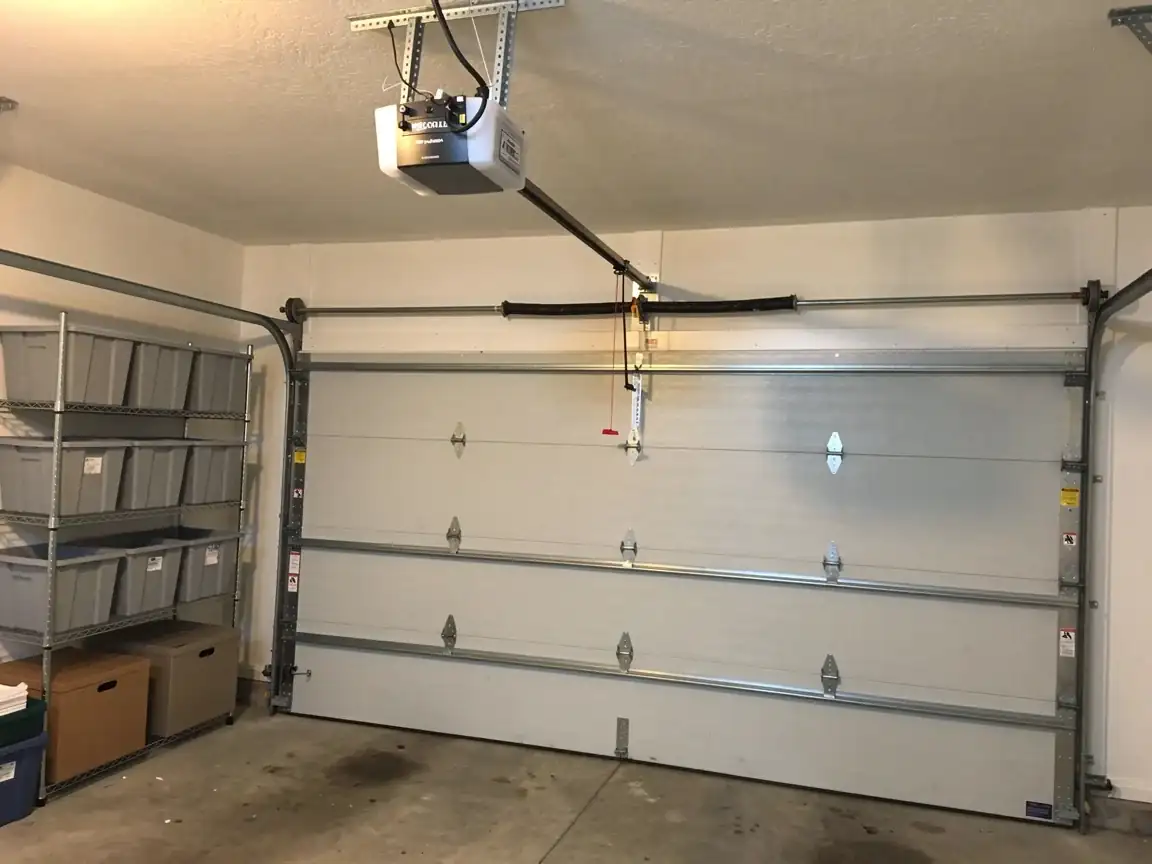
Some of it, yes. Lubricating rollers and hinges, tightening loose hardware on the track, replacing weatherstripping along the bottom - that's reasonable weekend work on any door, Chamblee's included. What isn't reasonable is touching a torsion spring. These doors store enough tension in that coiled spring to break a wrist or worse, and on a house built around 1981 the hardware holding it is original and old enough that it doesn't always let go the way a newer part would.
If your opener is cycling but the door won't move, check the obvious first: is the arm disconnected, is the photo-eye sensor blocked or knocked out of alignment, is there a padlock bar engaged. Those three things account for a lot of calls that don't need a truck at all.
Where we draw the line is anything involving the spring, the cable under tension, or the torsion bar itself. We'd rather tell you not to try it than show up to a job that's worse than the one we were called for.
How We Fix It
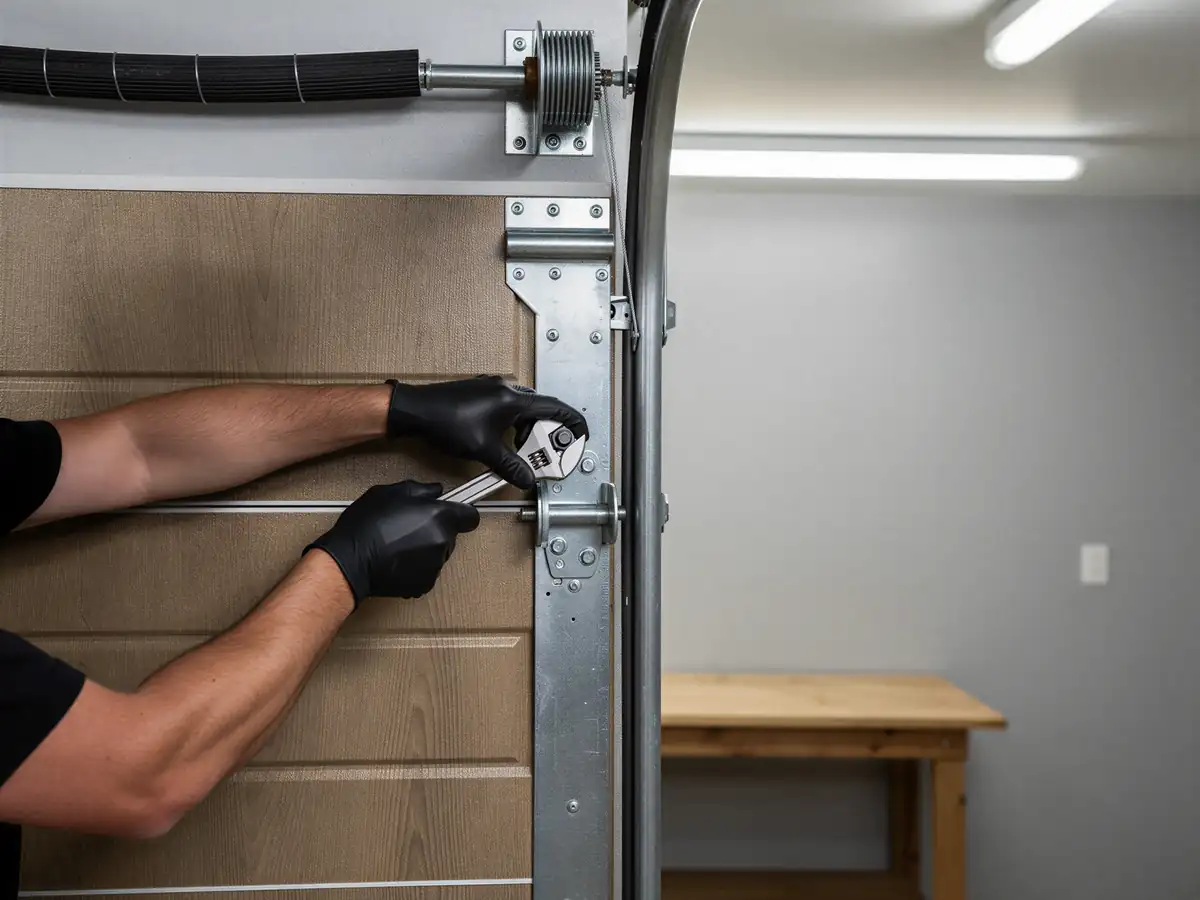
Most Chamblee calls start with a diagnosis on site, not a swap-and-hope. We check the spring tension, the cable condition, the track alignment, and the opener's force settings in that order, because a door that's hard to lift by hand will wear out an opener fast even if the opener itself is fine. On a house from the early 1980s the torsion hardware is often original, which means the mounting brackets and bearing plates have 40-plus years of rust and wear on them even if nobody's touched the spring.
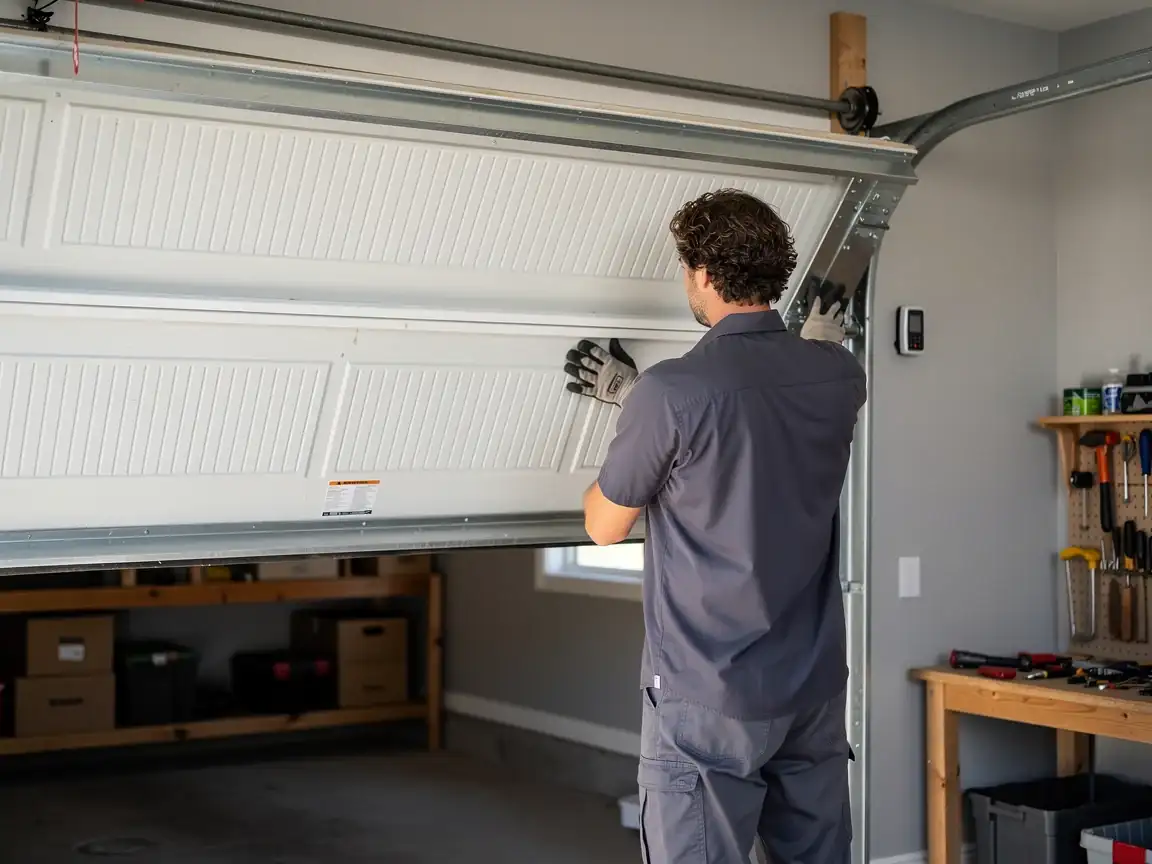
If the fix is a spring replacement, we match the wire size and wind to the door's weight rather than grabbing a generic one - mismatched springs are a common reason doors slam down or won't stay open. If it's the opener, we check whether the issue is the motor, the logic board, or just worn gears before we recommend a full replacement.
We're upfront when a repair isn't worth it: if the door itself is warped, rusted through, or the track is bent beyond a clean adjustment, we'll say so and talk replacement instead of patching something that'll fail again in six months.
What Causes It Around Here
Chamblee's housing runs mostly 1980s and 90s construction
With a median build year around 1981, which puts a lot of garage doors and their hardware well past the age where parts wear out on schedule rather than from abuse. Torsion springs are rated for a number of cycles, and a 40-year-old spring is simply due, regardless of how carefully the door's been used.
The region sits in a moderate-cold climate band
Not the deep freeze-thaw cycling that cracks concrete and warps steel further north, but enough temperature swing across the year to stiffen grease, shrink weatherstripping, and change how a steel door hangs in its frame between seasons. That shows up as doors that worked fine in September and stick or grind by January.
Original openers from that era also tend to lack modern safety features like photo-eye sensors
Which is less a cause of breakdown and more a reason to upgrade rather than just repair when the chance comes up.
Parts We Carry
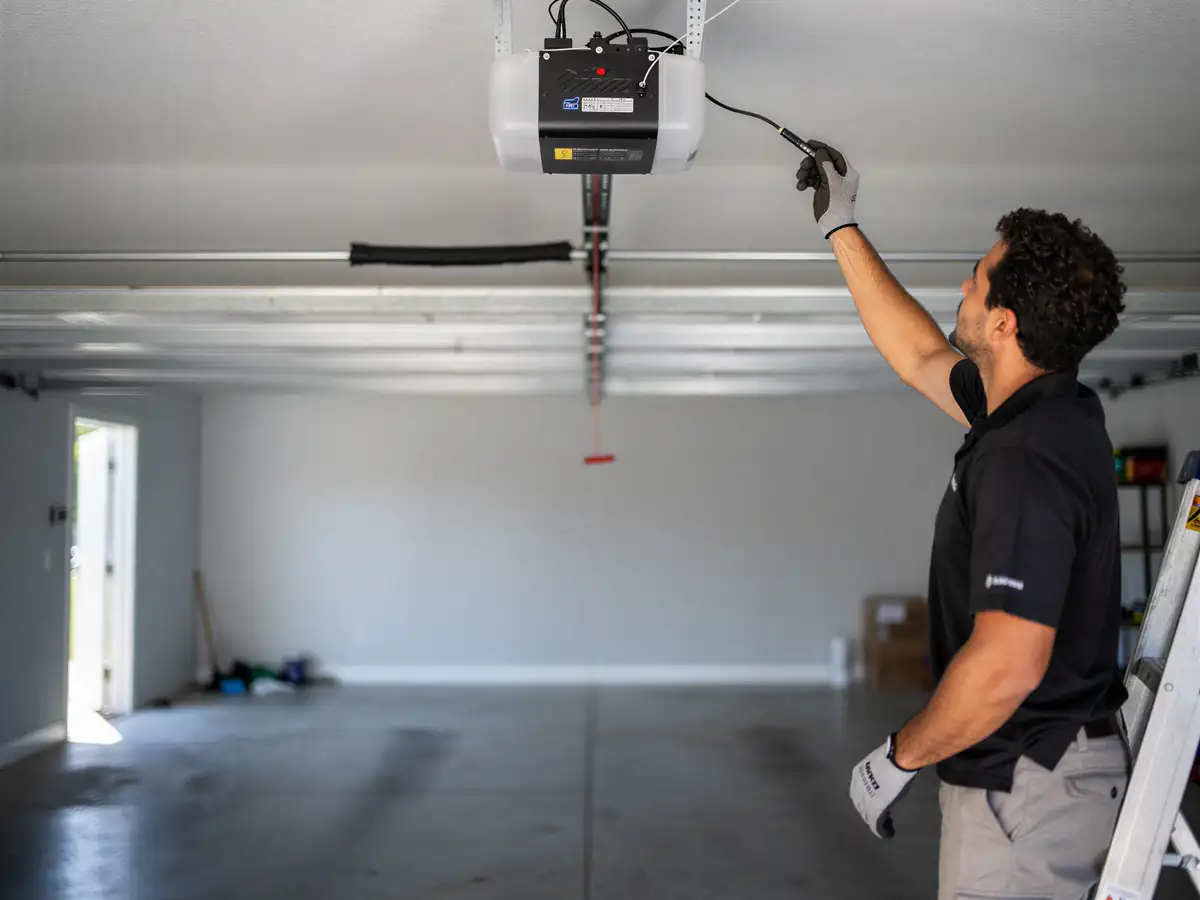
We stock the parts that fail most often on doors of this age: torsion springs in common wire sizes, extension springs, rollers (nylon and steel), cables, and the hinges and brackets that corrode out before anything else does. For openers, we carry logic boards and drive gears for the common chain and belt-drive units, plus photo-eye sensor kits for anyone upgrading an older door that never had them.
What we don't keep on the truck is obsolete hardware for a specific original opener model from decades ago - some of those parts simply aren't made anymore, and when that's the case, replacement is the honest answer rather than a special order that may never arrive.
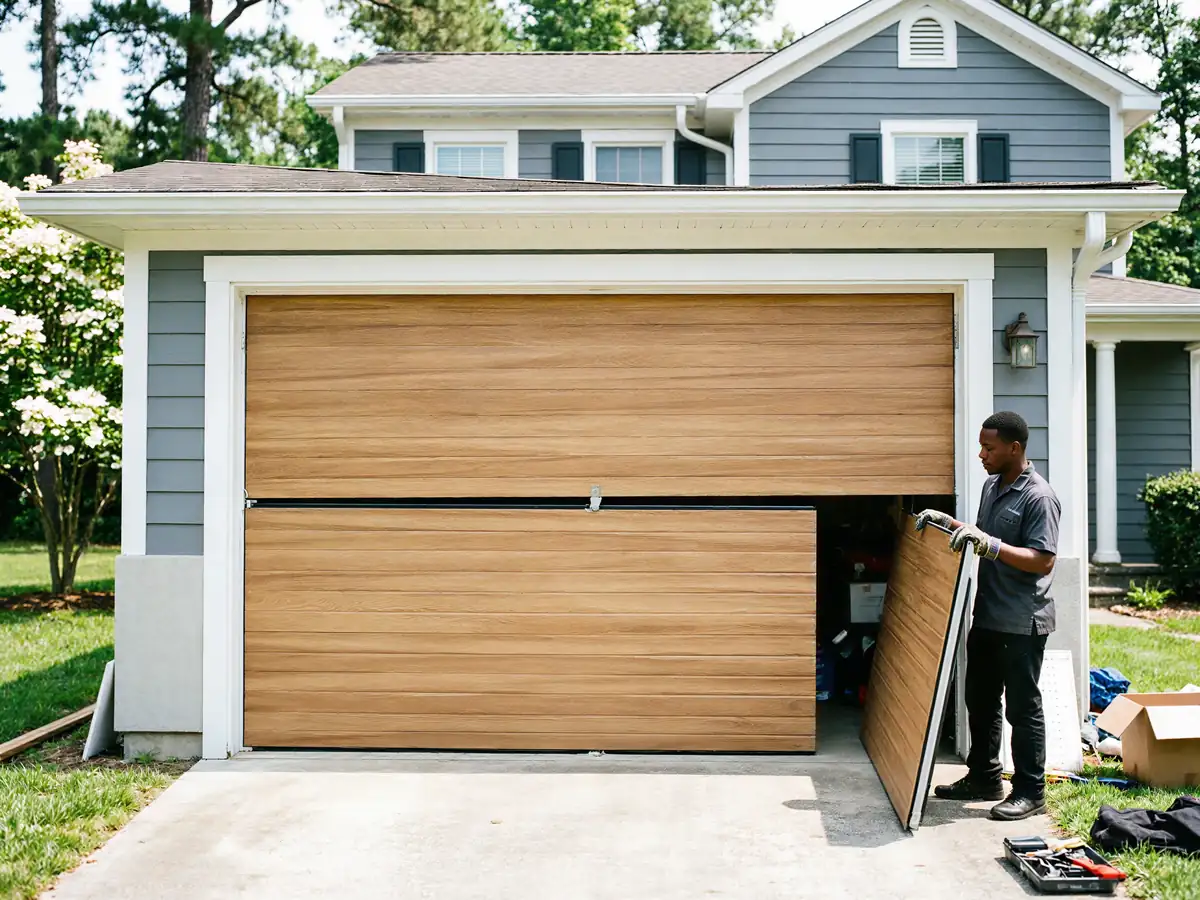
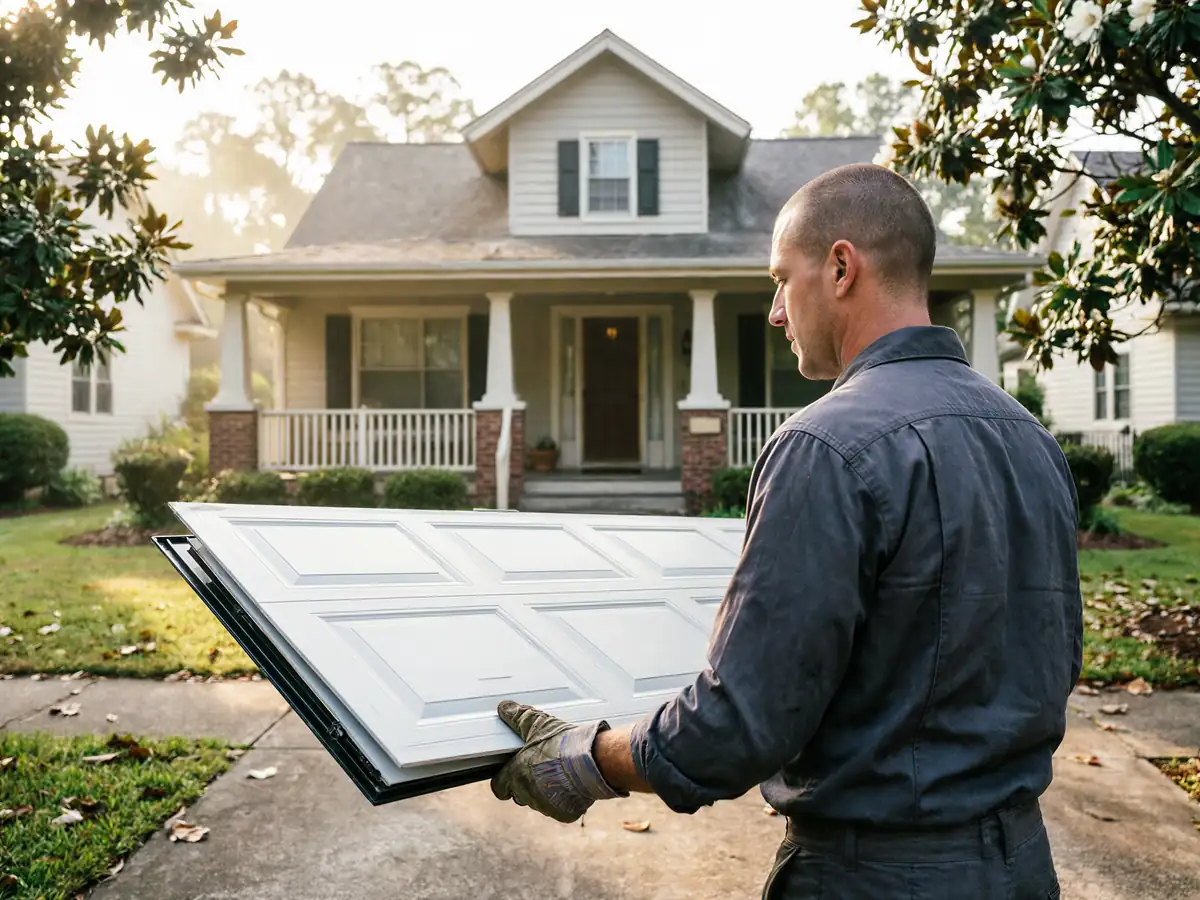
For panels and full door sections, we order to match rather than stock every size, since siding and trim color vary house to house. If a single panel is dented but the rest of the door is sound, we'll look at ordering a matching replacement before we talk about tearing out the whole door.