How We Fix It
The fault we see most in Peachtree Corners isn't a broken spring
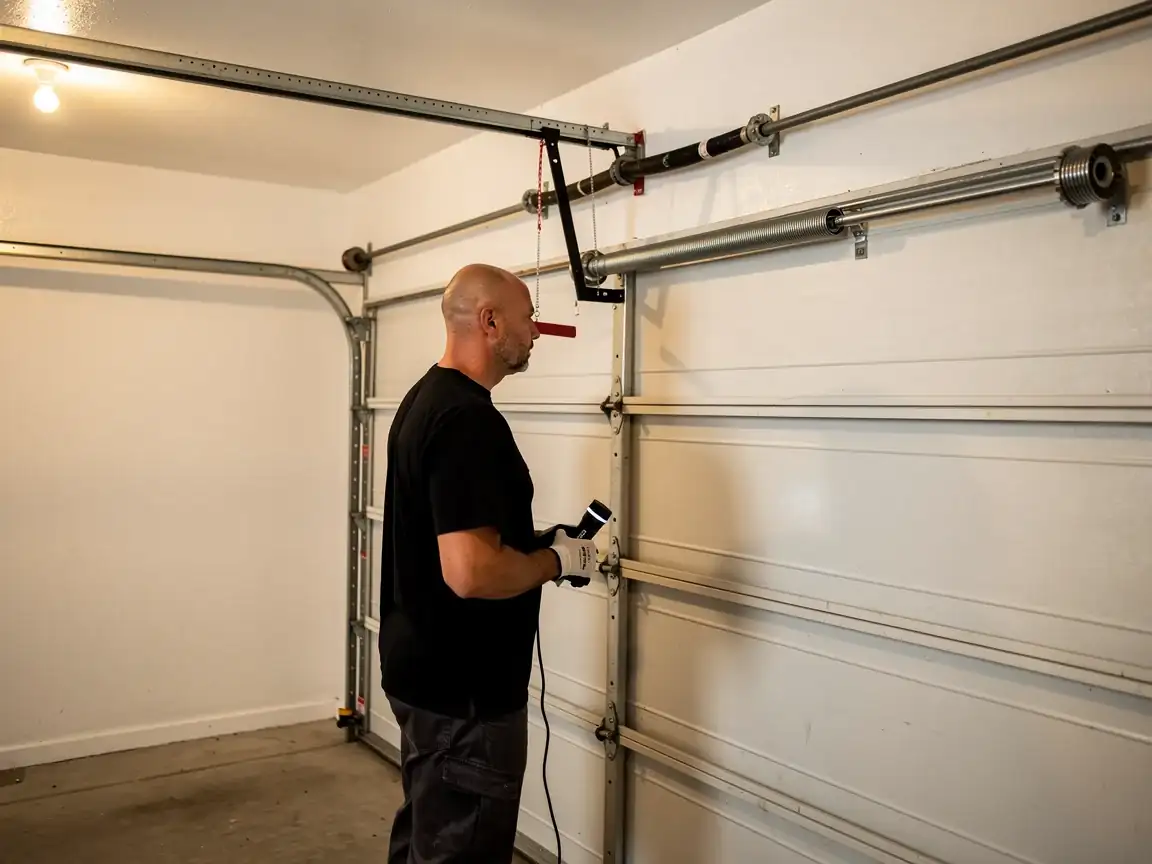
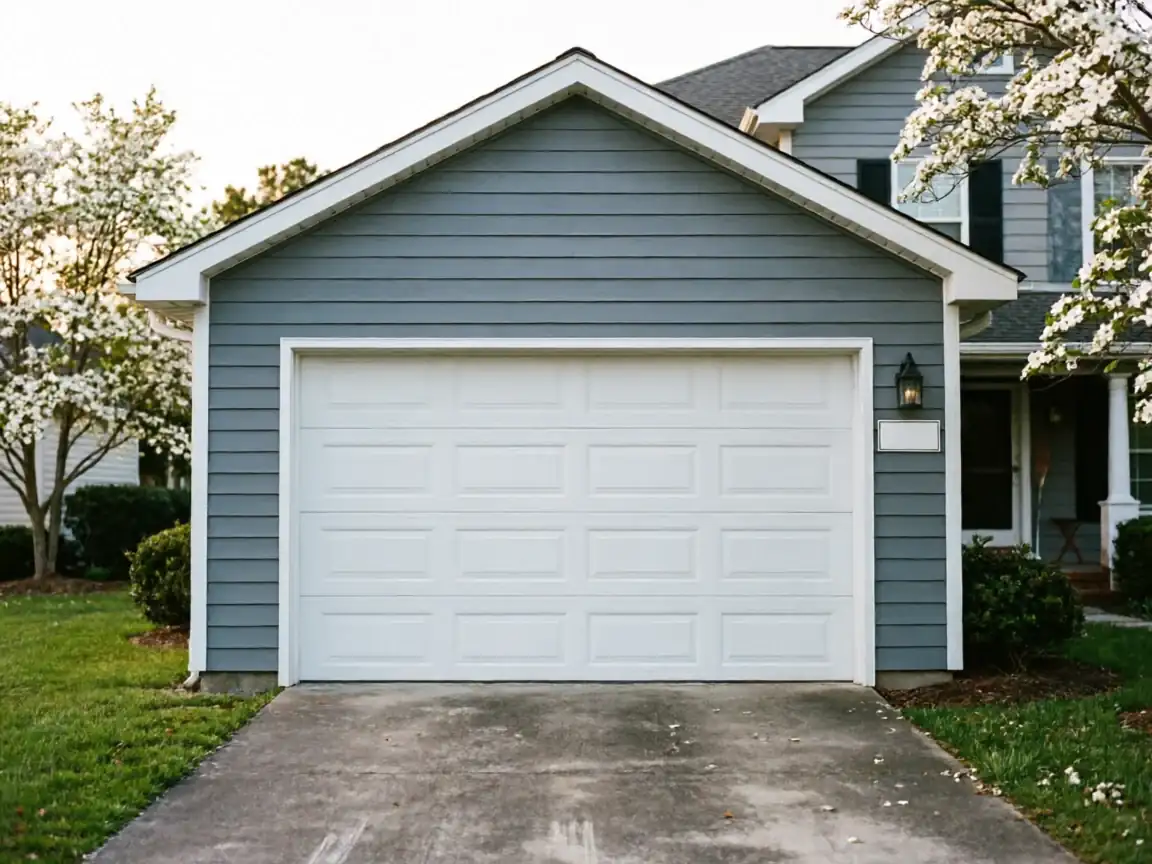
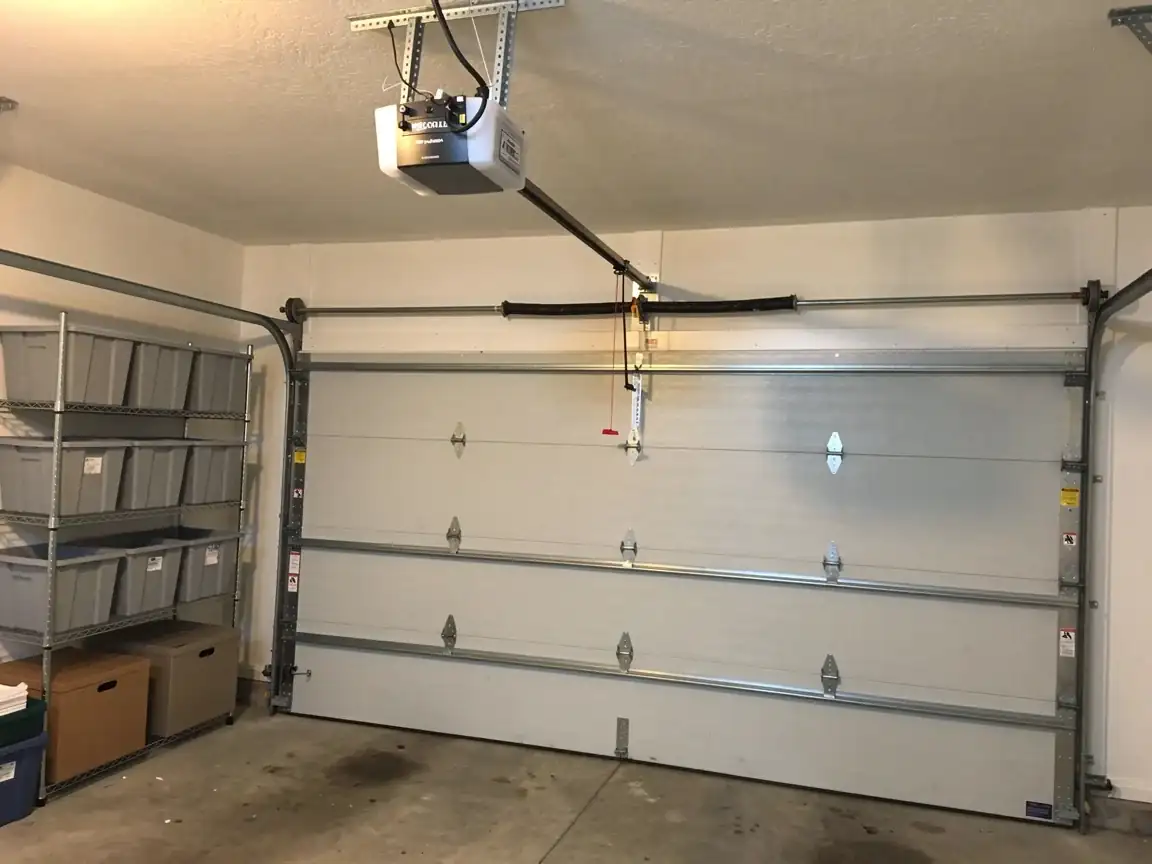
It's a door that's doing its job badly because it was never built for the house it's on. A lot of these homes went up around 1988, in the thick of the metro's late-80s building wave, and they shipped with single-layer steel doors and openers rated for loads nobody worries about anymore. The panel sags at the bottom corners, the track has been re-shimmed twice, and the opener chain-drives a door that's heavier than it was new because thirty-plus years of paint and moisture have added weight it wasn't designed to carry.
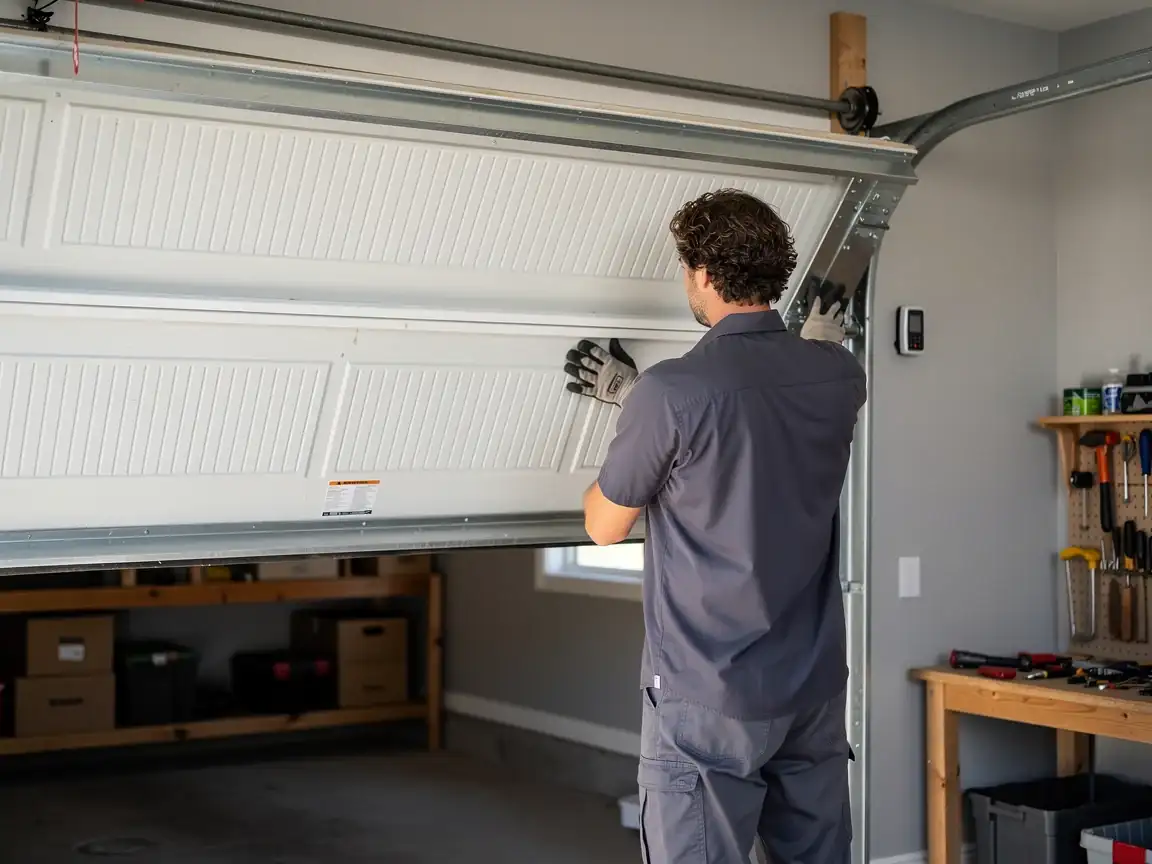
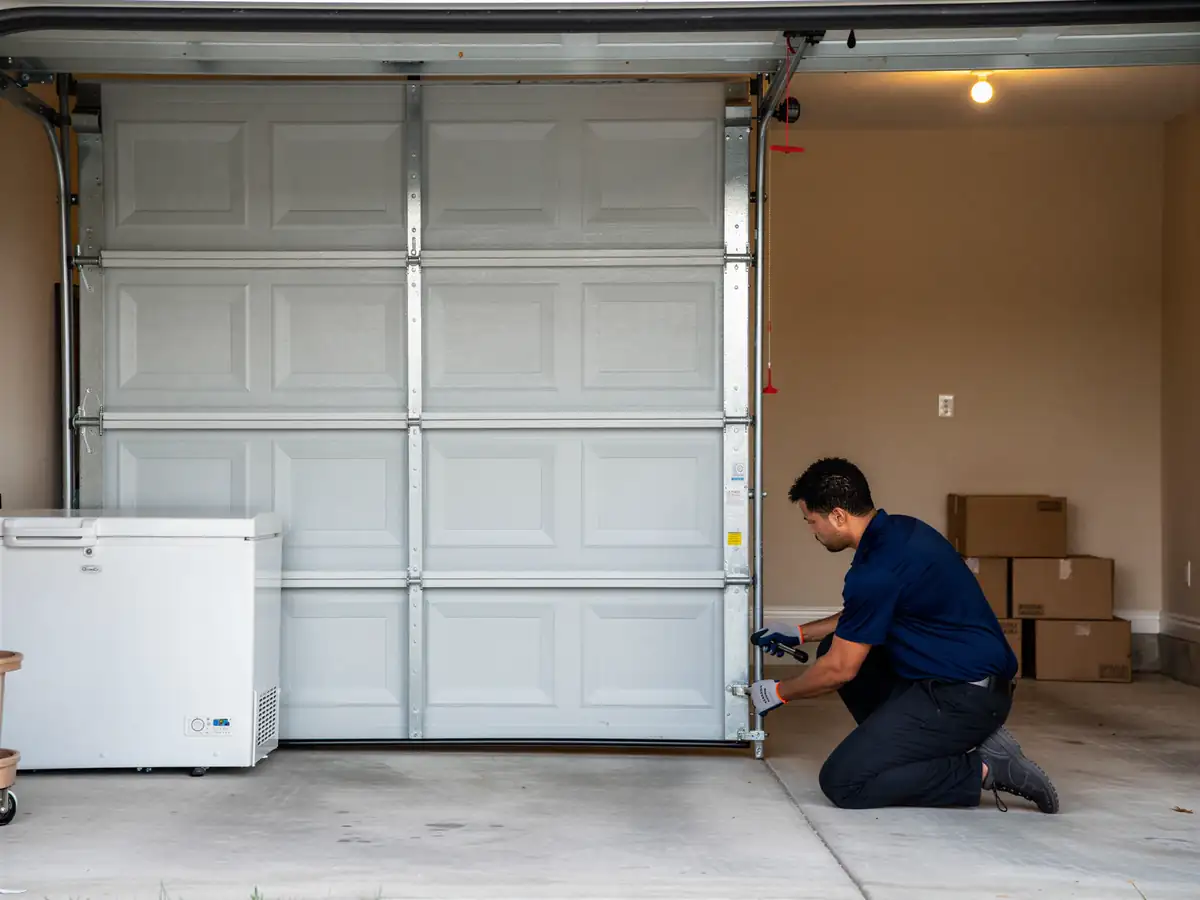
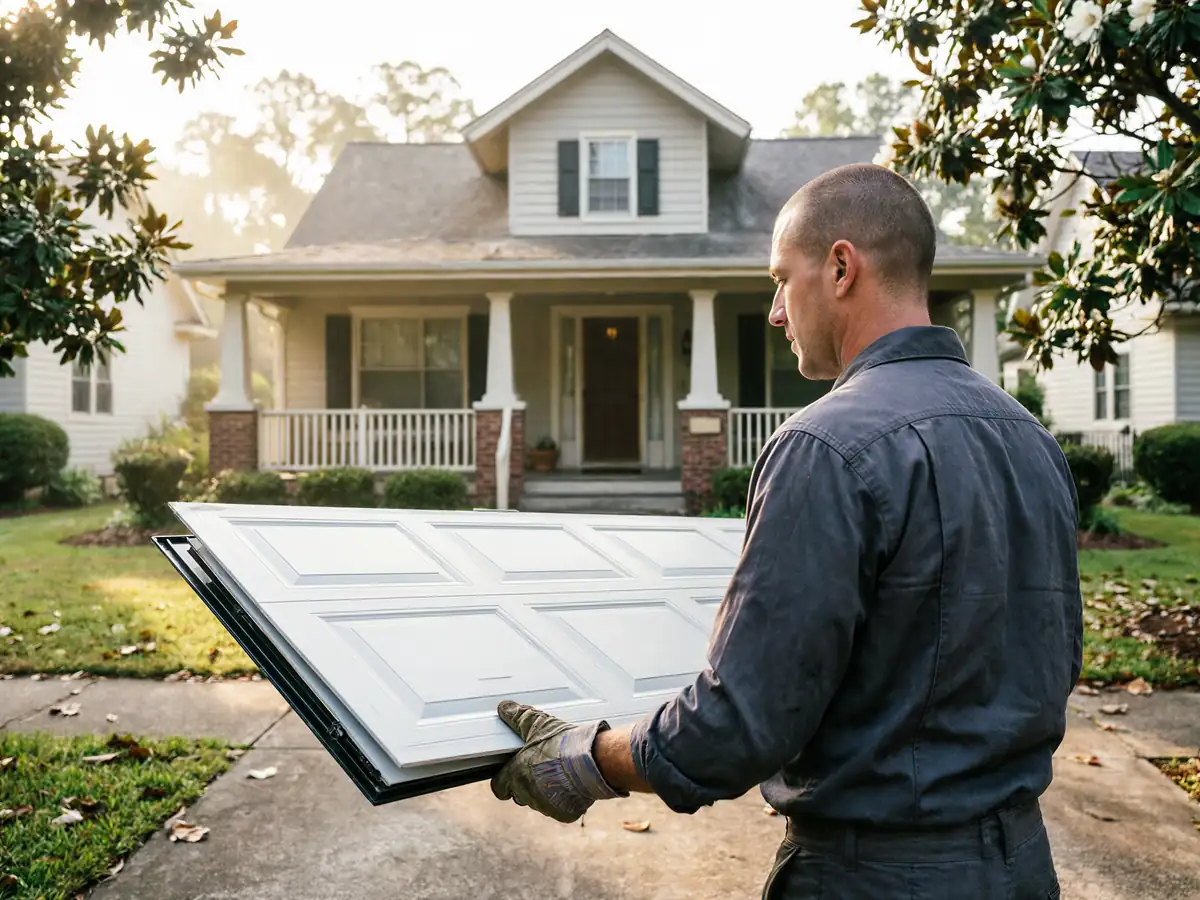
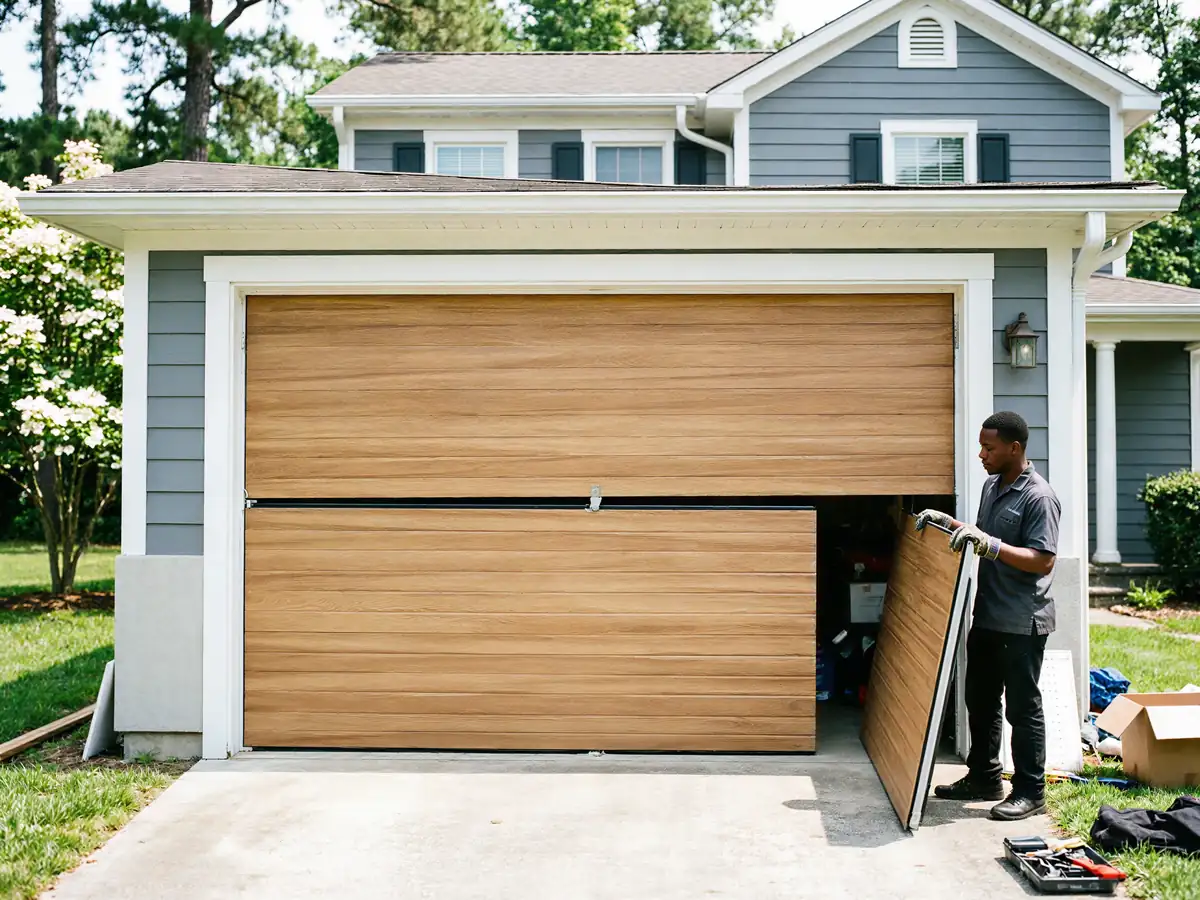
We pull the old door and track as a unit rather than patch around them
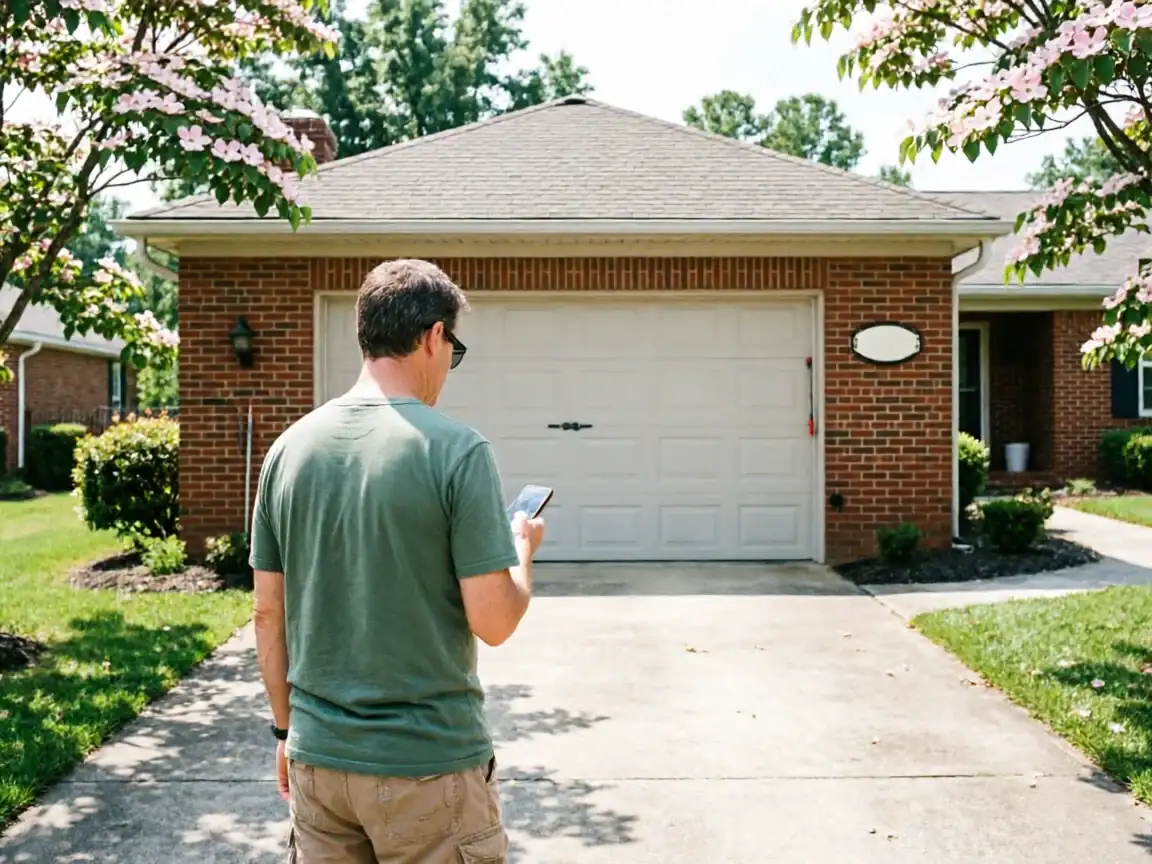
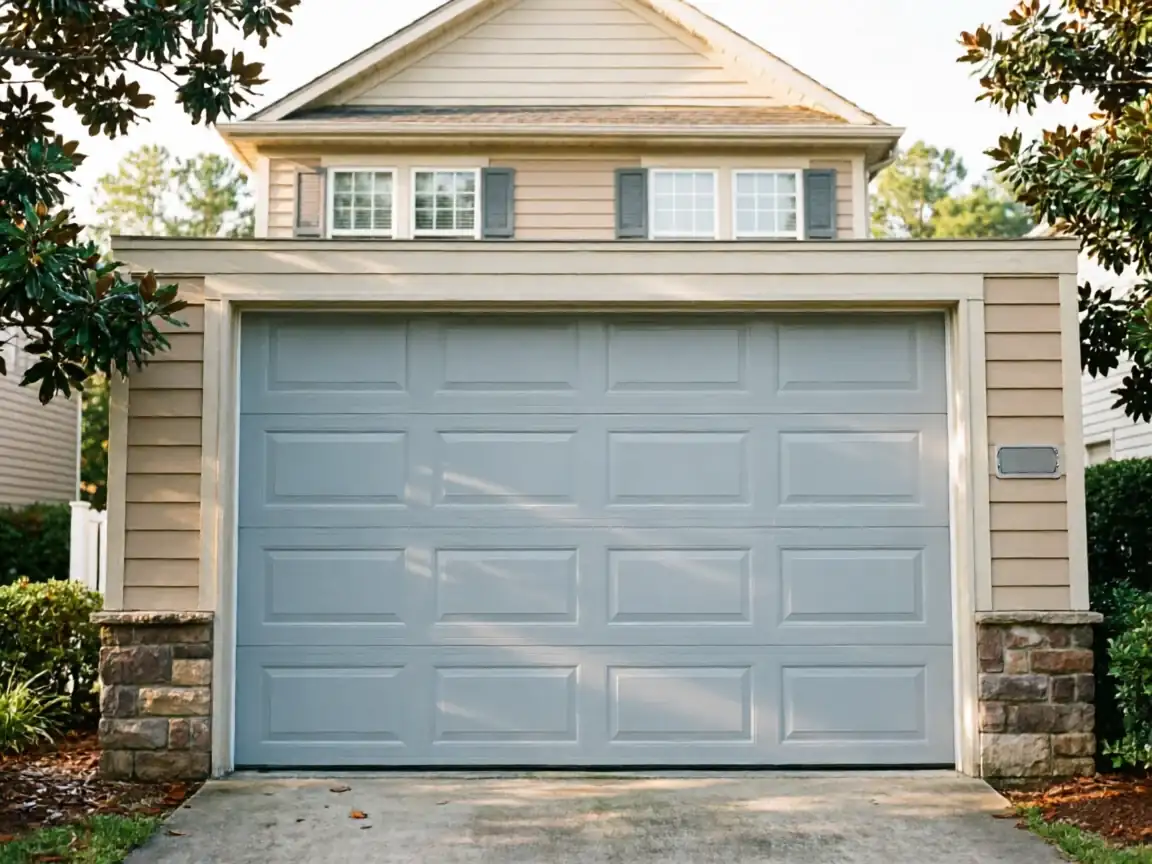
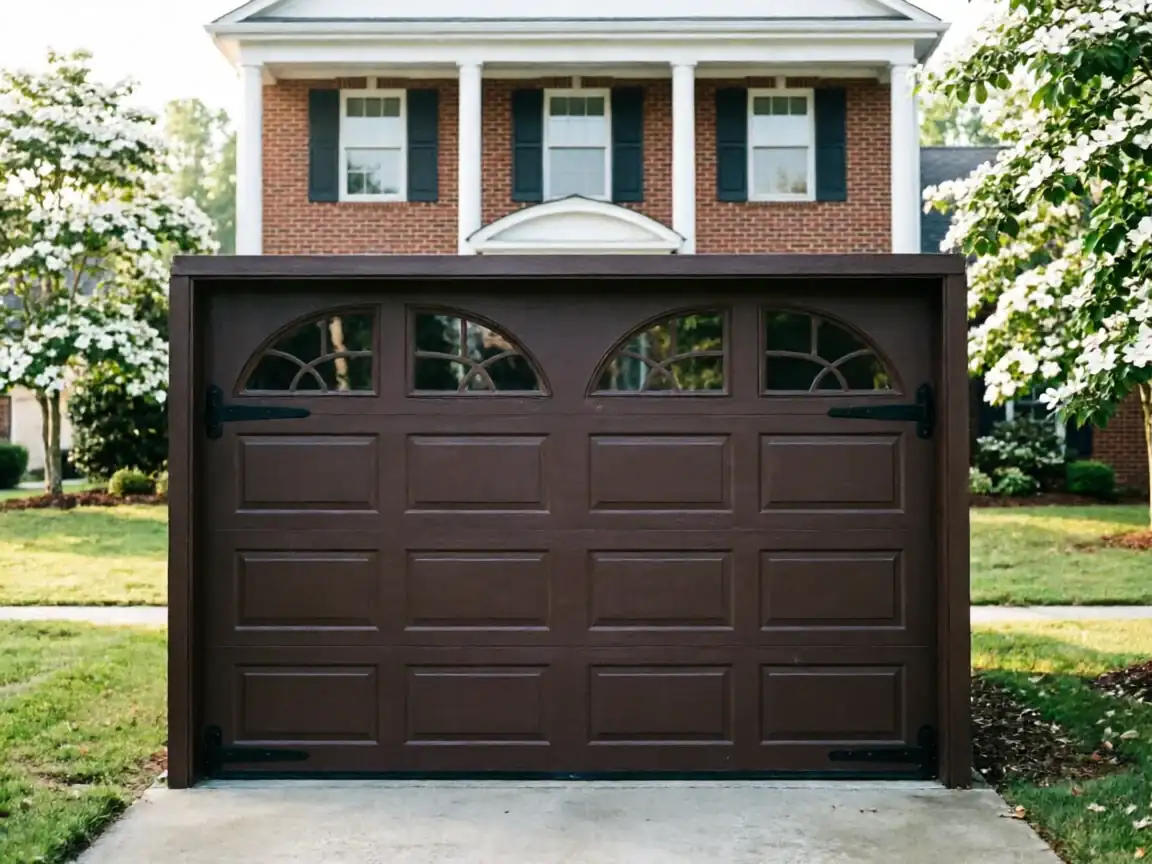
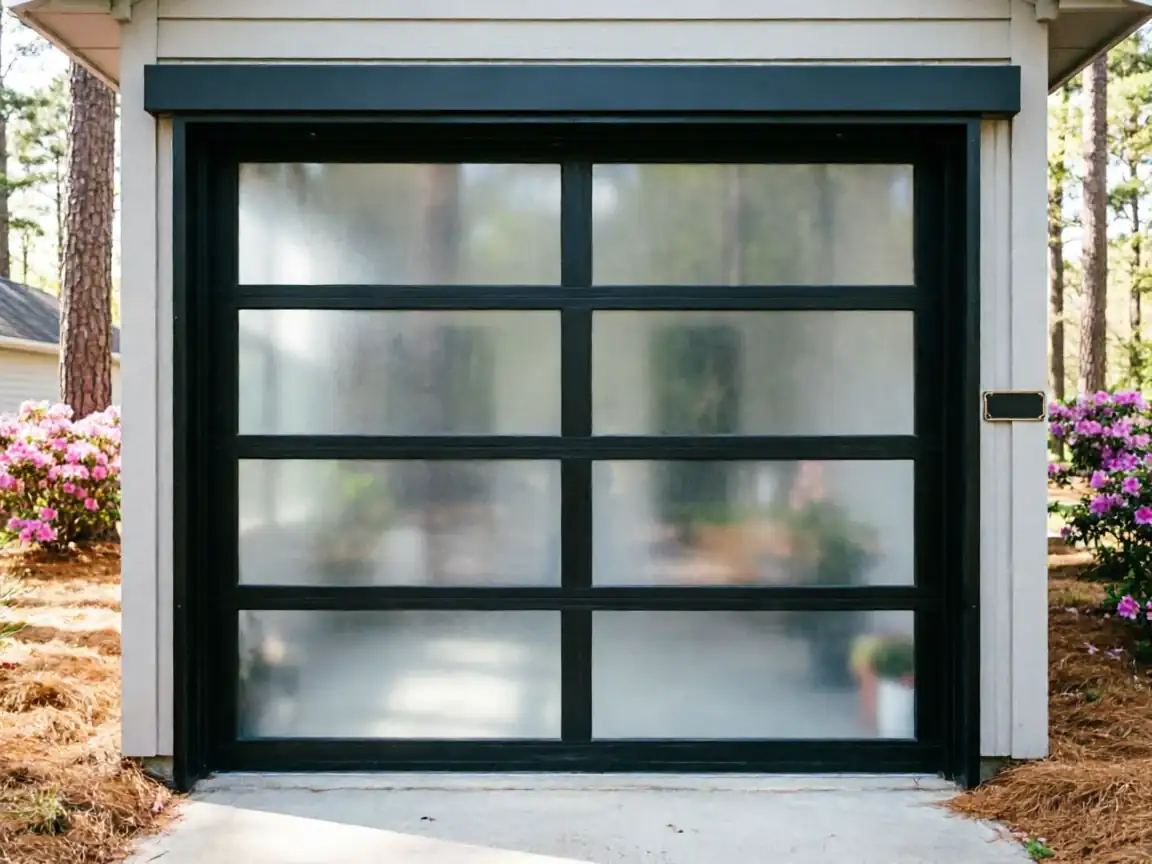
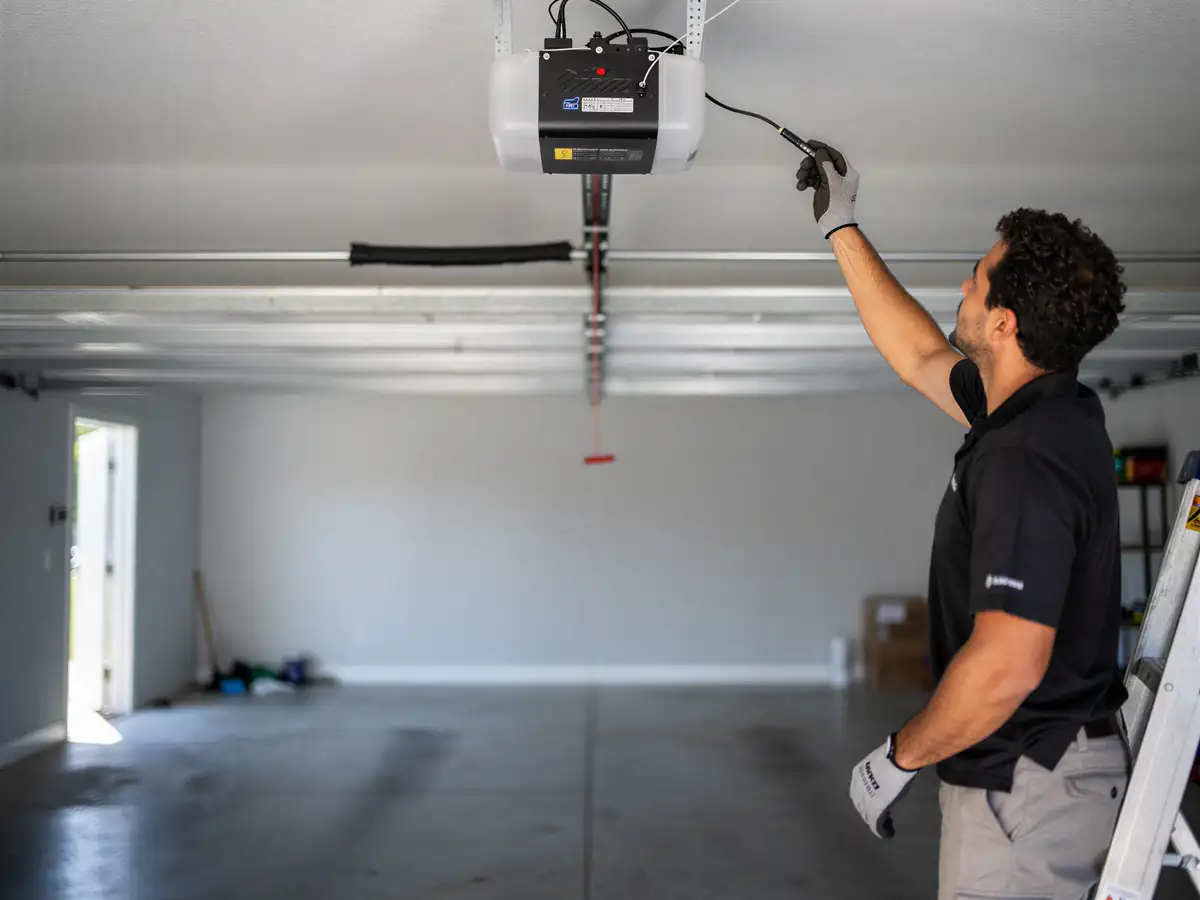
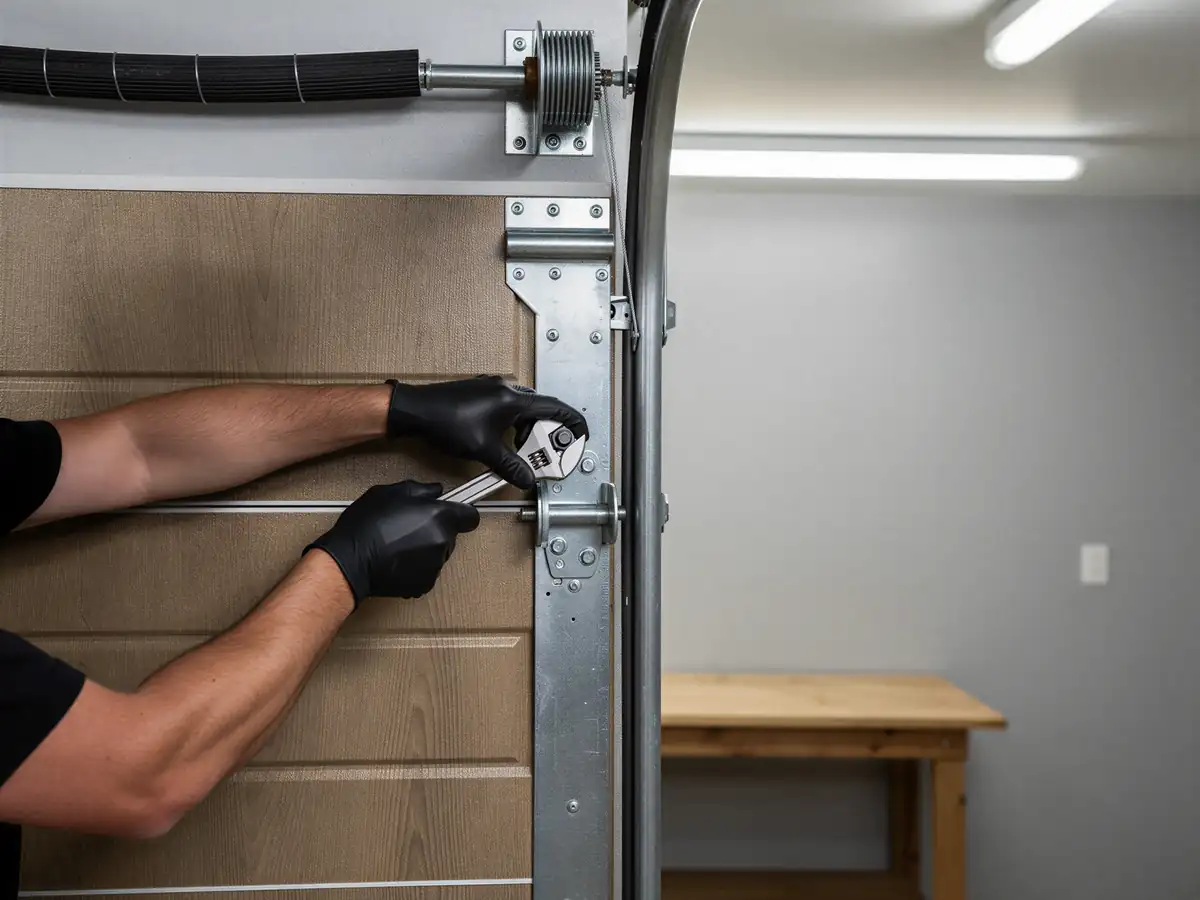
A new install here means a door sized and insulated for a house built on 1980s-era framing, torsion springs matched to the actual door weight (not the sticker weight from 1988), and an opener with a modern drive and safety sensors. We travel the 8 miles out from Alpharetta with the door pre-measured from a site visit - we don't guess dimensions over the phone, because track-to-jamb clearance on these houses varies more than people expect.
- 8 miles
What Causes It Around Here
Most of the trouble traces back to the build era. A door installed when this part of the suburb was first framed out - commonly stamped with a 1988 date on the old opener plate - was built to a lighter structural standard and with thinner steel than what's sold today. Add a cold-moderate climate with real seasonal swings, and that steel cycles through expansion and contraction every winter, which loosens hinge screws and warps thin panels over the decades.
We also see openers original to the house, meaning no rolling-code security and a motor that was never rated for a heavier insulated replacement door if a previous owner swapped panels without upgrading the drive. That mismatch - new door, old opener - is one of the most common reasons a system fails sooner than it should after a partial repair. We don't install a door without checking whether the existing opener can actually carry it; if it can't, we say so before we quote the job, not after.
Time on the Job
A straight swap - old door and track out, new door and opener in - on a standard single or double bay usually runs a single visit. Houses from the 1988 wave in this suburb tend to have standard jamb widths, which keeps the job predictable once we've measured on site. Where it runs longer is when the framing around the opening has shifted enough over three-plus decades that the jamb needs squaring before a new track will sit right - that's a second trip for lumber work we don't do ourselves, and we'll tell you up front if that's what we're looking at.
Because we're coming from Alpharetta, 8 miles out, we schedule Peachtree Corners jobs in blocks rather than one-offs, so the crew and the truck are already in the area rather than making a single round trip for one door. That's a scheduling detail, not a promise of a specific arrival time - we don't quote response windows we haven't confirmed.
What You Pay
We don't have a published price list for this page, and we're not going to invent one
What we can tell you is what drives the number on a Peachtree Corners install: door material and insulation level, whether the existing opener can be reused or needs replacing, and whether the jamb needs any carpentry before the new track goes in. Households in this part of the service area run a median income somewhat under the wider area's $91,308 figure, and we size quotes to the job in front of us, not a blanket rate.
One honest limit: if your opener is original to a 1988-era build and the door is being upgraded to a heavier insulated panel
We won't quote a reuse of that opener even if it still runs. Running a decades-old motor on a load it wasn't built for is a callback waiting to happen, and we'd rather tell you that at the estimate than after it fails in six months.